

Your own fat · Facial rejuvenation · Madrid
Facial fat grafting in Madrid
We restore lost facial volume without making you look like someone else. The key is not simply to fill wrinkles, but to understand which compartments have changed with age and restore natural proportions.
A direct answer
What is facial fat grafting?
It transfers your own fat: we collect a small amount from your abdomen or thighs, prepare it, and inject it into selected facial areas to restore support, transitions, and volume.
Its advantage is not simply that the material is “natural.” Fat integrates as living tissue and can provide three-dimensional restoration that is difficult to reproduce with indiscriminately placed filler. However, some fat is reabsorbed, and the result cannot be predicted precisely: some people choose a second session to increase or refine the effect.
Our aesthetic approach
Do not overfill the face to hide wrinkles
“Fat grafting should selectively restore compartments that have lost volume, respecting facial anatomy and proportions. Overcorrecting to erase lines is a common conceptual mistake when the broader surgical picture of aging is overlooked.”
Facial aging involves changes in skin, fat, ligaments, and bone. Adding volume only makes sense where it has been lost. If the main issue is laxity, sagging, or excess skin, a different treatment may be more appropriate.
When it may help
Where do we use facial fat grafting?
Different areas require different fat preparation, depth, and volume. Treatment is planned by compartment, rather than by following a list of wrinkles.
Midface, cheeks, and cheekbone region
This is our most common indication. Restoring cheek support can soften transitions and improve a tired appearance without directly overfilling every fold.
Temples and the area around the eyes
Volume loss in the temples or above the eyes can make the face appear harsher. These areas are anatomically demanding and have important blood vessels, making injection depth and cannula choice particularly important.
Chin and jawline
Small volumes can improve continuity, support, and proportion. If there is a significant skeletal issue, fat grafting does not replace chin surgery.
Folds and marionette lines
We mainly address these as part of broader restoration of the lower face. Excessive isolated filling often creates a heavy appearance.
Glabella and forehead
Only for selected indications and with an extremely cautious vascular protocol. These are not areas for routine superficial injection.
Nanofat and skin quality
Fat processed as nanofat has a different purpose from adding volume, for example around vertical lip lines. We always explain that its effect varies.
An individualized technique
Three decisions that affect the result
There is no single formula for facial fat grafting. The donor site, processing, and placement technique are adapted to the goal.
- 01
Collect suitable fat
The abdomen and thighs are the most common donor sites. Facial treatment requires small volumes, so we can almost always identify a suitable area. We use controlled cannulas and pressure during harvesting to preserve the tissue.
- 02
Prepare it for its intended use
We may use decantation, low-speed centrifugation, closed systems such as Puregraft, or processing for nanofat. We do not automatically choose a particular brand or method: what matters is the tissue we need and where it will be placed.
- 03
Inject small deposits
Fat is distributed in small quantities across different tissue planes to maximize contact with a blood supply. The aim is to restore transitions, not create a lump of filler.
Indicative volumes
A few cubic centimeters can make a considerable difference in the face
As published guidance consistent with our practice, common ranges include 3–7 cc per side in a temple or cheek, 1–3 cc per side around the eyes or in the chin, 0.5–1.5 cc per side in the tear trough or nasolabial fold and up to 3–9 cc per side along the jawline. These are not a prescription: anatomy, tissue plane, and goals matter more than reaching a number.
Vascular precision
Safety also depends on how the fat is injected
Severe vascular complications are rare, but have been reported after facial fat transfer and must not be minimized. There is no reliable rate that allows us to promise a specific risk, because the literature is mainly based on reported cases.
In our protocol, we aspirate before each deposit, avoid excessively fine cannulas, avoid deep injection near the angular artery, and exercise particular caution in the tear trough. We also limit pressure and volume per pass and work with a precise understanding of the anatomical planes.
The key question
How much fat remains, and when can I assess the result?
Published facial retention rates vary. Two systematic reviews place the pooled average at approximately 42–47%, with wide differences between studies, areas, and techniques.
More volume than will remain
The grafted fat, swelling, and small bruises are present together. It is too early to judge the final result.
Swelling subsides and tissues adapt
The face gradually returns to a socially comfortable appearance while the graft continues to integrate.
A first useful assessment
Most of the early change has occurred, and the volume at three months provides a reasonable guide.
Decide whether to refine the result
This is when we usually consider an elective second session if you would like more volume or symmetry.
A second session does not mean the first has “failed.” Uneven reabsorption is part of graft biology, and the amount of correction someone wants is subjective.
The setting is adapted to the procedure
From local anesthesia at the clinic to combined surgery at HLA Moncloa
Nanofat or microfat grafting to very limited areas may be performed under local anesthesia alone at our clinic. More extensive facial fat grafting is usually performed at HLA Moncloa University Hospital under local anesthesia and sedation, without intubation.
General anesthesia is usually used for combined procedures, particularly blepharoplasty or a facelift. HLA Moncloa has 14 operating rooms for major surgery, a postoperative recovery unit, and 13 ICU beds; its Intensive Care Unit is accredited for specialist training through the Spanish MIR system.
- Very localized treatment
- Local anesthesia at the clinic
- Extensive facial fat grafting
- Local anesthesia and sedation in hospital
- With blepharoplasty or a facelift
- Usually general anesthesia
- Hospital stay
- Depends on the main procedure
Realistic recovery
When can I return to everyday life?
Social recovery depends more on treatment extent and bruising than on pain. When combined with another operation, the main procedure determines recovery.
- 48–72 hoursUsual peak swelling. Quiet activity from the next day after limited treatment.
- 2–3 daysRemote work or work with limited public contact after a small treatment.
- 5–7 daysUsual return to social activities or the office; allow 7–10 days if several areas are treated.
- 7–14 daysMost visible swelling and bruising improve substantially.
- 7–10 daysLight exercise; strenuous exercise usually waits around three weeks.
From 24 hours after local anesthesia and 48 hours after sedation, provided you have no significant discomfort and are not taking medication that affects reaction time. Follow your team’s individual clearance and instructions.
Suitability and expectations
Who may be a suitable candidate?
An ideal candidate wants natural restoration, accepts that some fat is reabsorbed, and understands that more than one session may be needed. For facial volumes, a lack of donor fat is rarely a problem.
Often suitable
- Localized volume loss.
- Preference for your own tissue.
- A natural, proportionate goal.
- Reasonably stable weight.
- Acceptance of variability and follow-up.
We advise against treatment or postpone it
- Unrealistic expectations.
- Unwillingness to accept a possible second session.
- Current anticoagulant treatment requiring assessment.
- Serious illness or an uncontrolled health risk.
- Requesting volume where it would compromise anatomy.
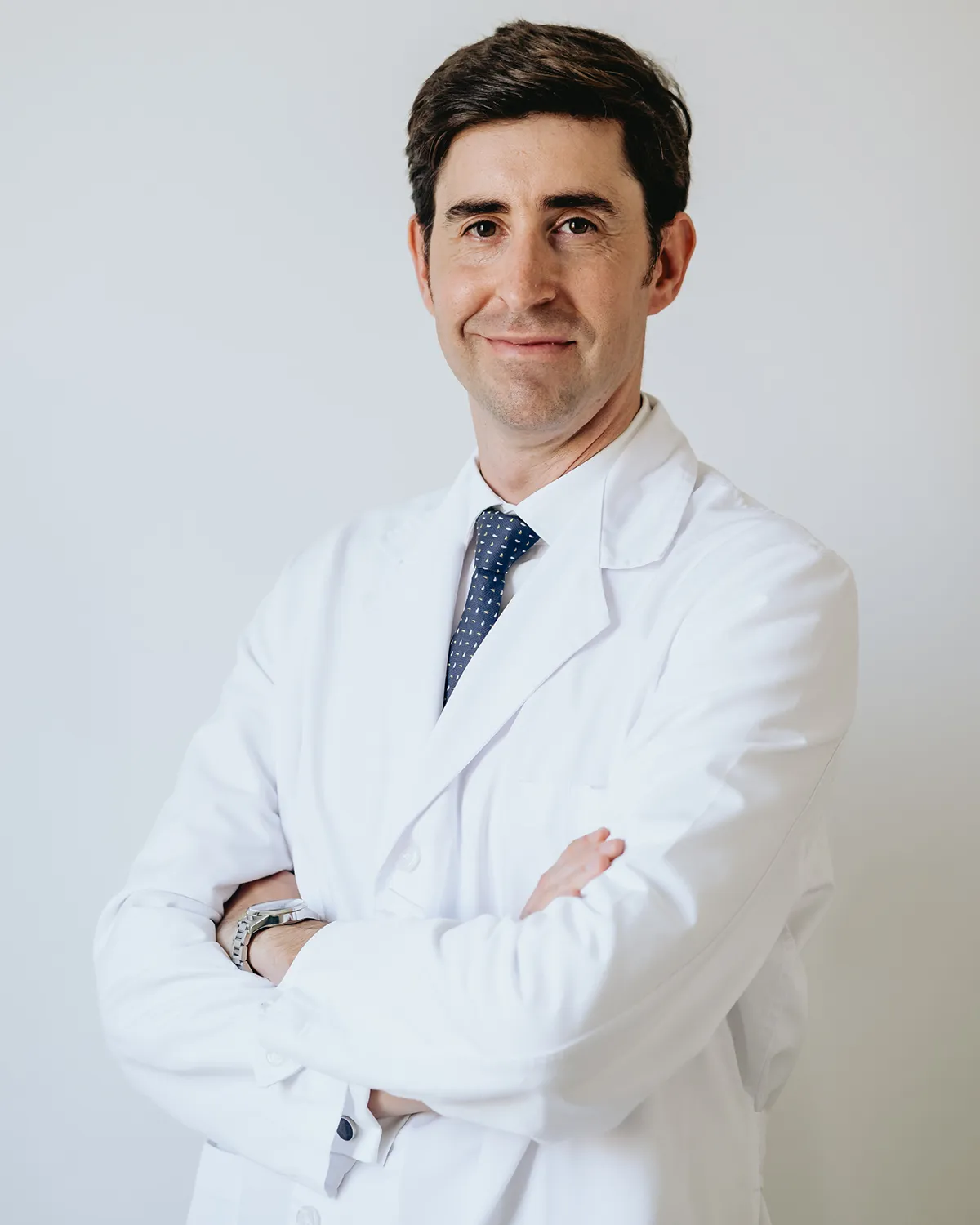
Experience and surgical judgment
Meet Dr. Aso
I perform more than 60 facial fat grafting procedures per year and have performed more than 1,000 to date. This experience includes very small grafts, more extensive restoration, and procedures combined with blepharoplasty or a facelift.
Assessing the face as a plastic surgeon means recognizing when volume is missing and when the issue is sagging, skeletal support, skin, or muscle. The best result may involve adding fat, combining it with another technique, or deciding it is not the appropriate treatment.
Clinical transparency
Our experience: complications and refinements are not the same
Our internal facial fat grafting registry records no infections, fat necrosis, vision loss, embolism, neurological complications, or repeat operations due to a complication. This describes our experience and does not allow us to promise zero risk.
Palpable nodules or irregularities
None have required surgery in our series.
Prolonged swelling
Swelling resolves more slowly.
Asymmetry from uneven reabsorption
May lead to observation or elective refinement.
Significant hematoma
No repeat operation due to a complication.
Minor donor-site imperfections
Mild irregularities in the abdomen or thighs.
Elective second session
Not a complication: it depends on reabsorption, goals, and how much refinement the patient wants.
These approximate rates come from an internal clinical registry. They are not equivalent to a comparative trial and do not predict individual risk. A systematic review of 4,577 patients reported an overall complication rate of 2.27%, while a more recent review estimated around 4% for facial fat transfer.
Indicative pricing
How much does facial fat grafting in Madrid cost?
The price depends on the number of areas, processing, anesthesia, and whether it is part of another operation. It is confirmed after assessing your face, donor site, and goals.
Nanofat or microfat grafting to small areas under local anesthesia.
More extensive treatment with an anesthesiologist and sedation.
Blepharoplasty, facelift, or another main procedure.
First assessment
Tell us the change you want, not how many cubic centimeters
During consultation, we assess which compartments have lost volume, whether fat is the best option, and how much change is possible without altering your expression.
We listen to your goalsNatural appearance, areas of concern, and the amount of change you want.
We assess the whole faceVolume, skin, support, and symmetry.
We plan without overcorrectingIncluding a different technique if it is more appropriate.
The first consultation costs 100 EUR. Please select “Another treatment or general question” and mention facial fat grafting in your message.
Frequently asked questions
Questions about facial fat grafting
What are the main disadvantages of facial fat grafting?
Graft survival varies, the result cannot be accurately judged in the first week, and a second session may be needed. Fat also needs to be collected from another area. Swelling, bruising, nodules, irregularities, asymmetry, infection, and rare serious vascular complications can occur.
How long does facial fat grafting last?
Integrated fat behaves as living tissue and may remain for years, but changes with weight and aging. The literature shows variability and does not allow us to promise a fixed percentage or the same duration for everyone.
When can I assess the final result?
At three months, we obtain a first useful assessment. We prefer to wait around six months before deciding whether a second session is appropriate. Some initial volume is swelling, and some fat is reabsorbed.
Is fat or hyaluronic acid better?
They are not interchangeable for every indication. Hyaluronic acid can be dissolved, allows precise placement, and does not require a donor site; fat can treat larger volumes and areas using your own tissue. We usually prefer hyaluronic acid for the lips. The choice depends on the area and goal.
Could I need more than one session?
Yes. In our experience, between 25 and 50% may want a second session to increase or refine the result. This is an elective, subjective decision, not a complication rate or automatic sign of failure.
At what age can I have it?
There is no single age. We usually address age-related volume loss, but younger people with specific deficits may also be suitable. Anatomy, health, and expectations matter more than an age threshold.
What happens if I lose or gain weight?
Integrated fat responds to weight changes. Significant weight gain or loss may alter facial volume and the donor site, so we recommend reasonably stable weight.
Can it be performed under local anesthesia?
Yes. Very limited nanofat or microfat grafting can be performed under local anesthesia at the clinic. More extensive treatments usually use local anesthesia and sedation at HLA Moncloa; general anesthesia is mainly reserved for combined operations.
What do patients tend to value?
Patients often value the natural appearance and overall improvement in a tired-looking face. The most important preoperative discussion is understanding that swelling will occur, integration varies, and a conservative result may require two stages.
Sources and transparency
This page combines published evidence, clinical experience, and Dr. Jorge Aso’s own protocol. Internal figures are approximate and do not guarantee an individual result.
- Facial Fat Grafting: Why, Where, How, and How Much
- Facial graft outcomes: systematic review
- Facial fat retention: pooled evidence
- Fat-transfer complications: pooled evidence
- Facial fat embolism: systematic review
- Prospective craniofacial graft assessment
- Facial graft assessment using Dixon MRI
- HLA Moncloa University Hospital
Medical authorship
Specialist in Plastic, Aesthetic and Reconstructive Surgery (Spanish MIR training)
Medical registration no. 2828/61062 · Madrid
About Facial Fat Grafting in Madrid: clinical information, safety and expectations. Based on the original Spanish content.
Translation does not constitute a new medical review. This information does not replace an individual medical assessment.
View profile, training and credentialsMedical sources and editorial standards Selected references for this page 8 references
References support the general medical information. Suitability, alternatives, and risks are discussed individually during consultation.
- Facial Fat Grafting: Why, Where, How, and How Much Aesthetic Plastic Surgery / PubMed
- A systematic review of the effectiveness and complications of fat grafting in the facial region JPRAS Open / PMC
- Volume Retention After Facial Fat Grafting and Relevant Factors: A Systematic Review and Meta-analysis Aesthetic Plastic Surgery / PubMed
- A Systematic Review of the Literature and Meta-Analysis of Autologous Fat Transfer: Fat Transfer Confers a 4.2% Incidence of Complications Cureus / PubMed
- Arterial Embolism After Facial Fat Grafting: A Systematic Literature Review Aesthetic Plastic Surgery / PubMed
- Changing the Paradigm of Craniofacial Reconstruction: A Prospective Clinical Trial of Autologous Fat Transfer for Craniofacial Deformities Annals of Surgery / PubMed
- Assessment of facial autologous fat grafts using Dixon magnetic resonance imaging Quantitative Imaging in Medicine and Surgery / PubMed
- HLA Moncloa University Hospital HLA Hospital Group

Selected interviews, mentions and third-party articles. Coverage is in Spanish.