

Breast augmentation in Madrid, Spain
Personalized surgery, natural-looking proportions, and attentive care at every stage.
Request a consultation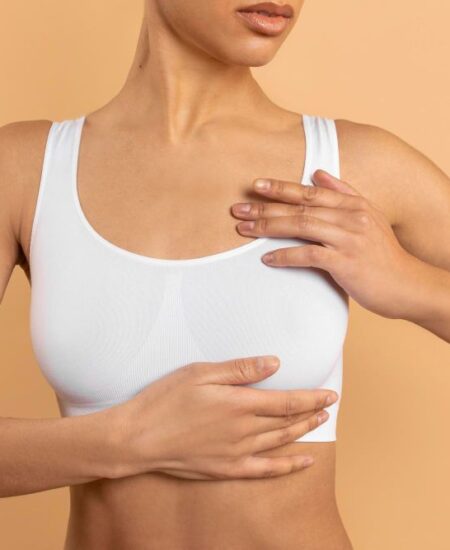
Augmentation Mammaplasty
What does breast augmentation involve?
Breast augmentation, also known as augmentation mammoplasty, is one of the main procedures performed at our clinic in Madrid, Spain. In the UK, this procedure is also commonly called breast enlargement. It increases breast volume using implants, with the plan tailored to your anatomy and goals.
Planning must always be individualized. It's not just about choosing an implant size, but about evaluating chest width, breast shape, skin quality, initial volume, implant type, and the desired outcome for the patient.
At Dr. Aso's Clinic, breast augmentation surgery is performed with a medical and personalized approach, seeking natural, proportionate, and long-lasting results.
Treatment Goals
Details of a Mammaplasty
Breast augmentation can improve volume, proportion, symmetry, and patient confidence, always based on personalized planning.
Increase your breast volume
Breast augmentation may be an option if you would like more volume or a different breast contour. Suitability depends on your anatomy, health, and realistic expectations.
Correct possible asymmetries
One of the problems that can occur in the breast is asymmetry. Therefore, surgery to augment your breasts in Madrid can help balance size and shape. You can achieve more symmetrical, aesthetically pleasing breasts adapted to your figure.
Consider your personal goals
Surgery is a personal choice. Some patients feel more comfortable with their appearance afterward, but emotional well-being and confidence cannot be guaranteed by a procedure.
Plan for natural-looking proportions
Your surgical plan is tailored to your body and preferences. Implant selection and technique aim for balanced proportions, with the limitations and risks discussed before you decide.
We answer your questions
All procedures are performed in a hospital, with full resources and expert, highly experienced anesthesiologists.
Traditional breast augmentation procedures include one night of hospital stay in the price, for your safety and faster recovery.
Minimally invasive mia / Preservé techniques allow for discharge on the same day.
Ask us any questions you may have
Initial Assessment
What will your first breast augmentation consultation be like at Dr. Aso's Clinic?
During your first consultation with Dr. Aso, you will learn firsthand the details of the procedure. Subsequently, the Doctor will perform a series of measurements of your chest and breasts to determine the possibilities for your specific case and recommend a range of implant volume and shape.
Breast augmentation in Madrid
We help you explore whether breast augmentation is right for you and which technique, implant, and volume may suit your anatomy and goals. A result planned around you.
Personalized Surgical Technique
A carefully planned approach to breast augmentation
Dr. Aso's approach emphasizes careful tissue handling, appropriate implant insertion devices, and an individualized plan for recovery. Drains and compression bandages are avoided when they are not clinically needed. Recovery and discomfort vary; no technique eliminates surgical risk.
Key features of the approach:
- “MINIMAL-SCAR” INCISION: The incision is kept as small as the procedure safely allows. Its position and length depend on the implant, technique, and your anatomy.
- TISSUE CARE: We create a pocket using minimally invasive techniques, with maximum respect for the tissues.
- DRAINS AND BANDAGES ONLY WHEN NEEDED: Drains and compression bandages are not routinely used when the case allows. They may still be needed for a specific medical reason.
- “NO-TOUCH” TECHNIQUE: We use “Keller Funnel” type sleeves to gently introduce implants without touching them with our hands.
Minimally Invasive Techniques
Minimally Invasive Breast Augmentation with MIA Femtech and Preservé
We perform minimally invasive breast augmentation techniques. The MIA Femtech technique is an innovative minimally invasive procedure for breast augmentation.
For its execution, we use patented technology that allows for the placement of silicone implants through an armpit incision, avoiding an incision on the breast itself. MIA remains a surgical procedure. It is performed with local anesthesia and sedation in suitable patients, and recovery is individualized.
We also have another innovative breast augmentation technique, Preservé, a tissue-preserving technique performed through a small incision in the fold beneath the breast. Suitability, incision length, anesthesia, and recovery are determined individually.
Technique and recovery
Avoiding unnecessary drains and compression bandages
We aim for careful surgery and a comfortable recovery, tailoring every measure to your clinical needs.
Supporting a more comfortable recovery
Drains are not routinely required in many of our breast augmentation procedures. They can cause discomfort and additional small scars, but may be appropriate when clinically necessary.
A postoperative bra and small dressings are usually used instead of compression bandages. Your individual plan may include a special bra and small dressings.
No drains when they are not needed
The decision is made individually during surgery. Where appropriate, avoiding drains can reduce discomfort and additional skin marks.
Avoiding unnecessary compression bandages
Most patients leave surgery wearing a postoperative bra and small dressings. Follow the specific instructions given by your surgical team.
No-touch technique
Careful implant handling, fresh surgical gloves, and insertion devices are used to minimize direct contact. These precautions do not eliminate the risk of infection or capsular contracture.
Every case is assessed individually: drains or other measures may still be needed for safety. The aim is to combine careful surgery, appropriate precautions, and a comfortable recovery.
Surgical Process
What is breast augmentation surgery like at Dr. Aso's Clinic?
At Dr. Aso's clinic, planning includes examination and, where appropriate, 3D simulation to compare implant options. The simulation is an aid to decision-making, not a guarantee of your final result.
Next, we explain what a breast augmentation surgery is like, step by step:
Pre-operative
Before surgery, the team assesses your health, anatomy, and expectations to determine whether the procedure is appropriate. This includes:
- We will analyze your medical history and health status.
- We will request preliminary medical tests — blood work, electrocardiogram, etc. —. Pre-operative tests are included in the price.
- We will study your body proportions to recommend the breast implant that best suits your figure, aiming for a natural-looking breast augmentation.
- Any questions you may have will be answered by our team, from the technique used to the types of implants.
- You will receive very clear instructions on how to prepare for the day of surgery.
Our goal at Dr. Aso's Clinic is for you to arrive at our operating room feeling calm, confident, and with all information clear.
Post-operative
After breast augmentation surgery, a fundamental and clear phase begins: recovery. At Dr. Aso's Clinic, we take care of every detail to make this process as comfortable as possible for you. During the post-operative period:
- You will remain in the hospital for monitoring after surgery. Conventional augmentation commonly includes an overnight stay. MIA and Preservé may be day-case procedures in suitable patients; discharge depends on your clinical condition.
- You must wear a special post-surgical bra for the duration recommended by your surgeon, according to your procedure and healing.
- You will receive a personalized medication and care plan.
- Follow-up includes medical check-ups —included as detailed in your quote—to assess healing and identify any concerns.
- We will give you clear guidelines on when you can resume your daily routine, exercise, and other activities.
- You will be accompanied throughout the entire process to clarify any questions that may arise after the procedure.
Meet Dr. Jorge Aso
Dr. Jorge Aso completed specialist training in Plastic, Aesthetic and Reconstructive Surgery through Spain's MIR residency system at Hospital Universitario 12 de Octubre in Madrid. He holds a doctorate in medicine, cum laudefrom Universidad Complutense de Madrid. His surgical practice focuses particularly on aesthetic breast surgery.
According to the clinic's internal records, he performs more than 500 aesthetic breast procedures annually and has performed more than 4,000 breast augmentations.
For breast augmentation, Dr. Aso assesses your chest and breast anatomy, tissue quality, asymmetry, and desired outcome. Implant type, volume, placement, and incision are then planned individually.
His approach combines surgical planning, natural-looking proportions, and support through consultation, preparation, surgery, recovery, and follow-up. He also teaches and lectures internationally in aesthetic breast surgery.
* Experience and surgical volume figures are from the clinic's internal records, updated in June 2026.
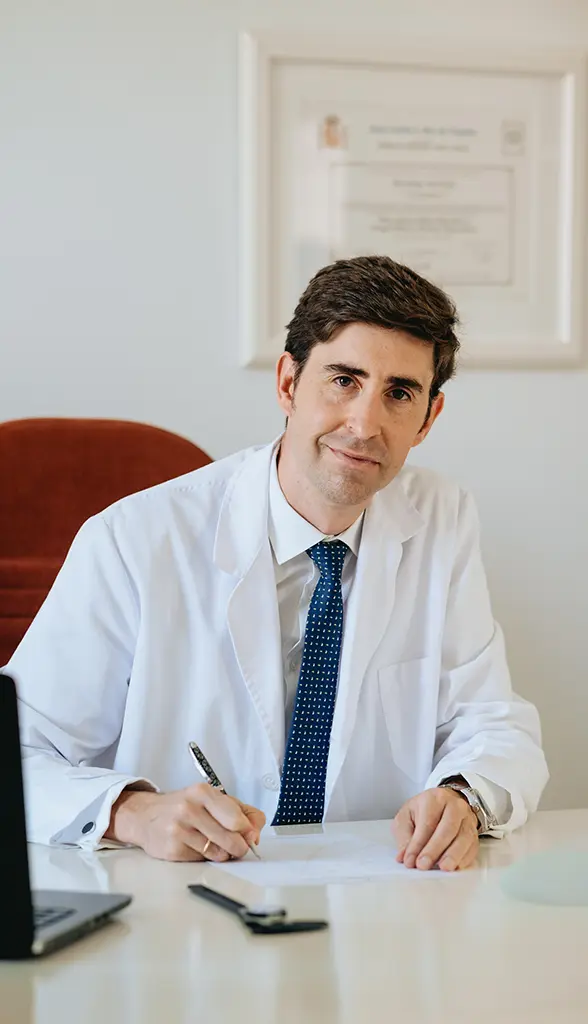
- Specialist training through the MIR residency system at Hospital Universitario 12 de Octubre in Madrid.
- Doctorate in medicine cum laude from Universidad Complutense de Madrid.
- More than 500 aesthetic breast procedures annually.
- International lecturer and teacher in aesthetic breast surgery.
Which breast implant is right for me?
The choice between round, anatomical, and ergonomic implants depends on your anatomy, existing volume, tissue quality, and desired outcome. Each option is assessed during your consultation.
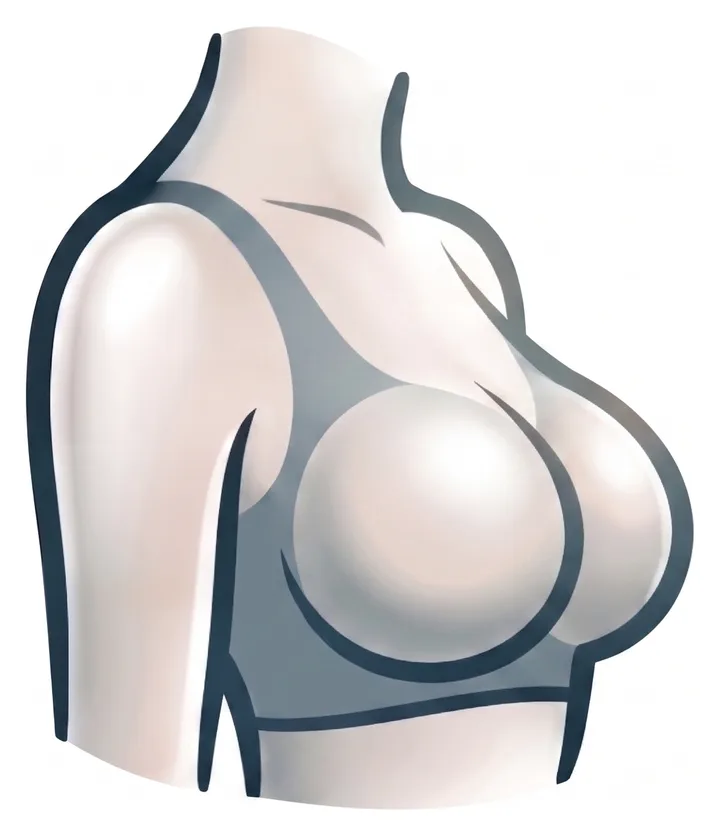
Round implants
Round implants can provide more upper-breast fullness. They may be an option when a fuller upper contour is desired or when the surgical plan calls for additional volume in this area.
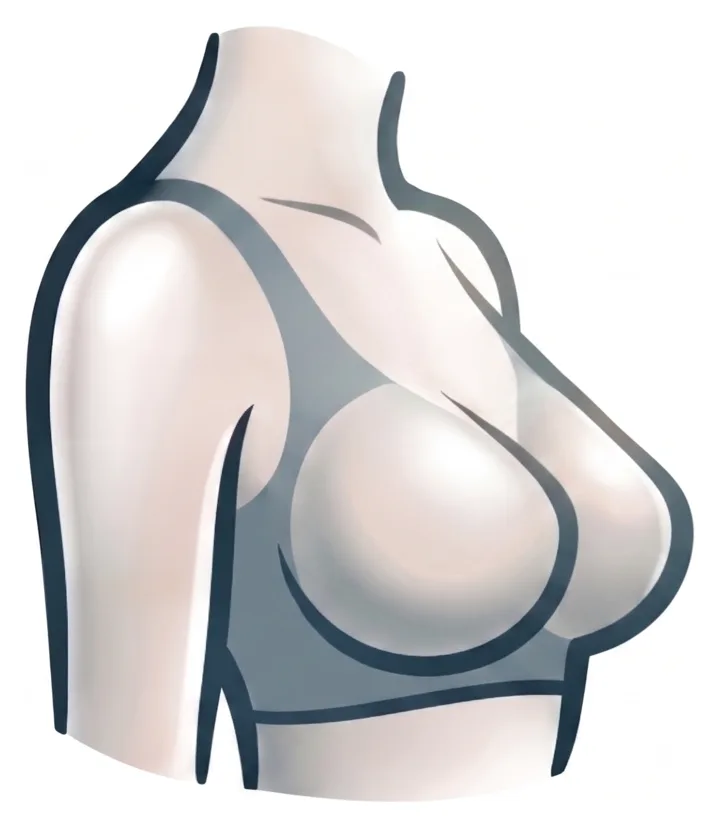
Anatomical implants
These implants have a defined shape, with less volume above and greater projection below. They may be considered when your anatomy or desired contour calls for this shape.
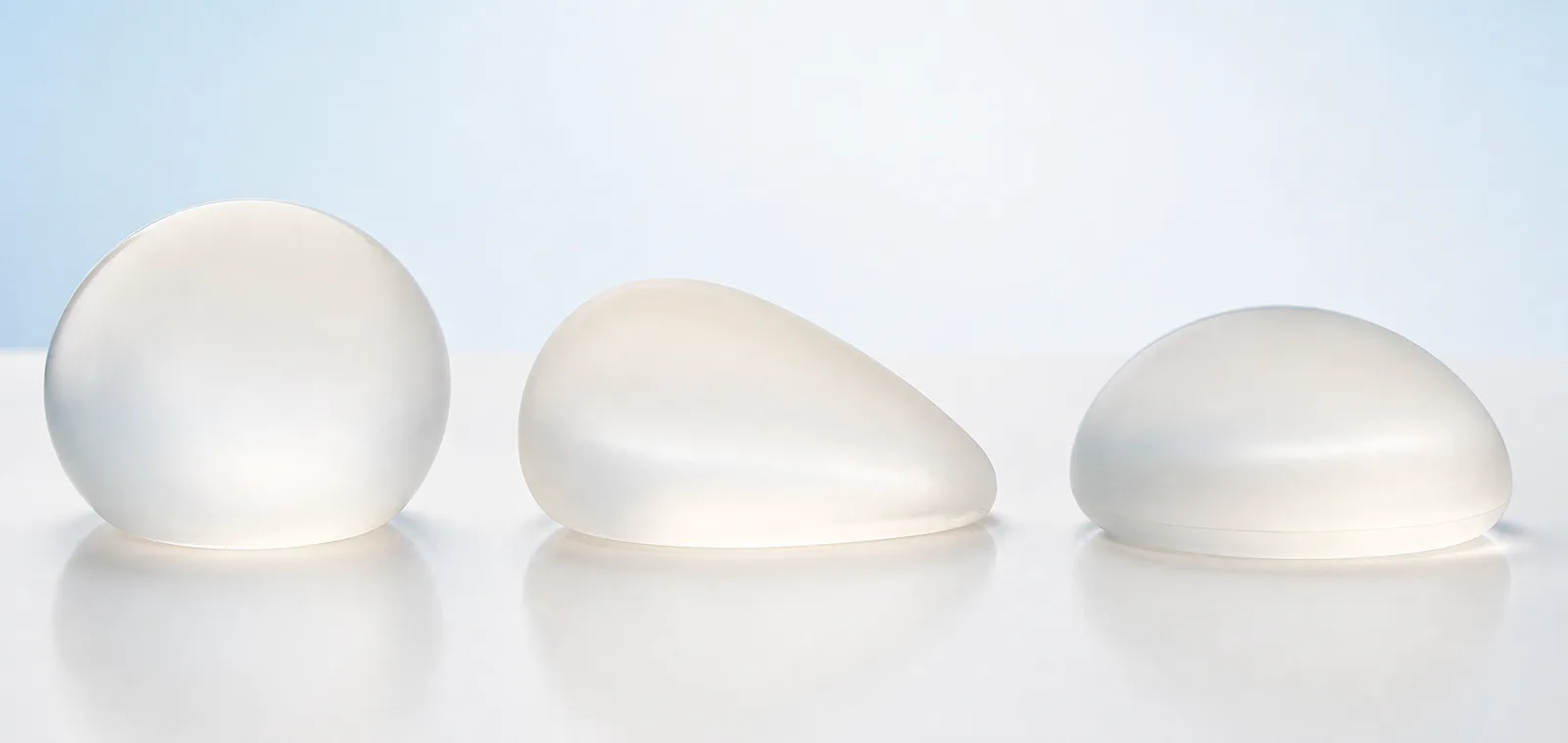
Ergonomic implants
These combine a round base with a gel designed to respond to movement and body position. They may help create a soft contour. Their round shape means axial rotation does not change the outline in the same way as rotation of an anatomical implant. However, malposition or front-to-back flipping can still occur.
Chest width, existing volume, breast shape, and tissue quality influence the choice.
Preferences for upper-breast fullness, projection, and overall contour vary from patient to patient.
Technique, implant placement, base width, and pocket stability all inform the recommendation.
No single implant is best for everyone. Shape must be considered alongside size, base width, projection, placement, and your individual anatomy.
3D simulation during consultation
Explore different options before choosing an implant size
During assessment, we can compare implant volumes and shapes using a 3D reconstruction of your anatomy. This example shows an illustrative simulation with 250 cc ergonomic implants.
- Compare volume and body proportions
- Assess projection from front and oblique views
- Explore natural-looking proportions
- Combine simulation, measurements, and clinical judgment
A decision aid, not a promise of results A 3D simulation cannot guarantee an exact outcome. It supports the examination, measurements, external sizers, and individual clinical assessment.
Choosing your breast implant
Implant type, shape, volume, and position should be a shared decision between surgeon and patient. No two patients are alike: your anatomy and your desired outcome both matter.
Dr. Aso makes an individualized recommendation based on your preferences and measurements, balancing your goals with tissue limitations and surgical safety, and avoiding excessive volumes that may compromise the result or your health.
Incision and implant placement
Breast augmentation involves more than choosing implant volume or shape. The incision and anatomical placement must also be planned around tissue thickness, existing breast volume, implant type, and your goals.
During consultation, Dr. Aso evaluates chest width, breast position, skin quality, tissue coverage, and your preferences to recommend an appropriate approach.
Incision options: where will the scar be?
The incision is the route used to insert the implant. Its location depends on the technique, anatomy, and surgical plan.
The incision is placed in the fold beneath the breast. It provides surgical access, and the scar can become less noticeable within the natural crease as it matures.
The incision follows the lower edge of the areola. It may be considered in selected cases, although it passes through breast tissue and is not suitable for everyone.
The incision is placed in the armpit. It is used in techniques such as MIA Femtech®, avoiding an incision on the breast itself.
Placement options: where does the implant sit?
The implant's anatomical position must also be chosen. No single placement suits everyone; the choice depends on tissue coverage, chest shape, and your desired outcome.
The implant is partly covered by the pectoral muscle. This may help conceal implant edges in patients with limited breast tissue.
The implant is positioned above the muscle. It may be an option when tissue coverage is adequate and can avoid implant movement caused by pectoral muscle contraction.
Selected cases may be suitable for a subfascial plane or tissue-preserving techniques such as Preservé®, with the aim of limiting surgical tissue disruption.
Shape, volume, incision, and placement are not separate decisions. They must be considered together with your anatomy, tissue quality, and realistic expectations.
Conventional augmentation, MIA Femtech® and Preservé®
Each option may suit different patients. Key differences include the incision, available volumes, implant position, and extent of tissue dissection.
| Feature | Conventional augmentation | MIA Femtech® | Preservé® |
|---|---|---|---|
| Technique | Conventional breast augmentation offers a wider range of volumes, incisions, and placement options. | Minimally invasive Designed for selected patients seeking a modest increase in volume. | Minimally invasive Designed to preserve tissues in suitable patients. |
| Anesthesia and hospital stay | Usually general anesthesia; an overnight stay is commonly included. | Often sedation with local anesthesia and same-day discharge, subject to assessment. | Often sedation with local anesthesia and same-day discharge, subject to assessment. |
| Recovery | Gradual recovery, with restrictions on strenuous activity during the first weeks. | Recovery may be quicker in suitable patients, but discomfort and restrictions vary. | Recovery may be quicker in suitable patients, but discomfort and restrictions vary. |
| Implant options | A wider range of implant shapes, profiles, and volumes. | Implants designed for the MIA technique; the exact device is discussed at consultation. | Implants selected for the Preservé technique and your individual anatomy. |
| Incision | Breast fold, areolar edge, or armpit, depending on the surgical plan. | Armpit incision. | Incision in the fold beneath the breast. |
| Indicative upper volume | May exceed 600 cc in selected cases; anatomy and safety determine suitability. | Up to approximately 195 cc in the clinic's current selection. | Up to approximately 320 cc in the clinic's current selection. |
| Implant position | Below or above the pectoral muscle, depending on the case. | Above the pectoral muscle. | Above the pectoral muscle. |
| Patient profile | May suit patients who need a wider volume range or more surgical options. | Selected patients seeking a subtle increase with favorable anatomy. | Selected patients seeking a moderate increase with favorable anatomy. |
The choice between conventional augmentation, MIA Femtech®, and Preservé® is individualized. Desired volume, anatomy, tissue quality, and expectations determine which technique may be suitable.
Breast augmentation costs in Madrid: what is included?
Costs depend on the technique, implant, hospital, anesthesia, anatomical complexity, and follow-up. A personalized written quote is provided after medical assessment.
Conventional breast augmentation
From€6,400
A versatile option when a wider range of volumes, incisions, or implant positions is needed to suit your anatomy.
- More volume and profile options.
- Breast-fold, areolar, or armpit incision, depending on the case.
- Subpectoral, dual-plane, or prepectoral placement.
Preservé®
From€7,900
A tissue-preserving approach for selected patients seeking a moderate increase in breast volume.
- For selected moderate augmentations.
- Implant usually positioned above the muscle.
- Designed to limit tissue disruption.
MIA Femtech®
From€8,995
A minimally invasive option for selected patients seeking a subtle increase, using an armpit incision rather than an incision on the breast.
- Access through the armpit.
- Subtle augmentation, up to approximately 195 cc in the current selection.
- Suitable only after assessment of your anatomy.
Examination, measurements, discussion of expectations, and an individual recommendation.
Selection of implant type, volume, base width, and projection.
Your quote details the surgical resources and hospital stay appropriate to the technique.
Postoperative appointments to monitor healing and address questions.
Consultation arrangements: in-person and video consultations have different purposes. Ask our English-speaking team about current fees and the appropriate first step before booking.
Prices are indicative and may vary with your anatomy, technique, implant, and surgical needs. Your final quote follows medical assessment. Travel, accommodation, and the optional premium support program are separate unless explicitly included in your written quote.
Personalized Breast Assessment
Let's talk about your breast augmentation.
Tell us your case, and we will guide you on the technique, implant type, and volume range that might be suitable for your anatomy and goals.
We listen to your goals What you would like to improve and what your concerns are.
We assess your anatomy Proportions, tissues, chest, and starting point.
We plan with you Technique, implant, and volume are individualized.
Contact our English-speaking team to discuss the appropriate first consultation. Please wait for our instructions before sending medical records or clinical photographs.
Traveling to Madrid for breast augmentation?
Dr. Jorge Aso speaks English at a native level and has undertaken training in the United States. Our team can assist you in English by email and WhatsApp.
An initial video consultation can help you explore your options before traveling. An in-person examination is still needed before confirming the surgical plan. We will discuss the appropriate time in Madrid, follow-up appointments, and your return journey individually. Do not book nonrefundable travel around a general recovery timeline.
Optional premium support with Panathea
A personalized premium program is available from €2,000 in addition to your surgery. A typical program includes a personal nurse during the first postoperative week, daily visits and 24/7 contact, a relaxing massage at your accommodation before surgery, and a premium breakfast for two after discharge. 24/7 contact does not mean a nurse remains onsite continuously.
Accommodation, a chauffeur, transfers, logistics, and other services can be arranged as tailored extras. They are not automatically included in the starting price. Your written quote will specify the services and charges. This optional support does not replace medical follow-up or emergency care.
Long-term Follow-up
How long do breast augmentation implants last?
Breast implants are not lifetime devices. Replacement is not automatically required at ten years, but future surgery may be needed for a complication, a change in the breast, or your preferences. Follow-up is important even when you have no symptoms.
- Your surgeon will recommend check-ups and any imaging needed for the particular implant and your clinical situation.
- If you want to know more about breast implant longevity and the need for future replacement, you can consult our blog post (in Spanish) that delves into this topic.
Aftercare following breast augmentation
Follow your individual care plan: wear the recommended bra, attend follow-up appointments, and avoid strenuous activity during early healing.
The first days
The team checks your progress after surgery. A postoperative bra, and in some cases an upper support band, may be recommended.
The first weeks
Small sutures may be removed around 8–14 days if required. Keep activity gentle and increase it only as advised.
Exercise and massage
Heavy lifting and strenuous exercise are usually restricted for several weeks. Do not massage your breasts unless your surgeon specifically advises it.
Instructions vary with the technique and your recovery. Your surgical team will provide individual guidance on activity, travel, and follow-up.
Frequently Asked Questions about Breast Augmentation
We answer the most frequent questions about breast augmentation surgery, breast implants, minimally invasive techniques, and recovery.
What will my first breast augmentation consultation be like?
Your assessment includes your medical history, breast and chest measurements, tissue quality, and expectations. External sizers and 3D simulation may help you compare options. For patients abroad, an initial video consultation can start the discussion, but examination and final surgical planning require an in-person appointment.
How is implant size chosen?
Size is chosen using your measurements, tissue coverage, breast width, and desired proportions—not cup size or implant volume alone. Sizers and simulation are decision aids, not guarantees of the result.
What is the difference between traditional augmentation, MIA Femtech, and Preservé?
Conventional augmentation offers more implant volumes and placement options. MIA uses an armpit incision; Preservé uses a small incision in the fold beneath the breast. The minimally invasive options are suitable only for selected anatomy. Anesthesia and discharge arrangements are individualized.
Am I a candidate for MIA or Preservé?
Suitability depends on your anatomy, tissue coverage, existing volume, and the amount of sagging. Significant sagging, limited coverage, or a different volume goal may call for another technique. An in-person assessment is necessary before confirming eligibility.
Does breast augmentation correct sagging breasts?
An implant adds volume but does not reliably correct significant sagging. If the nipple is low or there is excess skin, a breast lift (mastopexy), with or without an implant, may be more appropriate.
Where will the scar be?
Possible locations include the breast fold, areolar edge, and armpit. MIA leaves an armpit scar rather than a scar on the breast. Incision length and final scar appearance vary, and scars take time to mature.
Is it better to place implants above or below the muscle?
There is no best position for everyone. Tissue coverage, chest shape, implant type, and your goals determine whether placement above the muscle, below it, or in a dual plane is suitable. The advantages and limitations are discussed individually.
Are breast implants safe? Do they increase cancer risk?
Implants carry risks and require long-term follow-up. BIA-ALCL, a cancer of the immune system, is associated particularly with textured implants. Other rare cancers have also been reported in the surrounding capsule. Ask about the specific device, surface, and patient information before deciding. Persistent swelling, a new mass, or pain should be assessed. Read the FDA overview of implant risks.
What complications can arise and how are they reduced?
Risks include bleeding, infection, scarring, sensation changes, rupture, implant malposition, and capsular contracture (hardening of the tissue around an implant). Further surgery may be needed. Careful planning and technique reduce some risks but cannot eliminate them.
Does breast augmentation hurt a lot?
Discomfort, pressure, and swelling are common early in recovery. The degree and duration vary with the procedure and the individual. Follow your prescribed pain-control plan and contact the team about worsening or unexpected symptoms.
What is the recovery like? When can I return to work, drive, and exercise?
Return to work, driving, and exercise depends on healing and the physical demands of the activity. Do not plan a fixed return date or flight from a general website timeline. Your surgeon will advise you after assessment and follow-up; do not drive while impaired by pain or medication.
Can I breastfeed or get pregnant after breast augmentation?
Breastfeeding may be possible after augmentation, but cannot be guaranteed and milk production can be affected. Discuss future pregnancy and feeding plans before surgery. Pregnancy and breastfeeding can change breast shape, so the timing of elective surgery should be individualized.
How long do implants last and what check-ups or tests should I have?
Implants are not lifetime devices. They are not automatically replaced at ten years, but complications or changes in your goals may lead to future surgery. Follow the recommended examination and imaging schedule and tell your mammography provider that you have implants.
What is the difference between round, anatomical, and ergonomic implants?
Round implants may provide more upper-breast fullness; anatomical implants have a defined teardrop shape; ergonomic designs use gel intended to adapt to body position. The recommendation considers your anatomy, tissue coverage, desired contour, and the risks of the specific device.
Want to know which breast augmentation technique best suits your case?
Request an assessmentBEFORE AND AFTER
Breast augmentation before and after photos
Results from real patients treated by Dr Jorge Aso, showing different starting points, implant sizes and outcomes.


These photographs show real cases and are examples only. Each patient needs an individual medical assessment.

Selected interviews, mentions and third-party articles. Coverage is in Spanish.
Medical authorship
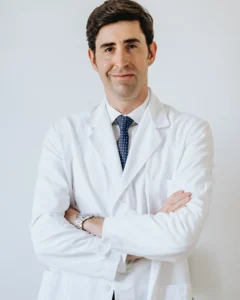
Specialist in Plastic, Aesthetic and Reconstructive Surgery (Spanish MIR training)
Medical registration no. 2828/61062 · Madrid
About Breast Augmentation in Madrid | Dr. Jorge Aso: clinical information, safety and expectations. Based on the original Spanish content.
Translation does not constitute a new medical review. This information does not replace an individual medical assessment.
View profile, training and credentialsMedical sources and editorial standards Selected references for this page 5 references
References support the general medical information. Suitability, alternatives, and risks are discussed individually during consultation.
- Patient information on breast implants Spanish Agency of Medicines and Medical Devices (AEMPS)
- Core Study: NATRELLE Highly Cohesive Silicone-Filled Breast Implants U.S. Food and Drug Administration (FDA)
- MemoryGel Breast Implants: Final Safety and Efficacy Results after 10 Years of Follow-Up Plastic and Reconstructive Surgery / PubMed
- Medical Specialist Care Utilization Prior to the Explantation of Cosmetic Silicone Breast Implants: A Nationwide Retrospective Data Linkage Study Aesthetic Plastic Surgery / Springer Nature
- Single Center and Surgeon’s Long-Term (15–19 Years) Patient Satisfaction and Revision Rate of Round Textured Eurosilicone Breast Implants Aesthetic Surgery Journal / Oxford University Press