

Cosmetic and functional nasal surgery · Madrid
Rhinoplasty in Madrid, Spain
Ultrasonic, structural, and personalized. We do not design a nose in isolation. We assess your face, breathing, and goals to plan a natural-looking, proportionate, and stable result.
100 % ultrasonic
>90 % with septoplasty
A clear overview
What type of rhinoplasty do we perform today?
We use ultrasonic rhinoplasty in all cases, usually with an open approach and a structural philosophy. This means using piezosurgery to work precisely on bone and rebuilding or reinforcing nasal structures when the anatomy requires it.
Ultrasonic technology, an open approach, and structural rhinoplasty are not interchangeable terms. They describe different decisions: the instrument used on bone, how we access the nose, and how we reshape or support it. The combination is personalized for each patient.
The consultation that shapes your plan
We plan the nose within your face, not from a template
Two people with similar noses may need different changes. Planning combines anatomical analysis, breathing assessment, photography, and an honest discussion about what each person hopes to improve.
Photographic simulation, discussed together
We prepare a simulation in every case. It does not promise an identical result, but helps us discuss the bridge, tip, length, projection, and limitations precisely before you decide.
Profile and chin
A recessed chin can make the nose appear larger. Sometimes changing the nose alone is not the best way to balance the profile.
Nasal breathing
We examine the septum, turbinates, and nasal valves. Septoplasty is part of more than 90 % of our rhinoplasties because appearance and function are often related.
Skin and structure
Skin thickness, cartilage strength, and asymmetry influence how much the tip can be defined and how long it takes to settle.
“A simulation is not about choosing a nose from a catalog. It helps surgeon and patient share a clear understanding before surgery.”
Three different decisions
Ultrasonic, open, and structural: what each term means
Explaining them separately avoids a common source of confusion when comparing clinics and techniques.
Instrument
Ultrasonic rhinoplasty
The piezoelectric instrument selectively cuts and reshapes bone. Available evidence shows benefits mainly during early recovery: less swelling, bruising, and pain than with conventional osteotomies.
In our practice: always ultrasonic
Approach
Usually open
A small incision in the columella provides clear access to the nasal framework. We generally prefer it for the control it offers over the tip, septum, grafts, and symmetry.
The scar usually becomes very discreet
Philosophy
Mainly structural
As well as removing or reducing tissue, we reinforce and rebuild where needed. Preservation may be useful for selected anatomies, but it does not replace assessment or offer a superior solution for everyone.
Support tailored to your anatomy
The technology we use
What does ultrasonic rhinoplasty actually offer?
The piezoelectric instrument works on bone through ultrasonic vibration. It allows controlled cutting and smoothing and reduces trauma to the soft tissues around the nasal skeleton.
Its best-established benefit is in the first days: comparative research finds less swelling, bruising, and early pain. It does not guarantee a perfect nose or replace careful planning, precise cartilage surgery, or long-term follow-up.
Precise bone work
Selective cutting and reshaping of the nasal bones.
Benefits during early recovery
Less swelling, bruising, and pain in comparative studies.
It does not replace the surgeon
The tip, septum, valves, and grafts require other surgical steps.
It does not eliminate every risk
Swelling, asymmetry, and the possibility of refinement remain.
Appearance and breathing
Septoplasty is part of more than 90 % of our cases
A nose can be deviated both externally and internally. Correcting appearance without assessing the airway may miss an opportunity to improve function, or even compromise it.
Septoplasty
We straighten or rebuild deviated areas that affect nasal alignment and airflow.
Turbinates and valves
These are treated when examination shows that they contribute to obstruction; treatment is not automatic.
A comprehensive approach
We usually perform both the cosmetic and functional surgery. We collaborate with an ear, nose, and throat specialist in specific cases that require it.
A complete guide to rhinoseptoplasty, function, and recovery
Safety before speed
General anesthesia and one night at Hospital Universitario HLA Moncloa
We perform all rhinoplasties in a university hospital with operating rooms for major surgery, a postoperative recovery unit, and an ICU accredited for MIR residency training in Intensive Care. General anesthesia protects the airway and allows precise work during a procedure lasting around 2.5 hours on average.
Recovery in stages
When are splints removed, and when can I return to daily life?
The timeline varies with complexity, skin characteristics, and individual healing. These are our usual guidelines.
Breathing and starting to walk
Internal splints allow breathing and are usually removed after 24 hours. In selected cases, they remain for approximately one week.
External splint removal
The main first-week review takes place. Swelling is still present, although the initial shape can already be seen.
Office work and social activities
Many people return within this interval. Bruising varies and is usually less pronounced with the ultrasonic technique.
Gentle exercise
Brisk walking, a stationary bike, or gentle aerobic exercise may be possible if healing is progressing well. Glasses can be worn again when the team allows it, often around the third week.
Gradual return to strenuous exercise
Gym workouts, running, and lifting are resumed gradually. Any impact to the nose must be avoided.
Protection and final definition
Contact sports must wait at least three months. The tip may continue to refine for 12–18 months in patients with thick skin or after complex surgery.
Our experience, explained transparently
More than 500 rhinoplasties and a 5 % refinement rate
Rhinoplasty is a highly precise operation, and no surgery is risk-free. In our experience, we have not recorded major complications such as significant infection, bleeding requiring surgery or transfusion, septal perforation, skin necrosis, or visual complications.
We have observed occasional functional issues, such as an adhesion that worsened previous breathing or a septum that remained deviated without sufficient improvement. Discussing these possibilities is part of realistic informed consent.
Three real patient profiles
Rhinoplasty before and after
The side view clearly shows the bridge, tip, and balance between the nose, lips, and chin. We selected two rhinoplasties and one combined rhinoplasty and chin surgery case to show why the profile should be assessed as a whole.


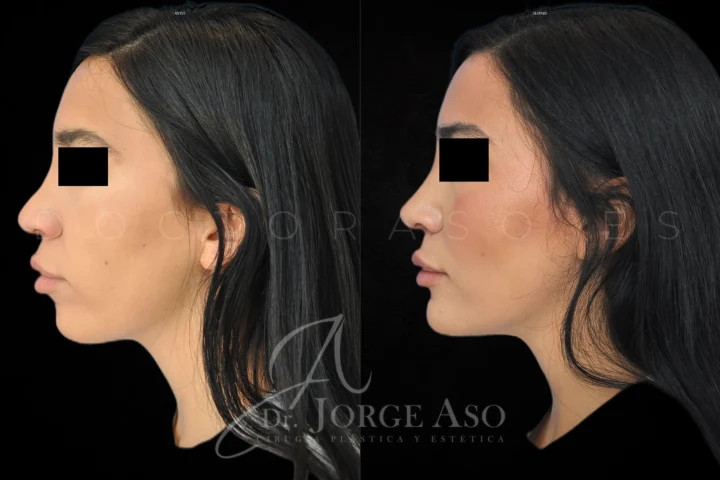
Real cases from our clinic. These photographs are examples only; anatomy, healing, and results differ from person to person.
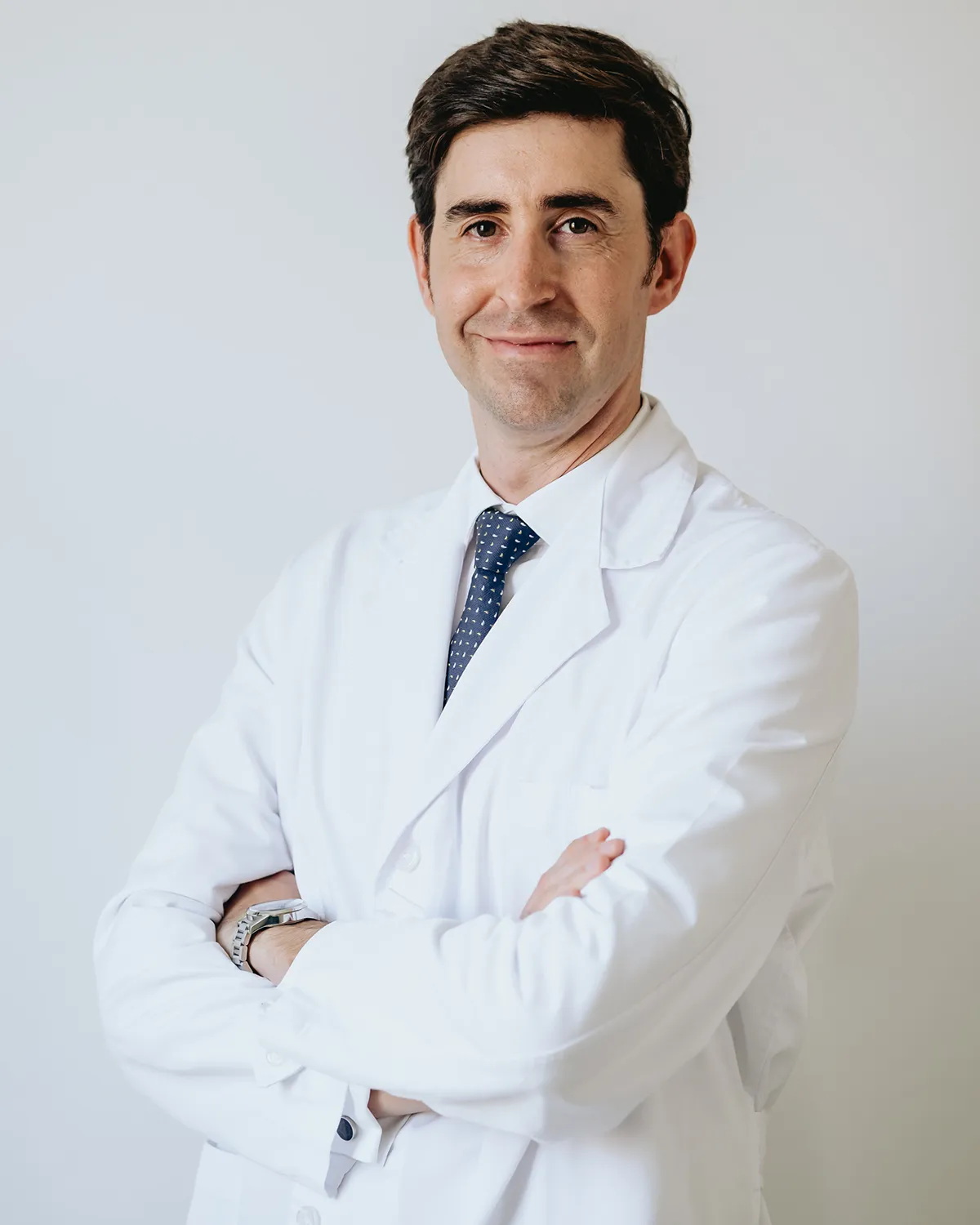
Cosmetic and reconstructive experience
Meet Dr. Aso
I have performed more than 500 rhinoplasties, including cosmetic and functional surgery and nasal reconstruction. Today I use ultrasonic technology in every case and, in most, a structural and open approach.
My plastic surgery training allows me to assess the nose within the whole facial framework. The aim is not to impose a shape, but to listen to the patient, assess breathing, and plan a nose that fits their features and still feels like their own.
Indicative pricing
How much does ultrasonic rhinoplasty cost?
The quote depends on anatomy, cosmetic and functional complexity, any grafts needed, and whether the procedure is primary or revision surgery.
A consultation that shapes the plan
Making the nose smaller is not always the answer
Sometimes the priority is straightening, supporting, increasing projection, or improving the airway. The consultation helps distinguish changes that balance the face from proposals that would be excessive or insufficiently stable.
Cosmetic and functional examinationExternal nose, septum, valves, turbinates, and breathing.
Photographic simulationA tool for discussing goals and limitations together.
A complete surgical planTechnique, recovery, hospital care, and pricing.
Your first assessment
Tell us what you would like to change and how you breathe
We assess the nose from all angles, its relationship with the chin, skin quality, and nasal function. We then prepare the simulation and explain what can be achieved with a natural-looking approach. The first consultation is 100 EUR.
Planning your visit from abroad. If you are considering rhinoplasty in Spain, an initial English video consultation can help you discuss appearance and breathing concerns before visiting Madrid. An in-person examination is needed for final planning. Agree the stay required for your postoperative reviews and splint care, and discuss your return journey individually with the team. Read our international patient guide.
We listen to your goalsBridge, tip, size, deviation, or breathing.
We assess the whole faceProfile, chin, proportions, and symmetry.
We plan with youSimulation, limitations, recovery, and price.
Choose “Another treatment” in the form and mention rhinoplasty in your message.
Frequently asked questions
Questions about rhinoplasty and ultrasonic rhinoplasty
Is ultrasonic rhinoplasty a different operation?
Not exactly. “Ultrasonic” describes the technology used to cut or reshape bone. Rhinoplasty can also be open or closed, and structural, preservation, or hybrid. In our practice, every case is ultrasonic, usually open, and mainly structural.
Does the ultrasonic technique cause less bruising?
Comparative studies show less swelling and bruising during the first week, as well as less early pain. Swelling and bruising can still occur, and their severity depends on the surgery and the individual patient.
Does open rhinoplasty leave a scar?
Yes. The incision is in the columella, between the nostrils. It usually matures into a discreet line, but every scar may heal differently and must be discussed before surgery.
Will my breathing always improve?
Improvement cannot be guaranteed. We assess and treat the septum, valves, and turbinates when indicated; septoplasty is included in more than 90 % of our cases. Persistent deviation, an adhesion, or other causes may still limit improvement.
When are the splints removed?
Internal splints allow breathing and are usually removed after 24 hours. In selected cases, they remain for approximately one week. The external splint is usually removed around the seventh day.
When will I see the final result?
Improvement becomes visible when the splint is removed, but the nose continues to change for months. The tip and thick skin may need between 12 and 18 months to reach a stable definition.
How common is a refinement procedure?
In our series, approximately 5 % of patients have required a cosmetic or functional refinement. Rhinoplasty is a highly precise operation, and a second procedure does not necessarily indicate a serious complication.
Why can assessing the chin be important?
The nose and chin together determine the balance of the profile. When the chin is recessed, reducing the nose too much to compensate may produce an artificial appearance. Chin surgery is considered in some cases; in others, it offers no advantage.
How much does ultrasonic rhinoplasty cost?
Prices start at 7,500 EUR. The final amount depends on cosmetic and functional complexity, any grafts needed, and whether it is primary or revision surgery.
Sources and transparency
This page combines published evidence, clinical experience, and Dr. Jorge Aso’s own protocol. Internal figures are approximate and do not guarantee an individual result.
- Meta-analysis of trials comparing piezoelectric and conventional rhinoplasty
- Clinical practice guideline on nasal form and function after rhinoplasty
- Assessment of patient-reported outcomes: dorsal preservation and hump reduction
- American Society of Plastic Surgeons: rhinoplasty recovery
- Hospital Universitario HLA Moncloa
Medical authorship

Specialist in Plastic, Aesthetic and Reconstructive Surgery (Spanish MIR training)
Medical registration no. 2828/61062 · Madrid
About Rhinoplasty in Madrid: clinical information, safety and expectations. Based on the original Spanish content.
Translation does not constitute a new medical review. This information does not replace an individual medical assessment.
View profile, training and credentialsMedical sources and editorial standards Selected references for this page 5 references
References support the general medical information. Suitability, alternatives, and risks are discussed individually during consultation.
- Piezoelectric versus conventional osteotomy in rhinoplasty: meta-analysis of randomized trials PubMed
- Clinical Practice Guideline: Improving Nasal Form and Function after Rhinoplasty Otolaryngology–Head and Neck Surgery / PubMed
- Patient-reported outcomes in preservation and structural rhinoplasty PubMed
- Rhinoplasty recovery American Society of Plastic Surgeons
- HLA Moncloa University Hospital HLA Hospital Group

Selected interviews, mentions and third-party articles. Coverage is in Spanish.