
Advanced body contouring · Madrid
Abdominoplasty in Madrid, Spain
Abdominal surgery involves more than removing skin. In our practice, the aim is to restore the abdominal wall and create balanced contours, with a natural waistline and a belly button that blends into the result.
An in-person assessment with Dr. Jorge Aso. Treatment is recommended and quoted after examining your skin, fat, abdominal wall and belly button, and discussing your expectations.
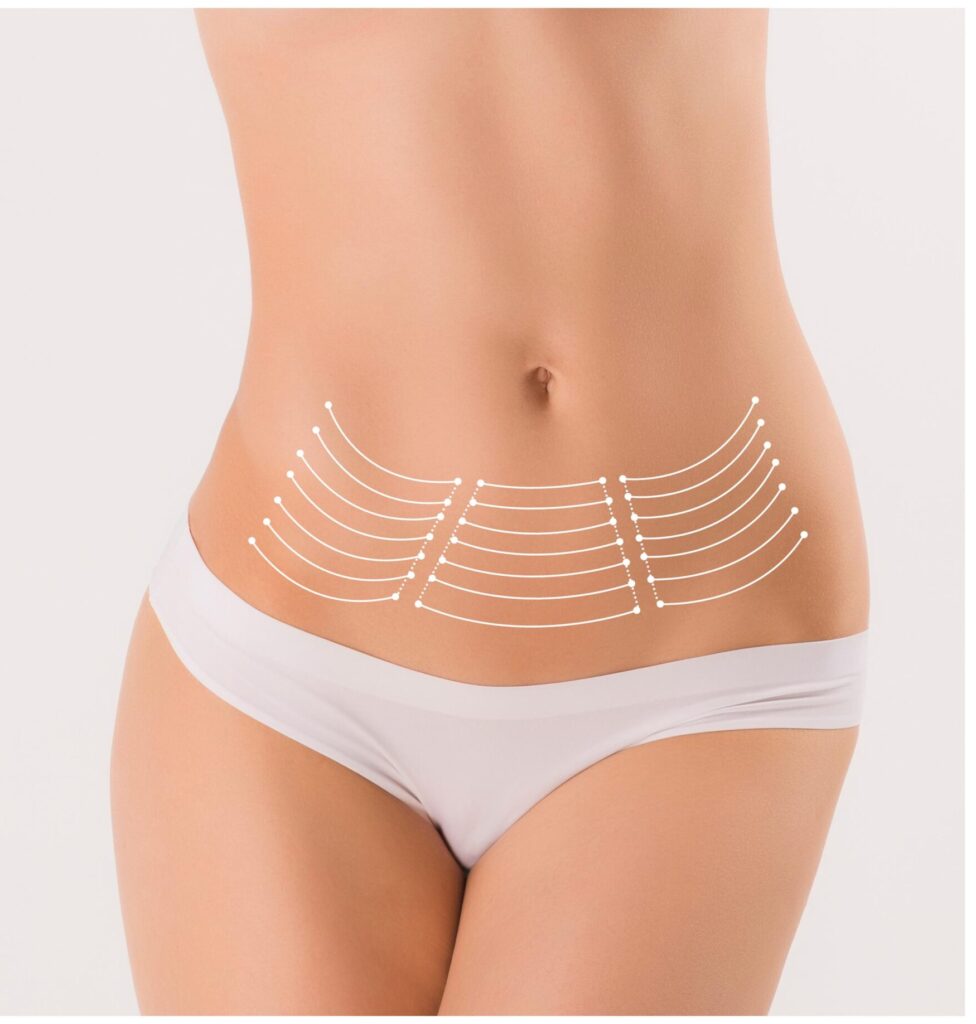
Skin, fat, diastasis, waistline and belly button
A clear answer
What is abdominoplasty, and what can it correct?
Abdominoplasty, also called a tummy tuck or abdominal dermolipectomy, removes excess abdominal skin and the fat attached to it. When diastasis is present, it can repair separation of the abdominal wall. When there is localized fat, it can be combined with liposuction to reshape the contours.
In Dr. Aso’s current practice, approximately 80–90% of procedures are modified Saldanha lipoabdominoplasties with MicroAire liposuction and/or anatomical definition. Most remaining cases involve slim patients whose main concerns are loose skin or diastasis, without a need for additional liposuction.
Scar length, the amount of skin removed, liposuction areas, diastasis repair and belly button design all depend on your anatomy.
Before and after
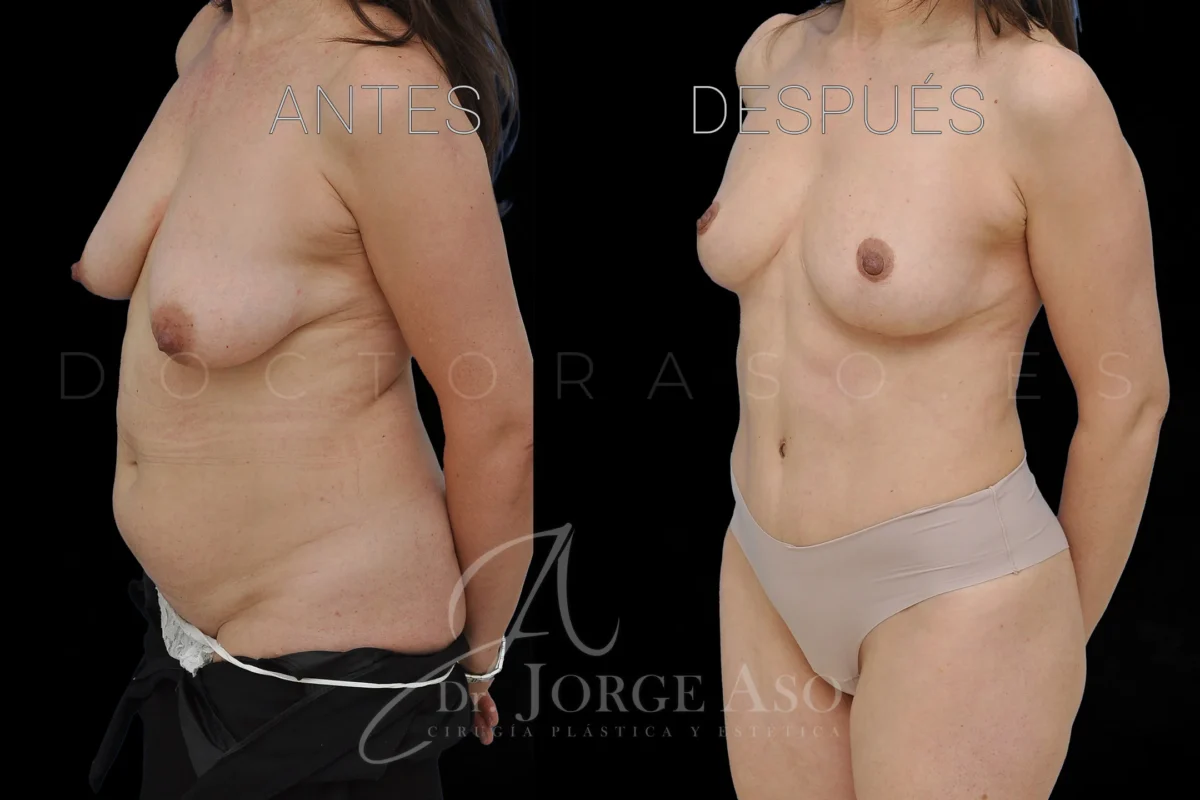
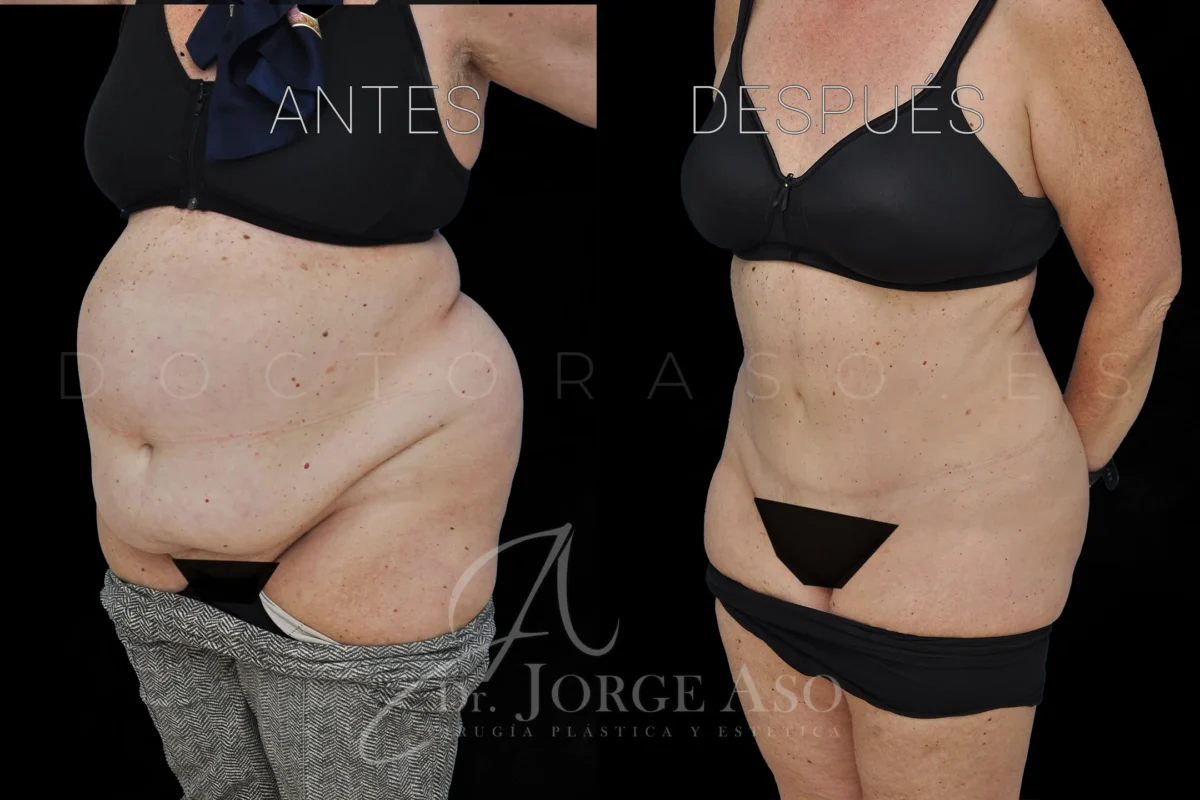
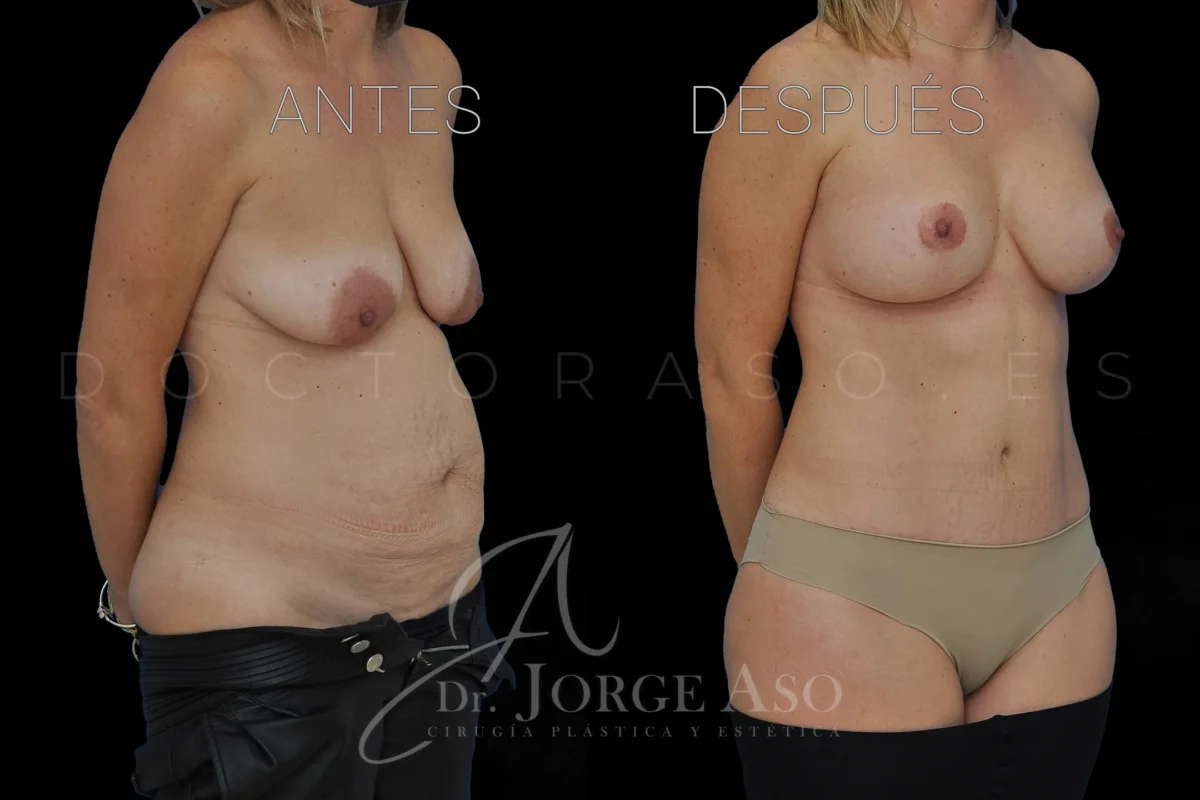
Real abdominoplasty and lipoabdominoplasty results
The gallery is an important part of the assessment: it shows different anatomies, diastasis repairs and liposuction procedures. Each case includes several views to help you understand the change in contour, rather than just a front-view photograph.
 BEFOREAFTER
Case 17 · Lipoabdominoplasty
LiposuctionDiastasis repair
View the case and all angles →
 BEFOREAFTER
Case 4 · Lipoabdominoplasty
LiposuctionDiastasis repair
View the case and all angles →
 BEFOREAFTER
Case 11 · Lipoabdominoplasty
LiposuctionDiastasis repair
View the case and all angles →
View three more cases
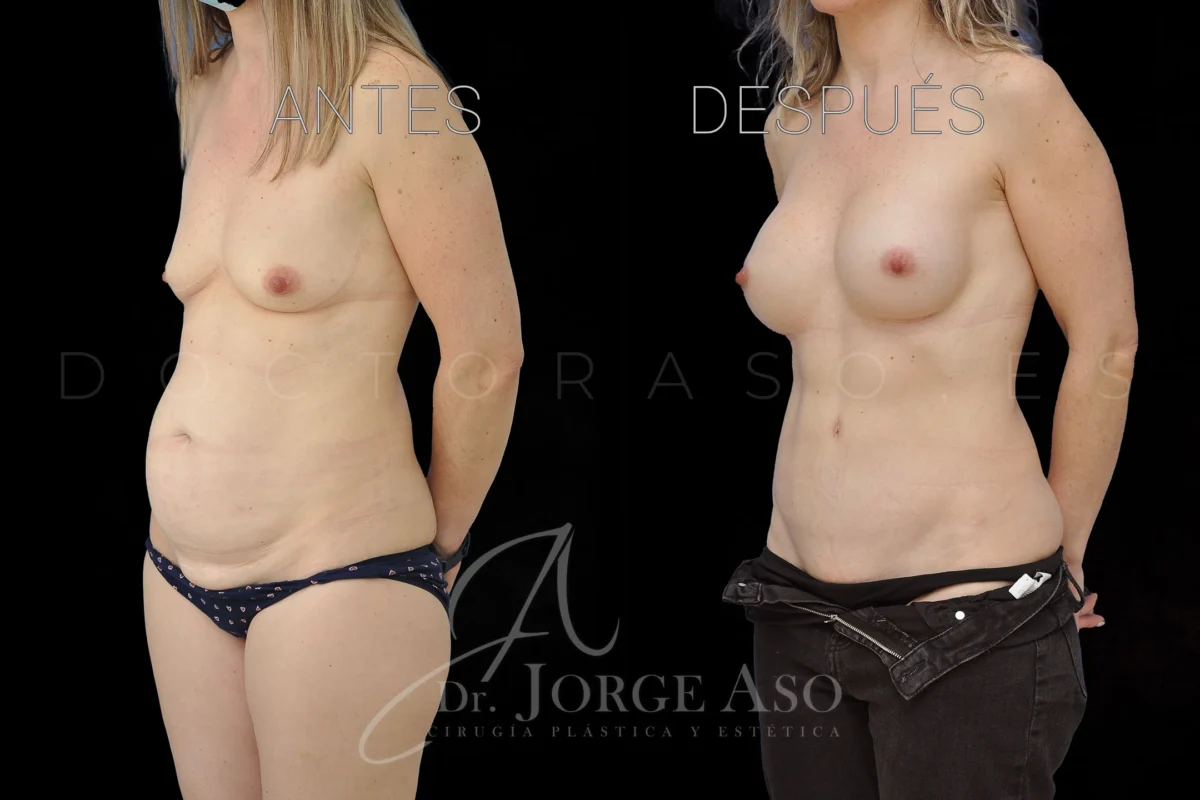
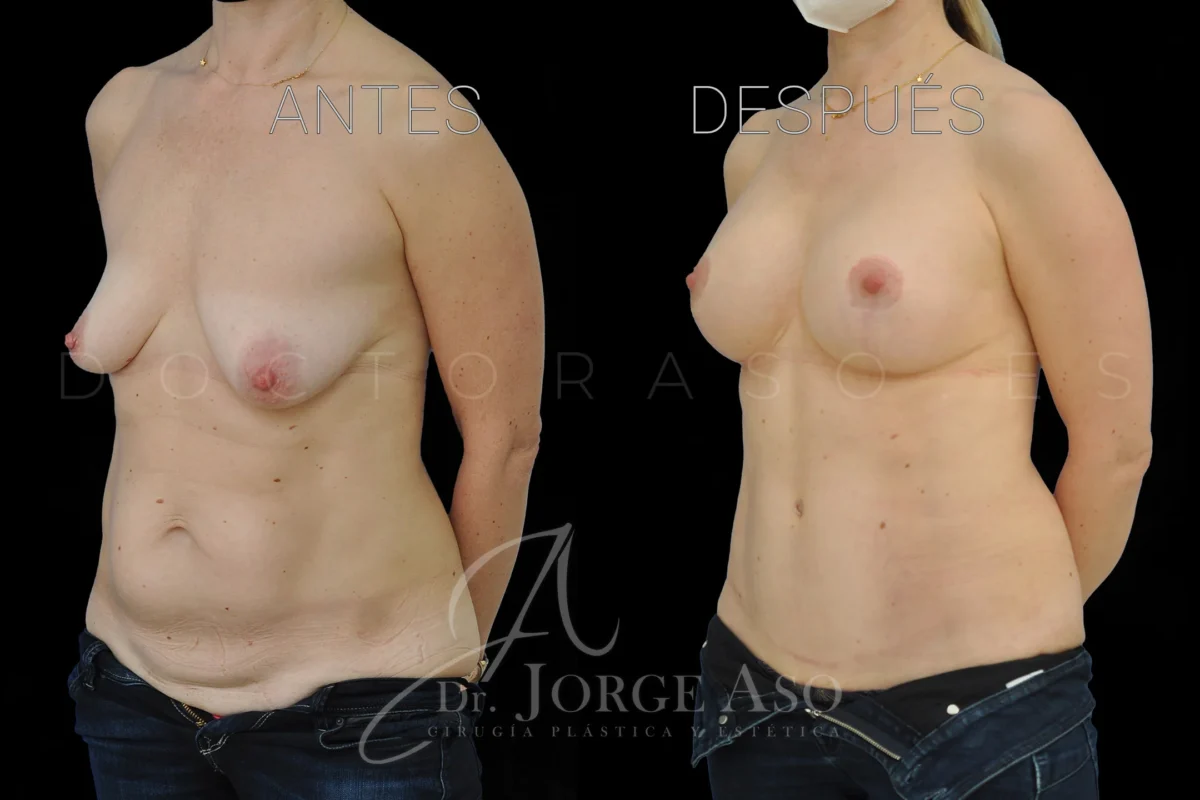
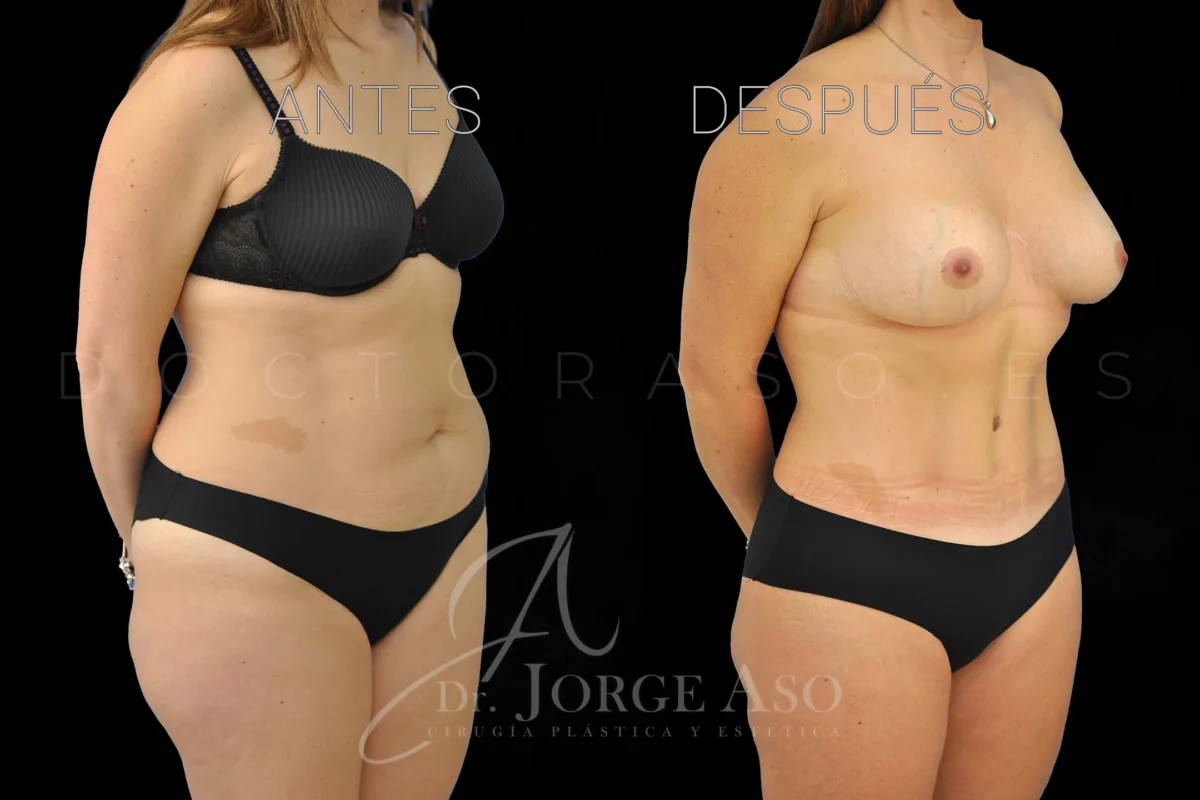
These photographs show real cases and provide examples only. Results depend on each patient’s anatomy, healing and individual treatment plan.
Choosing the right technique
Liposuction, abdominoplasty or lipoabdominoplasty?
The choice is based on your anatomy, not the name of a procedure. Liposuction can remove fat, but it does not remove excess skin or, on its own, correct diastasis.
Liposuction or liposculpture
May be sufficient when the skin is firm, there is no substantial overhanging skin, and localized fat is the main concern.
- Does not remove loose skin.
- Does not repair significant diastasis.
- Avoids the horizontal scar of an abdominoplasty.
Lipoabdominoplasty
Addresses skin, fat and contours together, with diastasis repair added when appropriate.
- MicroAire liposuction of the abdomen, waist, flanks and other selected areas.
- Definition can range from very subtle to more pronounced.
- Individualized belly button and scar design.
Abdominoplasty without liposuction
Suitable for some slim patients with excess skin or diastasis, but no localized fat that warrants liposuction.
- Avoids treating fat that does not need correction.
- Can include plication when diastasis is present.
- The plan remains completely individualized.
Mini abdominoplasty
May be useful when skin laxity is concentrated below the belly button and only a limited correction is needed. It is not simply a full abdominoplasty with a shorter scar.
A dedicated page is in preparation
REPA technique
A minimally invasive alternative for repairing selected cases of diastasis without removing skin through an abdominoplasty. It is suitable only when the skin does not need to be removed.
A dedicated page is in preparation
Patient suitability
Safety starts with careful selection
- Stable weight and expectations that are realistic for your anatomy.
- No further pregnancies planned, because pregnancy can stretch the skin and abdominal wall again.
- No smoking at all for one month before and one month after surgery.
- Assessment of blood clot risk; a history of clotting problems requires coordinated assessment with Hematology.
Our main technique
Modified Saldanha lipoabdominoplasty: more than a flat abdomen
Saldanha’s original technique reduced the extensive undermining of traditional abdominoplasty and allowed liposuction to be integrated. Our modification further tailors the central tunnel, preserves Scarpa’s fascia, and individualizes abdominal wall repair, definition and belly button design.
Planning and MicroAire liposuction
We plan treatment of the abdomen, waist, flanks and mons pubis, and, when helpful, the back or lumbar region. The area around the belly button receives particular attention.
Selective undermining and preservation
The central tunnel is tailored to the case, and Scarpa’s fascia is preserved. The aim is to obtain enough tissue mobility to remove skin without separating more tissue than necessary.
Abdominal wall repair
If diastasis is present, we bring the fascia together at the midline with reinforced, two-layer plication. Lateral plications are added in selected cases.
Skin removal, belly button and closure
We remove the planned excess skin and attached tissue, position the belly button at the midline, and close the incision with the aim of a low scar. We usually use a single drain for 24–48 hours.
Anatomical definition
The degree of definition should suit your body
Waistline definition is part of the plan in more than 90% of our cases, through liposuction, diastasis repair, or both. Abdominal definition is a separate decision: the linea alba and transitions around the oblique muscles can be subtly suggested or made more visible.
Not every patient needs high-definition contouring. Pronounced definition in a body carrying some excess weight may look artificial. We listen to your goals and recommend a degree of definition that fits your anatomy.
This scale describes an aesthetic preference, not a guaranteed result.

An important detail
The belly button can blend in or reveal the surgery
There is no single belly button design for every patient. Its shape depends on the original abdomen, age, body build, and what looks most harmonious.
- A more elongated shape often suits younger patients.
- In middle age, a subtly triangular shape with the apex at the top may look more natural.
- It should be recessed and centered, with the least visible scar possible.
- If the original belly button is very long or there is an umbilical hernia, grafting or reconstruction may be preferable.
“A large, round belly button with a visible surrounding scar is one of the clearest signs of an abdominoplasty.”
Abdominal wall
What is diastasis, and how is it repaired?
Diastasis is widening of the midline between the rectus abdominal muscles. We do not cut or stitch the muscle itself: we bring its fascial covering together with plication tailored to the stretched area.
Brings the midline together. In our protocol, it is reinforced with numerous figure-of-eight stitches and a second continuous suture.
Added only in selected cases, with the aim of reinforcing the lateral wall and helping to narrow the waist.
The extent of repair is also individualized. Repair usually extends from the xiphoid process to the pubis, although some diastases occur only above or below the belly button. Small hernias can be repaired in the same plane; large or incisional hernias may require mesh and coordination with a general surgeon.
Experience that shapes the plan
More than 1,000 abdominoplasties, each individually planned
According to the clinic’s internal records, Dr. Jorge Aso has performed more than 1,000 abdominoplasties and carries out approximately 60 to 120 abdominal contouring procedures each year. Since 2021, he has systematically used the modern approach combining modified Saldanha lipoabdominoplasty, MicroAire and anatomical definition.
His experience informs how much to treat and how much to preserve: the extent of undermining, whether liposuction is needed, the precise diastasis repair, waistline definition and belly button shape. He has presented this approach at plastic surgery courses and conferences.
Experience figures are drawn from the clinic’s internal records. Updated: August 2026.
Anesthesia and hospital care
Major surgery in a fully equipped hospital
Abdominoplasty is performed under general anesthesia with intubation. At the end, we add a local anesthetic block to improve discomfort control during the first few hours.
We operate at Hospital Universitario HLA Moncloa, which has 13 ICU beds, 14 operating rooms for major surgery, and a post-anesthesia recovery unit. Every patient stays in hospital for at least one night, and often two.
If you have a personal history of thrombosis or embolism, we request a Hematology assessment and tailor pneumatic compression, heparin prophylaxis and mobilization.
Recovery and follow-up
Recovery milestones we discuss before abdominoplasty
Recovery varies considerably with the extent of liposuction, abdominal wall repair, hernias, time spent in the prone position, and combined procedures. This timeline describes a typical case, not a fixed schedule.
-
First 6–8 h
Early mobilization
If your clinical condition allows, we help you begin sitting up, standing and walking. A slightly bent posture is maintained to protect the closure.
-
24–48 h
Hospital stay and drain
You always stay in hospital for at least one night, and often two. We usually use a single drain and aim to remove it within this period if the output and its appearance allow.
-
Days 4–7
Showering and lymphatic drainage
Showering is usually allowed around the fourth day, depending on wound healing. The clinic offers an early lymphatic drainage protocol provided by experienced staff, usually starting between the fourth and seventh day.
-
Days 7–12
Walking upright again
Most patients gradually stop using the bent posture during this period. Tightness is expected and improves as the tissues adapt.
-
Around 15 days
Driving and office work
After a typical procedure, this may be a reasonable time to resume driving and office work. Complex surgery may require 30 days or more.
-
Days 30–45
Gradual return to exercise
Start gently, for example with a stationary bike and exercises that do not place heavy demands on the abdominal muscles. Abdominal exercises are postponed initially.
Indicative pricing
How much does abdominoplasty cost in Madrid?
The price involves more than the amount of skin removed. It varies with the liposuction areas, diastasis or hernia repair, operating time, hospital stay, and the need to coordinate care with other specialties.
Simple abdominoplasty
Mainly skin correction, with little or no liposuction.
Full lipoabdominoplasty
Abdominal and contour reshaping, with abdominal wall repair where appropriate.
Complex procedures
More extensive treatment, combined surgery, or coordination with a general surgeon.
These prices are indicative. Your final written quote and its precise inclusions are provided after the medical assessment.
Common questions
Abdominoplasty FAQs
Brief answers to questions patients commonly ask during consultation and when researching surgery in Madrid.
What is the difference between abdominoplasty and lipoabdominoplasty?
Abdominoplasty removes skin and the attached fat and can repair the abdominal wall. Lipoabdominoplasty adds liposuction to reshape the abdomen, waist or flanks. In our practice, approximately 80–90% of cases benefit from this combination, but a slim patient without excess fat may need abdominoplasty without liposuction.
How do I know whether I need liposuction or abdominoplasty?
If the skin is firm and localized fat is the main issue, liposuction may be sufficient. If you have excess skin, an overhanging abdominal fold, or diastasis that needs repair, abdominoplasty is usually required. An in-person examination helps distinguish these situations.
Does abdominoplasty always repair diastasis?
No. Abdominoplasty and dermolipectomy describe removal of skin and attached fat; plication is added when abdominal wall separation warrants repair. In our practice, it is performed in more than 90% of cases, always tailored to the anatomy.
Does abdominoplasty leave a scar?
Yes. Lifting and removing skin requires a low horizontal scar whose length depends on the excess. It is designed to sit beneath typical underwear, but it would be misleading to promise an invisible scar for every patient. Healing varies individually.
What happens to the belly button?
In a full abdominoplasty, the belly button is preserved and brought through a new opening. If its anatomy or a hernia warrants it, grafting or reconstruction may be considered. Our aim is a recessed, centered belly button with the least visible scar possible.
How much does abdominoplasty cost in Madrid?
A simple, mainly skin-focused abdominoplasty costs around €6,500. A full lipoabdominoplasty averages approximately €9,500. Complex procedures or those combined with general surgery can exceed €12,000. These are indicative prices; the quote is confirmed after assessment.
What anesthesia is used, and how long does surgery take?
We use general anesthesia with intubation and a local anesthetic block at the end. A typical lipoabdominoplasty of the abdomen and flanks with diastasis repair takes an average of around four hours, although this can vary with the extent of liposuction, hernias, prone positioning, or combined procedures.
How many nights will I stay in hospital?
Our protocol always includes at least one night in hospital, and often two. Surgery takes place at Hospital Universitario HLA Moncloa. Discharge depends on your progress, mobility, pain control and clinical assessments.
When can I drive, work and exercise?
After a typical procedure, driving and office work may be reasonable around 15 days. Complex procedures may require 30 days or more. Exercise is usually reintroduced between 30 and 45 days, gently at first and without placing heavy demands on the abdominal muscles.
Is a drain used, and for how long?
We usually use a single drain and, if the output and its appearance allow, aim to remove it after 24–48 hours. It is not kept for a fixed period: the decision depends on each patient’s progress.
Can I become pregnant after abdominoplasty?
A later pregnancy is possible, but it can stretch the skin and abdominal wall again and affect the result. We therefore recommend surgery when no further pregnancies are planned. We do not perform it at the same time as childbirth or a cesarean section; the abdomen must stabilize before corrective surgery is assessed.
How does it differ from mini abdominoplasty or REPA?
Mini abdominoplasty treats limited skin laxity, usually below the belly button. REPA repairs selected cases of diastasis through a minimally invasive approach but does not remove skin. These are different techniques, suitable only when specific anatomical criteria are met.
Not sure which situation applies to you?An examination helps distinguish skin, fat, diastasis and hernias before discussing a technique.
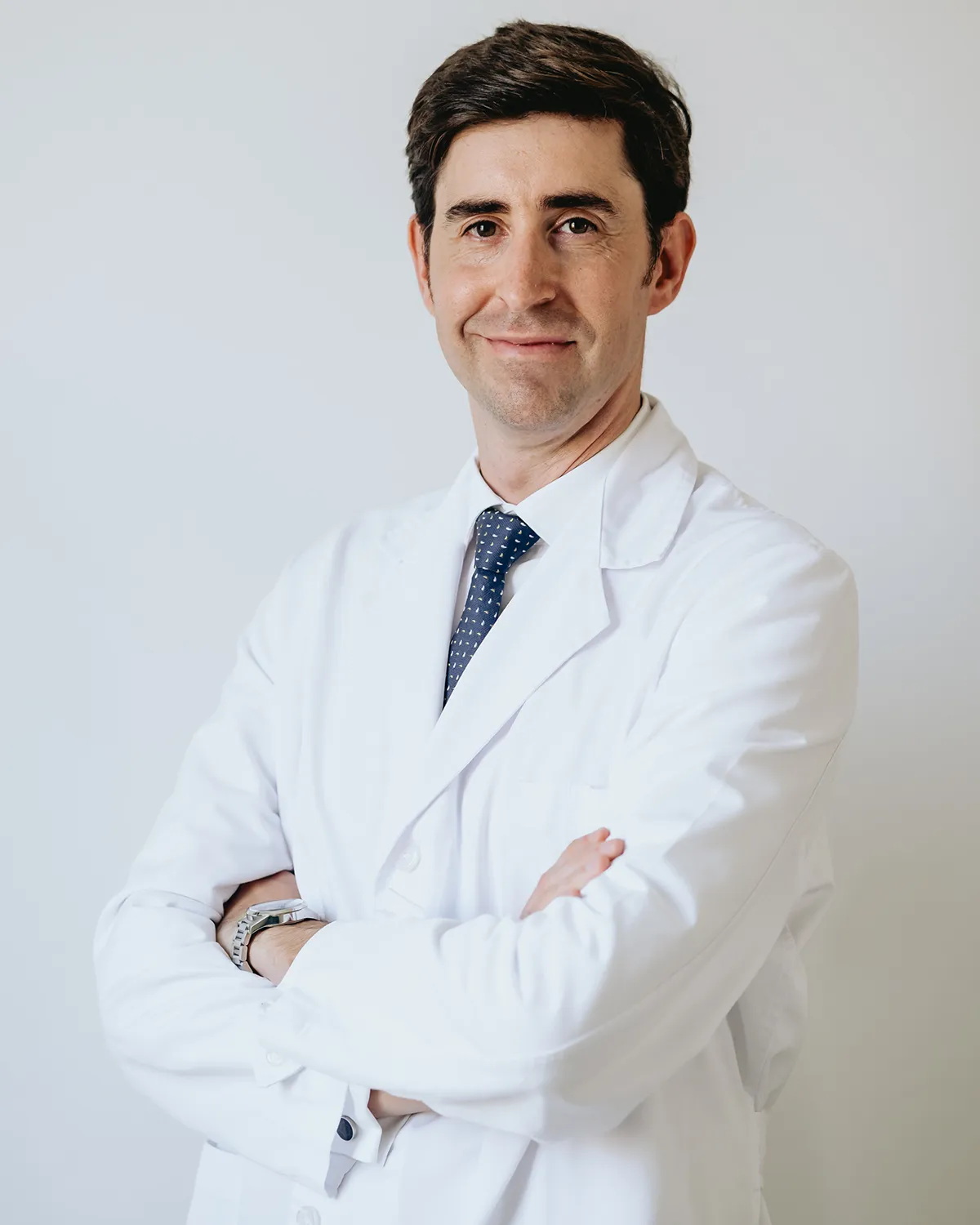
Medical authorship

Specialist in Plastic, Aesthetic and Reconstructive Surgery (Spanish MIR training)
Medical registration no. 2828/61062 · Madrid
About Abdominoplasty in Madrid: clinical information, safety and expectations. Based on the original Spanish content.
Translation does not constitute a new medical review. This information does not replace an individual medical assessment.
View profile, training and credentialsMedical sources and editorial standards Selected references for this page 5 references
References support the general medical information. Suitability, alternatives, and risks are discussed individually during consultation.
- Lipoabdominoplasty with Anatomical Definition Plastic and Reconstructive Surgery / PubMed
- Lipoabdominoplasty with Anatomic Definition: An Evolution on Saldanha’s Technique Clinics in Plastic Surgery
- Aesthetic and Functional Abdominoplasty: Anatomical and Clinical Classification Based on a 12-Year Retrospective Study Plastic and Reconstructive Surgery Global Open / PubMed Central
- Safety of Lipoabdominoplasty Versus Abdominoplasty: A Systematic Review and Meta-analysis Aesthetic Plastic Surgery / PubMed
- HLA Moncloa University Hospital: clinical services and facilities HLA Hospital Group
Medical assessment
Tell us what you would like to improve
The team will review your request and help you arrange a consultation with Dr. Aso. Email and WhatsApp communication in English is available. Please mention “Abdominoplasty” in your message so we can direct your inquiry appropriately.
Planning your visit from abroad. If you are considering a tummy tuck in Spain, discuss the abdominal procedure recommended for you before making travel arrangements. An initial video consultation in English can start the discussion; an in-person examination is still needed. Agree your stay in Madrid, early postoperative reviews and follow-up after returning home with the surgical team. Read our international patient guide.

Selected interviews, mentions and third-party articles. Coverage is in Spanish.