

Body contouring surgery · Madrid
Liposuction and liposculpture in Madrid, Spain
Liposuction is not a weight-loss treatment: it reshapes localized fat deposits and improves proportions. The result depends on planning and skin quality as well as the technology used.
Illustrative editorial photograph; not a before-and-after result.
A clear answer
What can liposuction really change?
It can reduce a localized fat deposit and, above all, change the proportions between areas: the waist and flanks, abdomen, back, thighs, knees, arms or under the chin. Fat distribution often differs between women and men, so there is no single pattern.
We call it liposculpture when fat removal is planned as three-dimensional shaping: we do not just reduce volume, but also design transitions, curves and anatomical definition to avoid a flat or artificial appearance.
Clinical decision-making
Fat, skin or the abdominal wall: three different concerns
A good consultation starts by identifying which structure is responsible for the contour that concerns you. Using the same solution for everyone is a common cause of unrealistic expectations.
Localized fat and elastic skin
This is the most favorable situation for liposuction alone. The skin can adapt to the reduced volume.
Liposuction or liposculpture
Fat with mild or moderate skin laxity
BodyTite may be considered to help the skin contract. Its effect varies and does not replace skin removal when there is clearly excess skin.
Liposuction + BodyTite, when appropriate
Excess skin, an overhang or diastasis
A cannula removes fat, but does not remove skin or repair muscle separation. In these cases, a procedure that removes excess skin and underlying tissue may be a more realistic option.
Anatomical planning
We plan transitions, not isolated areas
Modern liposculpture aims to blend the treated area with its surroundings. Sometimes a better result does not require removing more fat, but carefully extending treatment to avoid abrupt changes in contour.
Abdomen and waist
The superficial abdomen, flanks, bra-line area and back can be assessed together. Abdominal definition can be subtle or more pronounced, but should always remain proportionate.
Hips and thighs
The outer and inner thighs, transition to the buttocks and knees are planned to preserve natural curves, rather than removing fat uniformly across the thigh.
Arms and back
Skin quality determines whether liposuction alone is sufficient or whether to add skin-tightening treatment or an arm lift.
Under the chin and small areas
Very localized micro- or nano-liposuction can be performed under local anesthesia in selected cases. These procedures are not representative of extensive body surgery.
Technology supports the technique
MicroAire, microcannulas, VASER and BodyTite
We combine them according to the area, fat density, skin quality and goal. The percentages describe our approximate practice and overlap: several technologies may be used in the same procedure.
MicroAire
Power-assisted liposuction helps make fat removal controlled and efficient, particularly in extensive areas or denser fat. It does not replace the surgeon’s judgment or hand movements.
Microcannulas
They help refine layers and transitions when indicated. They are particularly useful for fine adjustments, but no cannula completely eliminates the risk of irregularities.
VASER
Ultrasound energy helps emulsify fat and may be useful for definition-focused liposculpture. It is not automatically better for every anatomy or every goal.
BodyTite
Bipolar radiofrequency-assisted treatment aims to encourage skin contraction in mild or moderate laxity. Results vary: when there is clearly excess skin, promising that it will avoid a surgical scar can lead to disappointment.
These percentages are not mutually exclusive and should not be added together. They reflect Dr. Aso’s current protocol, not a scientific comparison between devices.
How we perform it
From planning to proportionate fat removal
On the day of surgery, fat deposits, transitions and areas to preserve are marked while you are standing. A solution containing saline, local anesthetic and epinephrine is then infiltrated to help control bleeding and provide pain relief.
Fat is removed using fine cannulas at different depths. MicroAire, VASER or BodyTite may be added when they offer a specific benefit. Total volume, fluid balance and symmetry are monitored throughout the procedure.
- 1
Standing markings
We plan the contours, not just the area with excess fat.
- 2
Infiltration
Tumescent solution tailored to the extent of treatment, anesthesia and safety.
- 3
Fat removal in layers
Deep and superficial treatment according to the goal and skin quality.
- 4
Final checks
Volume, fluids, transitions and symmetry are checked before fitting the compression garment.
Safety comes first
Hospital care, clear limits and a plan that does not aim to remove the maximum
Approximately 95% of our liposuction procedures take place at Hospital Universitario HLA Moncloa. The usual exceptions are very localized, superficial micro- or nano-liposuction procedures lasting less than around fifteen minutes, which may be performed at the clinic under local anesthesia.
HLA Moncloa
Operating rooms for major surgery, a post-anesthesia recovery unit and an ICU accredited for specialist training through Spain’s MIR system. A hospital stay is recommended according to volume, areas treated, health and combined procedures.
We do not exceed 6 liters
We do not perform excessively prolonged liposuction or remove more than six liters. If the goal requires more, we prefer to reduce the extent or stage treatment instead of taking unnecessary risks.
A hospital stay when it adds safety
When removal exceeds one liter, we aim for an overnight hospital stay; we also usually recommend this for combined procedures.
Contour irregularity was the most common complication, at around 2.35%. Seroma, hematoma, infection and thromboembolism had much lower rates. These are averages from heterogeneous studies: they provide context, but do not predict an individual patient’s risk.
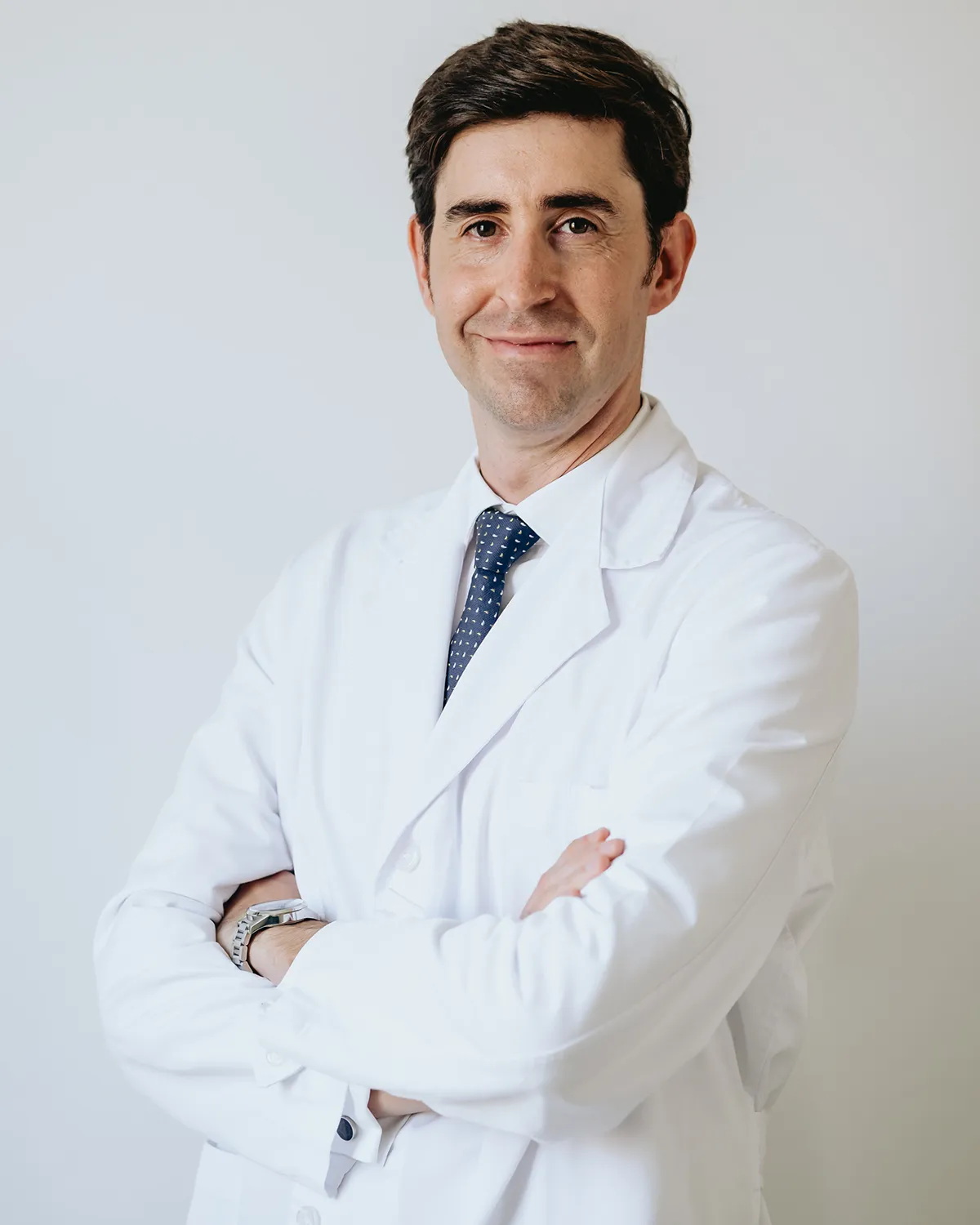
Experience tailored to each anatomy
More than 1,000 liposuctions and more than 70 each year
In body contouring, experience does not mean always using the same technology. It means recognizing which layer to treat, where to stop, when the skin can adapt and when liposuction alone will not solve the problem.
During your consultation, I assess fat distribution, the waist, transitions, asymmetries, skin quality, the abdominal wall, weight, medication and blood clot risk. We then decide what is worth treating and what should remain untouched.
Internal records of liposuction alone
A favorable recovery in approximately 220 recent cases
We have not recorded serious complications in our series of patients undergoing liposuction alone. This does not mean zero risk and cannot be extrapolated to every patient or combined procedure; it is a transparent account of our experience to date.
Refinements are distinguished from medical complications and usually address small irregularities, asymmetries or preferences for definition.
Two episodes of persistent lower-limb bleeding were also recorded in patients receiving anticoagulants or heparin; these resolved with conservative treatment, without surgery. The data come from retrospective internal records and do not replace a dedicated scientific audit.
Approximate recovery timeline
When can you return to normal activities?
This depends on the amount removed, areas treated, technology, whether repositioning is needed during surgery, and whether the procedure is performed alone or combined. Swelling lasts much longer than the limitation in daily activities.
- Days 0–3
Mobilization and compression
Walking starts early. Pressure, muscle-soreness-like discomfort, swelling and bruising are normal during this initial phase.
- Days 3–10
Lymphatic drainage
The starting point depends on the procedure. We offer a package of specialist treatment at the clinic or at home.
- ≈ 1 week
Office work
Many patients can return, although extensive or combined liposuction requires more time.
- ≈ 10 days
Driving
Once you are no longer taking sedating medication and can perform an emergency maneuver without pain or limitation.
- 2–4 weeks
Light exercise
Reintroduced gradually according to the areas treated, swelling and your checkup.
- 6 weeks–3 months
Intense exercise
A full return is individualized; extensive or combined procedures are closer to the longer end of the range.
Compression garment: around two weeks for almost 24 hours a day, then another two weeks during the day; in some cases this extends to six weeks.
Seek assessment promptly: shortness of breath, chest pain, fever, sudden one-sided swelling, persistent bleeding or worsening pain require medical assessment.
Results and refinements
Contours change early; the result matures over months
Swelling can initially hide definition or create differences between sides. Over the following months, swelling, fibrosis and skin adaptation change. After a month, you can often begin to appreciate the change, but not judge the final result.
We consider that the result should remain stable for at least a year. In the few cases where an irregularity or asymmetry has stabilized earlier and further improvement is no longer expected, a refinement may be considered between six and twelve months.
Current indicative prices
How much does liposuction cost in Madrid?
The quote depends on areas, volume, duration, positioning during surgery, technology, hospital stay and any combined procedures. We do not use a small procedure under local anesthesia as a headline price, because it does not represent most of our treatments.
Surgical liposuction according to extent and complexity.
Typical range when extensive high-definition treatment or significant BodyTite treatment is not required.
More operating time, technology, areas treated, hospital stay or combined procedures.
A quote that explains the plan
After examining you, we detail the areas, technique, hospital stay and everything included. The choice is based not just on liters or the number of areas, but on the result that can be achieved safely.
Medical assessment
Tell us which areas you would like to improve
Our team will review your request and help arrange a consultation with Dr. Aso. Please choose “Another treatment or general question” in the form and mention liposuction or liposculpture in your message.
Planning your visit from abroad. Planning liposuction in Spain involves more than choosing a technology. The areas treated and any combined procedures matter when discussing recovery and travel. Contact our Madrid clinic in English to explore your options and agree an in-person assessment, postoperative reviews and ongoing care before committing to travel dates. Read our international patient guide.
Frequently asked questions
Liposuction, skin, technology and recovery FAQs
What is the difference between liposuction and liposculpture?
Liposuction describes fat removal using cannulas. We use the term liposculpture when that removal is planned to change proportions, curves, transitions and anatomical definition, rather than just reducing volume.
How much weight will I lose with liposuction?
This is not weight-loss surgery. The goal is contouring, and the change on the scale may be modest. If you are currently overweight, it is usually better to stabilize your weight first, then assess which fat deposits remain.
What if my skin is loose?
With elastic skin, liposuction alone may be enough. BodyTite may be considered for mild or moderate laxity, with the understanding that its effect varies. If there is clearly excess skin, surgical skin removal may offer a more predictable result.
Is VASER, MicroAire or BodyTite better?
No technology is best for everyone. MicroAire assists fat removal, VASER can facilitate emulsification and definition, and BodyTite aims to encourage skin contraction. In our practice, we combine them according to anatomy and goals; experience and planning matter more than the device’s name.
Is the procedure performed under general anesthesia?
In our practice, approximately 85% of procedures use general anesthesia and 15% use local anesthesia. Local anesthesia is mainly reserved for very specific, superficial micro- or nano-liposuction procedures. The choice depends on areas, duration, volume and safety.
How much fat can be removed?
There is no single volume that is safe for everyone. Total aspirate, BMI, health, areas, fluids and combined procedures all matter. For safety, we do not remove more than six liters and may divide extensive treatment into several sessions.
When can I return to work, driving and exercise?
Office work is often possible at around a week, and driving at around ten days. Light exercise usually starts between two and four weeks, and intense exercise between six weeks and three months. These are approximate ranges adjusted at your checkups.
Does the fat return after liposuction?
The removed cells are not replaced in the same way, but the body and remaining cells can increase in volume if you gain weight. The result therefore depends on maintaining a stable weight and should not be described as immune to body changes.
Can a non-invasive treatment replace surgery?
Some devices can reduce small fat deposits, but they do not remove tissue and their effect is usually more limited than liposuction. They are not equivalent and do not correct excess skin. The appropriate option depends on how much change you are seeking.
Can I have surgery at the same time as childbirth or a cesarean section?
No. We do not recommend combining cosmetic surgery with childbirth. You need to wait for your body to recover, breastfeeding to finish and your weight to stabilize; as a guide, at least six months, with an individual assessment in every case.
Can it be combined with abdominoplasty?
Yes, in selected patients. Lipoabdominoplasty combines treatment of fat, skin and the abdominal wall, but increases operating time and changes recovery, hospital stay and risk. Suitability is assessed specifically.
What if I take Ozempic, Wegovy, Mounjaro or another GLP-1 medication?
Do not stop it on your own. We assess weight stability, dose escalation, digestive symptoms, nutrition and anesthetic risk, and coordinate the plan with Anesthesiology and your prescribing clinician.
How do I choose a liposuction surgeon in Madrid?
There is no official medical ranking. Look for a plastic surgery specialist trained through Spain’s MIR system, demonstrable body contouring experience, an appropriate hospital, clear limits, and an honest explanation of skin quality, irregularities and refinements. Dr. Jorge Aso performs more than 70 liposuctions each year and has performed more than 1,000 in total.
How much does liposuction cost?
Our general indicative range is €5,000 to €10,000. Conventional or assisted liposuction is usually €5,000 to €8,000, and extensive, HD or BodyTite liposculpture is €7,500 to €10,000 or more. The quote is confirmed after examination.
Sources and transparency
This page combines published evidence with Dr. Jorge Aso’s protocol and clinical experience. Percentages and results identified as our own come from internal records and are not presented as a comparative trial or an individual guarantee.
- American Society of Plastic Surgeons: evidence-based safety advisory
- Meta-analysis of liposuction risks and complications, 29,368 patients
- Systematic review of high-definition liposuction
- Clinical review of radiofrequency-assisted body contouring
- American Society of Plastic Surgeons: patient selection
- FDA: differences and limitations of non-invasive body contouring
Medical authorship

Specialist in Plastic, Aesthetic and Reconstructive Surgery (Spanish MIR training)
Medical registration no. 2828/61062 · Madrid
About Liposuction and Liposculpture in Madrid: clinical information, safety and expectations. Based on the original Spanish content.
Translation does not constitute a new medical review. This information does not replace an individual medical assessment.
View profile, training and credentialsMedical sources and editorial standards Selected references for this page 6 references
References support the general medical information. Suitability, alternatives, and risks are discussed individually during consultation.
- Practice Advisory on Liposuction American Society of Plastic Surgeons
- Risks and Complications Rate in Liposuction: A Systematic Review and Meta-Analysis Aesthetic Surgery Journal / PubMed
- A Systematic Review of Efficacy and Complications of High-Definition Liposuction. Plastic and Reconstructive Surgery / PubMed
- Soft Tissue Contraction in Body Contouring With Radiofrequency-Assisted Liposuction: A Treatment Gap Solution. Aesthetic Surgery Journal / PubMed
- Liposuction candidates American Society of Plastic Surgeons
- Non-Invasive Body Contouring Technologies U.S. Food and Drug Administration

Selected interviews, mentions and third-party articles. Coverage is in Spanish.