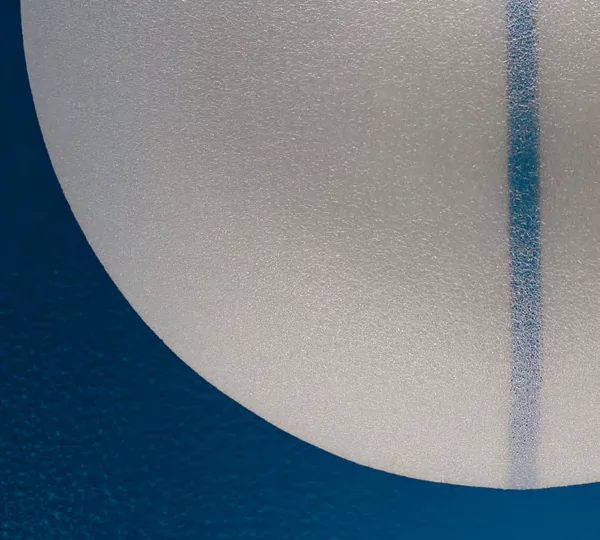
Yes: after a straightforward augmentation, most women can breastfeed. The implant is placed behind the breast tissue. When the operation preserves the gland and ducts, the implant itself does not prevent milk production or its passage to the nipple.

Can you breastfeed with breast implants?
Usually, yes
The gland sits in front of the implant. The implant itself does not form a barrier between milk and the nipple.
Breast tissue, nerves and ducts
Pre-existing milk-producing capacity and the surgical maneuvers performed matter more than simply having an implant.
This does not guarantee a full milk supply for every woman. Low glandular tissue, hormonal factors, latch or milk-transfer problems, and other maternal or infant factors can affect feeding even without surgery. If breastfeeding is difficult after a straightforward augmentation, the implant should not automatically be blamed: the cause needs assessment.
In this article
The implant sits behind the breast tissue, not inside it
Milk is made in the glandular tissue and travels through ducts to the nipple. In a straightforward augmentation, the implant is placed in a pocket behind that tissue. Depending on the technique, it may sit in front of the pectoral muscle (prepectoral) or partly or fully behind it.
In neither position does the implant occupy or plug the milk ducts. However, the ability to breastfeed also depends on the breast anatomy before surgery and whether the operation preserves functional tissue, ducts, nerves and the nipple–areola complex.
Produces milk
Pre-existing glandular development, hormonal response and the amount of functioning tissue influence how much milk a woman can produce.
Carry milk and support feeding
Preserving these structures, especially near the areola and nipple, helps maintain milk flow and the neurohormonal reflexes involved in feeding.
Adds volume behind the breast tissue
It does not produce milk or block its flow. What matters is which tissues were altered to place it.
Can you breastfeed after MIA Femtech or Preservé?
These approaches aim to preserve the breast tissue and avoid crossing the nipple–areola area, which is reassuring from an anatomical standpoint. In both, the implant is placed behind the breast tissue. Neither technique can guarantee a full future milk supply.
MIA Femtech
The incision is outside the breast. The implant is placed in a prepectoral pocket through a controlled approach that does not intentionally cross the areola or cut through the gland.
Preservé
A small inframammary incision allows creation of a prepectoral pocket while aiming to preserve breast tissue. The approach does not require crossing the gland or the area behind the areola.
What we can and cannot say: The anatomy of a straightforward, tissue-preserving augmentation is reassuring for someone who hopes to breastfeed. However, large comparative studies have not established that MIA or Preservé produces better breastfeeding outcomes than another well-performed augmentation. This reassurance must not be extended without qualification to a Preservé lift or an operation involving tissue removal or glandular reshaping.
Do implant position and incision location affect breastfeeding?
Some older observational studies associated below-muscle implants with fewer breastfeeding difficulties, but an association does not establish causation. A recent systematic review found no statistically significant difference among the augmentation techniques it assessed.1
In our practice, we do not treat implant position alone as a guarantee of breastfeeding success. Both prepectoral and subpectoral implants sit behind the gland. The US CDC notes that implants below the muscle usually affect milk production less than those above it; other analyses have not established a clear difference. The practical questions are whether the operation altered glandular tissue, ducts, nerves or the areola, and what milk-producing capacity existed beforehand.
Prepectoral or subpectoral
The plane alone does not describe what happened to the gland. Patient selection, baseline anatomy and the precise surgical technique also matter.
Inframammary incision
This approach begins beneath the breast rather than through the gland or the area behind the areola. It is used for our minimal-scar augmentation and Preservé.
Axillary incision
This starts outside the gland. In MIA, the tunnel and implant pocket are created while aiming to preserve the breast tissue above them.
Periareolar incision
This may involve tissue and nerves behind the areola. Many women breastfeed afterward, but it cannot be described as leaving every structure untouched.
Augmentation, lift and reduction are not equivalent
The implant is not the only consideration. Surgery may be limited to making a pocket and placing an implant, or it may also involve removing skin or breast tissue, lifting the areola or reshaping the gland. The more feeding-related structures are changed, the more individual the assessment must be.
| Procedure | What changes | Breastfeeding consideration |
|---|---|---|
| Straightforward augmentation | A pocket is created behind the breast tissue and an implant inserted. | The implant itself does not block ducts; the outcome still depends on baseline anatomy and the operation performed. |
| Breast lift (mastopexy) | The breast is lifted and reshaped, potentially involving skin, areola and glandular tissue. | The effect depends on the pattern, pedicle and structures preserved. No universal probability can be promised. |
| Breast reduction | A variable amount of skin and glandular tissue is removed. | Milk production may be reduced, particularly if functional tissue or duct and nerve continuity is lost. |
| Areolar surgery | Tissue around or behind the areola is treated. | The effect depends on the depth and extent of surgery and preservation of nipple–areola connections. |
A breast reduction is therefore quite different from a straightforward augmentation. A lift also needs its own discussion, including when a tissue-preserving implant technique is combined with additional lifting or reshaping.
What does the research say about breastfeeding after augmentation?
One percentage cannot tell the whole story. Studies measure different outcomes—starting, continuing or exclusively breastfeeding—and some women seeking augmentation had small or underdeveloped breasts before surgery. That baseline anatomy can influence milk production and complicate comparisons with women who have not had surgery.
The broadest review
It included 57 studies and 381,199 patients across augmentation, reduction and nipple procedures. It found no statistically significant difference among the augmentation techniques assessed; this does not prove that every technique is equivalent for every patient.1
4,679 women after augmentation
Of these women, 79.4% breastfed at least one child and around one in five reported insufficient milk production. These observational figures are not a prediction for an individual patient.2
A finding that needs context
It reported a lower breastfeeding rate among women with implants than among controls. The observational studies could not reliably separate effects of surgery from pre-existing breast anatomy, feeding choices and other factors.3
Can silicone from breast implants enter breast milk?
Available evidence has not shown higher silicon concentrations in the milk of women with silicone implants than in women without implants. A small comparative study found no significant difference between the groups.4 That study used silicon as an indirect marker; a small sample cannot provide an absolute guarantee for every clinical situation.
The US CDC reports no recent clinical cases of problems in infants of mothers with silicone implants and does not regard the implants, on their own, as a reason to avoid breastfeeding.5 Having implants alone is not a reason to give up breastfeeding if you wish to do so.
What if my milk supply seems low after augmentation?
Low milk supply occurs both with and without prior surgery. Possible causes include limited glandular tissue, hormonal factors, birth complications, delayed initiation, ineffective latch or milk transfer, insufficient stimulation, and maternal or infant health issues.
For some patients, underdeveloped breasts were part of the reason for seeking augmentation. Small breasts do not automatically mean insufficient glandular tissue. When true glandular underdevelopment exists, however, it may limit milk production before any implant is placed. That is one reason why a simple comparison between women with and without implants can mislead.
Check the baby
A pediatric clinician should assess weight, hydration and milk transfer. Feeling that supply is low does not always mean intake is insufficient.
Review feeding
A midwife or qualified lactation professional can assess latch, feeding frequency, positioning and stimulation before an anatomical cause is assumed.
Review the actual operation
The surgical report and incision matter, as does whether the procedure was a straightforward augmentation or also involved a lift, reduction, or work on the areola or gland.
Investigate other causes
If difficulty continues, glandular, endocrine, obstetric and infant factors should be assessed. An implant behind the gland is not, by itself, a complete explanation.
Will breastfeeding spoil my augmentation result?
Breasts can change after pregnancy whether or not they contain implants. Glandular expansion and later involution, age, tissue quality, starting volume, number of pregnancies, weight changes, smoking and genetics all play a part.
Available observational evidence suggests that pregnancy and underlying factors explain breast sagging better than breastfeeding alone.6 We would not advise avoiding desired breastfeeding solely to preserve an augmentation result. An implant does not shield the skin or breast tissue from all pregnancy-related changes.
If pregnancy is planned within the next year, we usually discuss whether elective breast surgery should wait. If breastfeeding has ended and you are considering surgery, see our guide to how long to wait after weaning before breast surgery. Our usual minimum is six months after breastfeeding has stopped completely, once the breast has settled. Selected exceptions need individual medical assessment.
Compare results achieved with different techniques
Our gallery lets you filter cases by implant volume, height, weight, implant shape and technique. It can help you assess results in patients with anatomy similar to yours.
Frequently asked questions about breastfeeding and implants
Can you breastfeed after breast surgery?
Do MIA Femtech or Preservé make breastfeeding harder?
Is an implant below the muscle better for breastfeeding?
Can an incision around the areola affect feeding?
Can silicone reach my baby through breast milk?
Can you breastfeed after a breast lift?
How long after weaning should I wait before breast surgery?
Should I avoid breastfeeding to preserve my result?
If you are considering augmentation and hope to breastfeed
We can assess whether your anatomy suits a straightforward tissue-preserving augmentation, which incision is appropriate, and whether MIA, Preservé or minimal-scar augmentation fits your goals. Your consultation should consider your aesthetic expectations alongside pregnancy and feeding plans.
Selected references
- Géczi AM, et al. Impact of Breast Augmentation, Reduction, and Nipple Repair on Breastfeeding Success: A Systematic Review and Meta-analysis. Aesthetic Surgery Journal. 2026.
- Jewell ML, et al. Lactation Outcomes in More Than 3500 Women Following Primary Augmentation: 5-Year Data From the Breast Implant Follow-Up Study. Aesthetic Surgery Journal. 2019.
- Cheng F, et al. Breastfeeding Outcome and Complications in Females With Breast Implants: A Systematic Review and Meta-Analysis. Aesthetic Surgery Journal. 2023.
- Semple JL, et al. Breast milk contamination and silicone implants: preliminary results using silicon as a proxy measurement for silicone. Plastic and Reconstructive Surgery. 1998.
- Centers for Disease Control and Prevention. Breast Surgery and Breastfeeding. Updated in 2025.
- Rinker B, et al. The effect of breastfeeding on breast aesthetics. Aesthetic Surgery Journal. 2008.