
MIA Femtech and Preservé consultation checklist
Dr Jorge AsoDr. Jorge Aso is a plastic surgeon with extensive academic and clinical training. He leads Dr. Aso Clinic, with a particular focus on breast surgery alongside other aesthetic…

Your own fat · Shape and volume
Fat transfer uses fat from one part of the body to fill another. It can improve a contour, restore lost volume, or complement surgery, but the volume injected is not the volume that will remain. Its indications and risks are also different in the face, breasts, and buttocks.
Understanding these differences helps you decide whether fat is a useful tool for your goals and what result you can reasonably expect.
Fat transfer, also called lipofilling or fat grafting, involves removing fat by liposuction, preparing it, and injecting it into another area of the same patient. It is used in aesthetic and reconstructive surgery to add volume or improve shape.
It is your own tissue, not an implant.
Some of the graft integrates and some is reabsorbed. Using your own fat does not eliminate surgical risks.
The difference is what happens to the fat. Liposuction removes it to reshape the donor area. Fat transfer adds another step: preparing some of that fat and using it as a graft elsewhere. Lipofilling is another common term for filling an area with your own fat.
Removes fat from a specific area. It does not necessarily mean that fat will be used to fill another area.
Combines removal and reinjection. There is a donor site and a recipient site, each requiring different care.
This is not a weight-loss treatment. The amount that can be harvested and safely grafted depends on your anatomy, goals, and the tissues' capacity to receive it.
The procedure has three stages. Although the overall approach is similar, processing, injection plane, anesthesia, and operating time are adapted to the treatment area and any associated surgery.
Fat is removed with liposuction cannulas from areas such as the abdomen, thighs, or hips. The choice is not based only on where there is excess fat: we also plan the donor area's final contour.
The usable fraction is separated from excess fluid and other components. Settling, centrifugation, or other systems may be used depending on the indication. In our buttock surgery, we use settling. The volume harvested is not the same as the volume finally prepared for grafting.
Fat is carefully placed in the appropriate tissues for each region. In the breasts, it is distributed in small deposits at different points; in the buttocks, the injection plane must be exclusively subcutaneous. The aim is not to inject all available fat or concentrate it in a single space.
Both procedures use your own fat, but they should not be described as the same operation. Expectations about volume, recovery, and safety should not be transferred from one to the other.
In our practice, breast fat grafting is used mainly to complement implants, a breast lift, or implant removal. It can fill specific areas, soften transitions, and improve shape. Its contribution is assessed as part of the overall surgical result.
Dr. Aso's approach
We find fat a more effective tool for shaping and filling the breasts than for substantially increasing cup size. We perform relatively few augmentations using fat alone. We explain that the volume gain remaining after each graft has settled is usually small, and repeat sessions are generally needed for a noticeable increase.
This does not mean fat cannot add volume; expectations need to be realistic from the outset. We do not promise a specific cup size or equate a given volume of fat with the same volume in implants. After implant removal, a graft should not be presented as automatically replacing all the volume the implants provided.
Fat can complement a mastopexy or breast lift, but filling does not remove excess skin or replace a lift when one is indicated.
Buttock fat transfer, also known as a BBL, combines reshaping the donor areas with grafting to improve the relationship between the waist, hips, and buttocks. Design matters as much as volume: not every body can accommodate or needs the same projection.
In our practice: exclusively subcutaneous injection with real-time ultrasound. Fat is placed above the gluteal fascia, never in or beneath the muscle. Ultrasound helps visualize the cannula and confirm the plane during injection.
These are essential safety measures, but they do not eliminate risk or justify pursuing any requested volume. Our technique and protocol are described further on the buttock augmentation with your own fatpage.
Grafting may address volume loss in the cheeks, temples, and selected under-eye or nasolabial transitions. The aim is to restore proportion and a more rested appearance, not indiscriminately fill every wrinkle. Not all expression lines are caused by volume loss.
Although fat has also been used in the lips, we generally prefer hyaluronic acid for this area because it can be adjusted and dissolved. Nodules or cysts after fat grafting can be difficult to treat. The choice requires a specific assessment; no filler is risk-free.
Our page on facial lipofilling with your own fat explains the indications and limitations of this application.
Fat can fill depressions and improve the relationship between the waist, hips, and buttocks. It changes soft tissue, not bone structure: the result must respect your anatomy, and we cannot promise a silhouette identical to a reference photo.
Wanting to remove fat from one area and place it in another is not enough. During consultation, we assess your health, medical and surgical history, available fat, tissue quality, and goals.
The advantage is using your own tissue while treating both the donor and recipient areas. Limitations include fat availability, graft variability, and complications at both sites. A natural-looking result is a planning goal, not a guarantee simply because the fat is autologous.
The part of the graft that integrates may remain long-term. However, not all injected fat survives. During the first months, swelling resolves and some of the graft is reabsorbed: the appearance in the first few days does not predict the final volume.
No retention percentage can be guaranteed for every person and treatment area. The systematic review of breast augmentation with fat reports variation between studies; its figures do not predict an individual's outcome and cannot automatically be applied to the face or buttocks.
“Long-lasting” therefore does not mean that shape and size will stay identical throughout life. Nor does it mean that grafted fat has a fixed expiration date.
This depends on your goals, the area, available fat, and how the first graft settles. Repeating a session to add volume or refine shape is not, by itself, a complication, but it should be discussed before treatment, including the additional recovery and cost.
For breast augmentation with fat alone, our experience is that repeat sessions are generally needed for an appreciable size increase. When fat complements another procedure, success is measured not only by breast size but by improvement in the specific area being corrected.
In the face and buttocks, a second session may refine the result. This is not decided on the basis of early swelling: we assess it once the retained volume can be distinguished. Timing is individualized, particularly when several procedures have been combined.
Swelling, bruising, and discomfort can occur where fat is harvested and where it is grafted. The extent of liposuction and associated surgery matter greatly: a small facial correction does not involve the same recovery as buttock fat transfer or a breast lift with grafting.
| Area | Social activities or work | What affects recovery |
|---|---|---|
| Face | Typical social recovery takes 5–7 days; it may take 7–10 after more extensive treatment. | Bruising and swelling may still be visible. Being able to work remotely is not the same as being ready for an event. |
| Breasts | Recovery particularly depends on whether grafting accompanies implants, a breast lift, or implant removal. | The recovery plan must account for the entire operation as well as the donor area. |
| Buttocks and body contour | Return to work is usually around 7–14 days, depending on the liposuction and your activities. | Sitting pressure and the physical demands of work matter. Our protocol avoids direct pressure on the buttock graft for the first two weeks. |
A compression garment may be needed, depending on the liposuction performed. Swelling, bruising, and tenderness evolve over the first weeks.
Protection must be adapted to the graft. Compression prescribed for the donor area should not automatically be applied to the recipient area.
Walking and gradually resuming activities are part of follow-up, but strenuous exercise requires instructions specific to each operation. Do not massage the graft or use compression garments or cushions on your own initiative. Lymphatic drainage of liposuction areas and graft care are not the same thing.
Results are assessed over the following months, not when you return to work. Follow-up checks both sites and allows instructions to be adapted to your progress.
Using your own fat avoids an implant for that filling, but it does not avoid surgical complications. Risks include infection, bleeding, adverse reactions to anesthesia, seroma—fluid accumulation—irregularities, asymmetry, partial reabsorption, oil cysts, and fat necrosis—loss of viability in some grafted tissue.
Oil cysts, calcifications, or fat necrosis can cause lumps and imaging findings. Tell your radiology team that you have had fat grafting, and continue the recommended screening and follow-up. A new lump needs assessment, not an assumption that it is simply grafted fat. The international consensus on breast fat grafting highlights the importance of follow-up by breast imaging specialists.
Pulmonary fat embolism can occur if fat enters the venous circulation: it is uncommon but potentially fatal. The joint safety recommendations from plastic surgery societies support subcutaneous injection and real-time ultrasound. These measures do not mean zero risk.
In addition to irregularities or nodules, serious vascular complications involving vision loss or neurological injury have been reported when fat enters an artery. The review of arterial embolism after facial fat grafting documents these cases; published case reports do not establish an individual's complication rate.
Patient selection, experience, planning, technique, and follow-up help reduce risks but do not eliminate them. Consent should explain the risks of the specific treatment area and any combined procedures.
Yes, both terms refer to grafting your own fat. Liposuction is the harvesting stage; on its own, it does not mean that the fat will be used to fill another area.
Not necessarily. Some is reabsorbed and some may integrate and remain long-term. The proportion varies; an identical retention percentage cannot be guaranteed for every patient or site.
We do not promise a specific cup size. In our practice, the retained volume gain per session is usually small, and fat-only augmentation generally requires repeat sessions for a noticeable change. We mainly use fat to shape and fill as a complement to other breast surgery.
Yes. In our breast practice, it mainly complements implants, breast lifts, or implant removal to improve shape and filling. Grafting does not, by itself, lift breasts with excess skin or automatically replace the full volume of a removed implant.
This depends on how much fat can be harvested without harming the donor area and how much filling is needed. There may be enough for a small correction but not extensive body augmentation; an in-person assessment is necessary.
Fat that integrates remains living tissue and can change volume with weight fluctuations. Maintaining a stable weight helps preserve the result, although aging also changes the tissues.
The initial appearance includes swelling and fat that may be reabsorbed. Results are assessed over the following months as the graft settles. Returning to work does not mean the volume and shape are final.
Our protocol avoids direct pressure on the buttock graft for the first two weeks. The team explains how to support your thighs and adapt positions to the treated areas; return-to-work planning must consider how much sitting your job requires.
Do not massage the graft unless your team specifically instructs you to. Care or lymphatic drainage for a liposuction area should not automatically be applied to the area that received the fat.
Not necessarily. It may be part of the plan to add volume or improve a specific area. Distinguish refinement from a complication, and assess the need for another session once the first graft has settled enough to judge the result.
Filling a depression, restoring facial volume, or complementing breast surgery involves different goals from seeking a large augmentation. During consultation with Dr. Aso, we assess your anatomy and both donor and recipient sites to explain what grafting can offer, its limitations, and whether several sessions may be appropriate.
Medical authorship
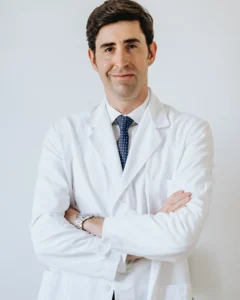
Specialist in Plastic, Aesthetic and Reconstructive Surgery (Spanish MIR training)
Medical registration no. 2828/61062 · Madrid
About Fat Transfer: What It Is, How Long It Lasts, and What to Expect: clinical information, safety and expectations. Based on the original Spanish content.
Translation does not constitute a new medical review. This information does not replace an individual medical assessment.
View profile, training and credentialsReferences support the general medical information. Suitability, alternatives, and risks are discussed individually during consultation.
Dr Jorge AsoDr. Jorge Aso is a plastic surgeon with extensive academic and clinical training. He leads Dr. Aso Clinic, with a particular focus on breast surgery alongside other aesthetic…
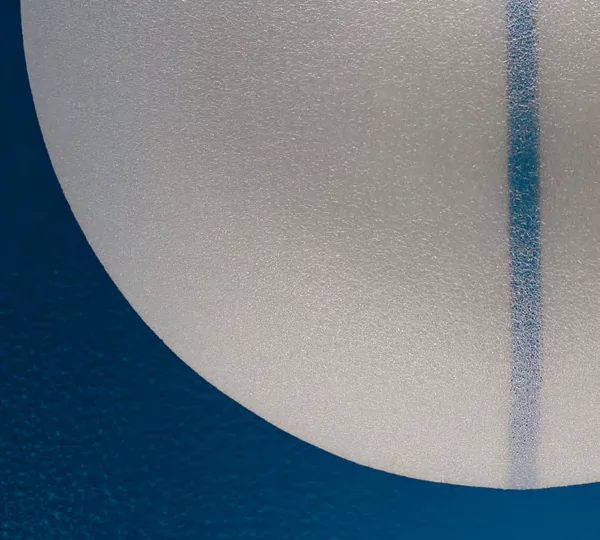
Explore B-Lite lightweight breast implants: weight reduction, feel, benefits, limitations, extra cost, and when Dr. Aso recommends MESMO or MICROTHANE.
Dr Jorge AsoDr. Jorge Aso is a plastic surgeon with extensive academic and clinical training. He leads Dr. Aso Clinic, with a particular focus on breast surgery alongside other aesthetic…
Dr Jorge AsoDr. Jorge Aso is a plastic surgeon with extensive academic and clinical training. He leads Dr. Aso Clinic, with a particular focus on breast surgery alongside other aesthetic…