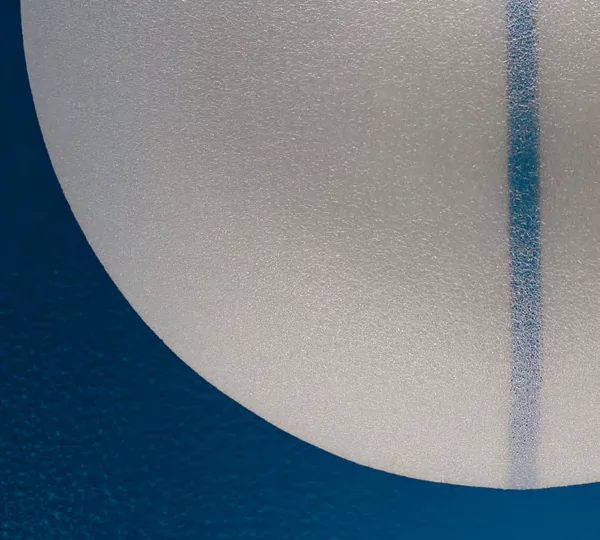
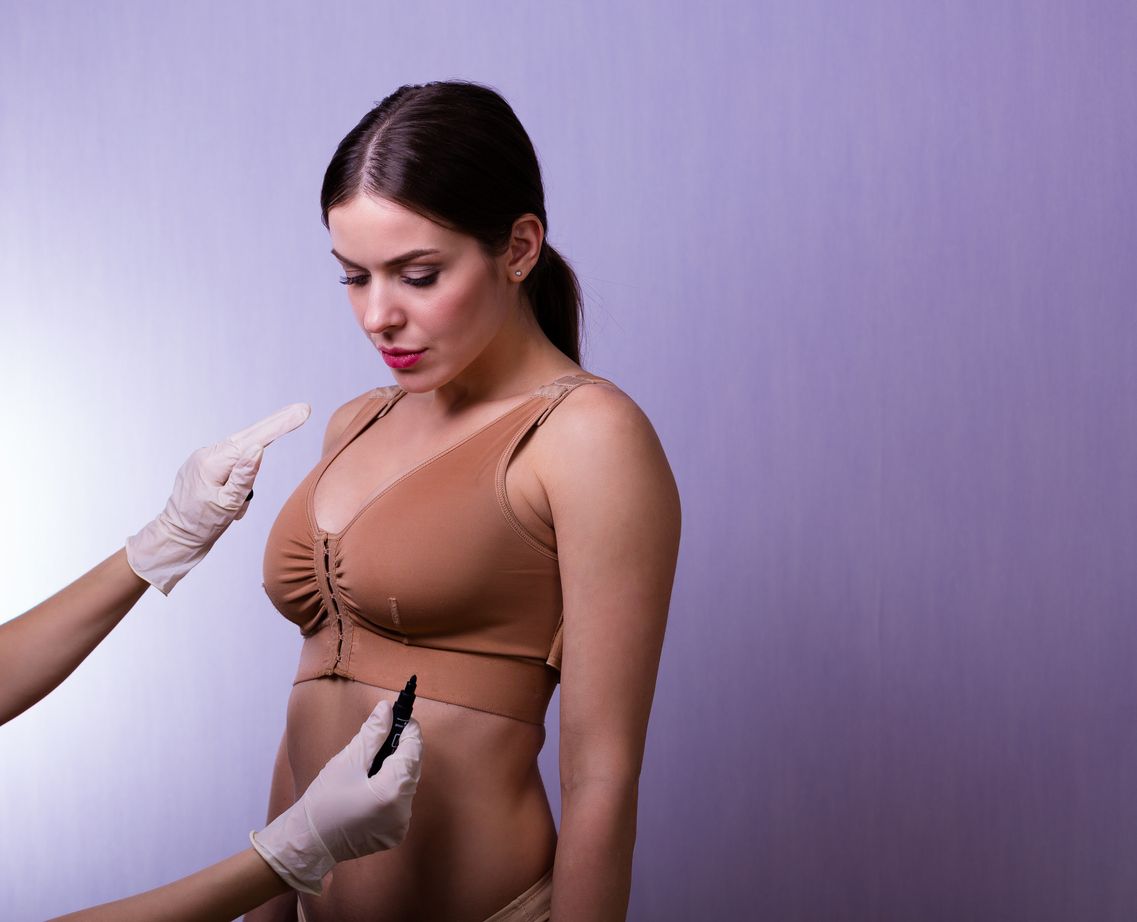
Our recommendation is to wait 12 months after breast augmentation before trying to conceive. This allows swelling to subside, the implant pocket to stabilize, and scars to mature. If pregnancy occurs sooner, having implants does not usually pose a danger to the mother or baby; the main uncertainty concerns how a breast that was still settling will change aesthetically.
How long should you wait before getting pregnant?
12 months
This is the interval we recommend so that the result, implant pocket, and scars are more stable before pregnancy.
Not a danger threshold
In our experience, patients have become pregnant six months after surgery without problems attributable to the operation.
Do not panic
An implant alone is not a reason to end a pregnancy or remove the implant. Inform your obstetrician and continue your usual follow-up with your surgeon.
Waiting a year is a precautionary recommendation, not a guarantee or an absolute biological threshold. Clinical trials have not established a universal number of months. We use this margin to avoid overlapping the substantial changes of pregnancy with breast recovery and tissue maturation.
In this article
Why do we recommend waiting 12 months?
Augmentation is not complete on the day of surgery. Over the following months, swelling subsides, tissues adapt to the added volume, the implant pocket stabilizes, and external and internal scars mature. The implant also gradually takes on a more natural position and movement.
Pregnancy triggers substantial hormonal changes from an early stage. The gland may enlarge, the skin experiences different tension, sensitivity and blood supply change, and milk production begins after delivery. If there is a choice, we do not consider it ideal to overlap this process with a newly operated breast.
Active recovery
Swelling and positional changes persist. Breast shape does not yet reflect the final result, and any early complication should be managed close to the surgical team.
Significant improvement
Most patients have returned to normal daily life, but tissues and scars continue to evolve. This is not yet our preferred time to try to conceive.
Greater stability
Problems attributable to the short interval are unlikely; we have seen uncomplicated pregnancies at six months. Even so, when pregnancy can be planned, we retain the one-year goal.
Recommended interval
The breasts have usually completed the main part of settling, making it easier to distinguish the surgical result from pregnancy-related changes.
I became pregnant after breast augmentation—what should I do?
First, try not to panic: in the vast majority of cases, nothing serious happens. Having implants alone does not make a pregnancy high-risk or require their removal. Available evidence has not established harm to babies from maternal implants, but it does not justify an absolute guarantee of zero silicone exposure.
In my practice, I have cared for patients who became pregnant very soon after augmentation—one approximately a month later—without problems affecting the surgery, pregnancy, or subsequent breastfeeding. We have also had patients become pregnant around six months afterward without complications attributable to that interval. This experience is reassuring, but an individual case is not a universal rule and does not replace follow-up.
Let your care team know
Tell your obstetrician about the procedure, implant type, and date of surgery. Inform your surgeon, too, so any breast changes can be assessed in context.
Do not judge the result now
Pregnancy may make the breasts larger, tense, or uneven. The final shape cannot be assessed during pregnancy or breastfeeding.
Do not manipulate the implant
Do not start massage, bands, or corrective bras on your own. Their use depends on the stage of recovery and clinical examination.
Have unusual changes assessed
Severe one-sided pain, marked redness, fever, sudden enlargement of one breast, or a new deformity requires assessment.

How can augmented breasts change during pregnancy?
The implant retains its volume, but the tissues covering it can change. The gland enlarges during pregnancy and breastfeeding, the skin stretches, weight may fluctuate, and your own tissue may lose some of that volume afterward. An implant does not prevent these changes, nor does it mean they will necessarily be pronounced.
How much of your own tissue changes
Someone with very little glandular tissue before surgery may experience less breast change than someone with more tissue and substantial milk-related enlargement.
Elasticity and tension
Skin quality, final breast size, age, smoking, number of pregnancies, and weight changes all play a role.
Volume and position
A large implant adds more load to the tissues. If the breasts stretch substantially, sagging, upper-pole volume loss, or positional changes may occur.
Time to recover
Do not assess the final shape immediately after pregnancy. Wait until breastfeeding has completely ended and breast shape and weight have stabilized again.
Symmetry can also change temporarily because each breast responds differently to hormones and milk production. An aesthetic change alone does not mean an implant has ruptured or that pregnancy was dangerous. If sagging, excess skin, or malposition persists after weaning, we assess whether observation, implant replacement, or an additional lift would be worthwhile.
Research on breast changes has linked sagging mainly to pregnancy itself and factors such as age, body mass index, previous breast size, number of pregnancies, and smoking. Breastfeeding alone was not identified as an independent risk factor in the cited study.1
Pregnancy and breastfeeding advice depends on the surgery performed
“I have had breast surgery” can describe anatomically very different procedures. In augmentation alone, a pocket is created behind the gland and an implant inserted. A lift, reduction, or correction of certain tuberous breasts may require raising the areola, reshaping or removing glandular tissue, or operating behind the areola.
| Procedure | Relationship to the gland | What we can anticipate |
|---|---|---|
| Augmentation alone through the breast crease | The incision avoids passing through the gland; the implant sits behind it. | The implant is not an anatomical barrier to pregnancy or milk flow. |
| Augmentation alone through the armpit | The entry point is also outside the breast. | With appropriate dissection, the gland is preserved above the pocket. |
| Periareolar incision | This involves some disruption of tissue behind the areola, although major ducts are not always affected. | It does not necessarily prevent breastfeeding, but should not be described as leaving the entire gland untouched. |
| Breast lift or reduction | This may involve raising the areola, incisions, reshaping, or removal of glandular tissue. | Breastfeeding capacity depends on the specific technique and how much tissue, nerve supply, and duct continuity are preserved. |
We therefore do not automatically apply experience with augmentation alone to a breast lift or breast reduction. For these procedures, the surgical report and technique help assess which glandular and retroareolar connections have been preserved.
What if I had mia Femtech or Preservé?
For augmentation alone, mia Femtech and Preservé place the implant in a prepectoral plane, preserving the breast gland above it. mia uses an armpit incision and Preservé a small incision in the breast crease. Neither requires passing through the areola or cutting through the gland to insert the implant.
mia Femtech
This uses moderate-volume implants, usually below 200 cc. A lower tissue load and controlled dissection aim to support a quick, tissue-preserving recovery.
Preservé
This offers a somewhat wider volume range while maintaining a tissue-preserving approach and a prepectoral pocket without passing through the breast gland.
The scientific nuance: anatomically, augmentation alone that leaves the gland intact is intended to preserve its function. Recent publications describe tissue-plane preservation and early results, but large, long-term studies specifically examining pregnancy and breastfeeding after mia or Preservé are not yet available.2 This statement should not be extrapolated to Preservé-pexia or another operation that adds a lift and glandular reshaping.
Can I breastfeed, and is the milk safe with implants?
Most women can breastfeed after augmentation alone. The implant sits behind the gland and does not occupy the ducts. Feeding capacity also depends on how much functioning glandular tissue existed beforehand, hormones, delivery, the baby, latch, and support.
A 2026 review included 57 studies and more than 381,000 patients. In the augmentation subgroup, it found no statistically significant overall difference, although the evidence was heterogeneous and mainly observational.3 A large prospective series of 4,679 women who had children after augmentation found that most breastfed; insufficient milk production was reported in around one in five births.4
Absolute statements about silicone are best avoided. The FDA notes that there is no established method for accurately measuring silicone in breast milk, and a study using silicon as a marker did not find higher levels in women with implants.5 The CDC does not identify silicone implants as a contraindication to breastfeeding and reports no recent clinical accounts of problems in infants attributable to them.6
It does not occupy the milk ducts
In appropriately performed augmentation alone, it sits behind the gland and does not need to be removed for breastfeeding.
Assess how breastfeeding is going
A retrospective health-record study found a small association in women with implants, but did not characterize the procedure, incision, placement plane, or glandular maneuvers. It therefore does not establish that the implant or augmentation alone caused the problem.7
Pain, warmth, redness, fever, or feeling unwell during breastfeeding requires assessment. Milk drainage, latch, and inflammatory or infectious causes are evaluated as in women without surgery, with ultrasound added when examination or progress warrants it.
Read the full guide to breastfeeding after breast augmentation →
When should I see my surgeon during pregnancy?
A healthy implant does not need to be checked every trimester solely because you are pregnant. Your obstetrician should know about your implants, and you should maintain appropriate breast follow-up based on your age, history, and implant age.
A progressive change causing concern
- New asymmetry that persists or increases.
- Firmness, displacement, or a change in implant shape.
- Localized pain that does not seem consistent with pregnancy-related tension.
- Older implants without recent follow-up.
Inflammation or significant symptoms
- Sudden enlargement of one breast.
- Marked redness, fever, or feeling generally unwell.
- Severe pain or significant trauma.
- Unusual discharge or a new lump.
We plan augmentation with your future in mind
Before surgery, we discuss pregnancy plans, approximate timing, breast anatomy, and the importance of future breastfeeding to each patient. If pregnancy is planned within the following year, our usual recommendation is to postpone cosmetic surgery.
If pregnancy is not planned soon, we choose the technique according to anatomy and goals, aiming to preserve the gland and avoid unnecessary manipulation. If pregnancy happens sooner than expected, we offer support without blame: we distinguish normal changes from signs needing investigation and defer aesthetic assessment until the breasts have stabilized again.
Compare augmentation by volume, anatomy, and technique
Our interactive gallery lets you filter cases by implant volume, height, weight, starting breast shape, and technique. Comparing similar anatomy is more useful than choosing a result based only on an implant's volume in cubic centimeters.
Pregnancy after breast augmentation
What if I get pregnant six months after surgery?
If it has already happened, do not panic. In our experience, patients have become pregnant six months after surgery without problems attributable to the operation. When pregnancy can be planned, we prefer waiting 12 months for greater breast stability.
What if I get pregnant one month after augmentation?
This is not ideal for assessing recovery and the aesthetic result, but the implant does not usually pose a danger to pregnancy. Inform your obstetrician and surgeon. In our practice, we have even seen a pregnancy beginning approximately a month after surgery that progressed without problems and allowed subsequent breastfeeding.
Do I need to remove my implants to become pregnant?
No. An intact, symptom-free implant does not need to be removed simply because you want to become pregnant. Assessment depends on implant age, symptoms, and the follow-up protocol, not pregnancy alone.
Can pregnancy affect my augmentation result?
It can, but not necessarily. The gland, skin, and weight change while the implant retains its volume. Some breasts return to a very similar shape; others lose volume, sag, or become uneven.
Can I breastfeed after mia Femtech or Preservé?
In the augmentation-only procedures we perform, both techniques preserve the gland above the implant and are intended to maintain its function. Large, long-term studies specifically examining breastfeeding with these techniques are not yet available; this statement also cannot be applied without qualification to an associated lift.
When can I assess my breasts after pregnancy?
Breast shape is not final during pregnancy and breastfeeding. Wait until breastfeeding has completely ended and breast shape and weight have stabilized. If you are considering further surgery, read the guide to how long to wait for breast surgery after childbirth and breastfeeding.
If you are considering surgery and want children
We can assess whether it is better to wait, have conventional augmentation with a minimal scar, or consider a tissue-preserving technique such as mia Femtech or Preservé. Your anatomy, desired volume, and pregnancy timeline all matter.
Medical sources
- Rinker B, Veneracion M, Walsh CP. The effect of breastfeeding on breast aesthetics. Aesthetic Surgery Journal. 2008.
- Chacón-Quirós et al. Retrospective Validation of a Tissue-Preserving Breast Augmentation Approach: From Native Tissue Geometry to Surgical Practice. Aesthetic Surgery Journal. 2026.
- Géczi AM, et al. Impact of Breast Augmentation, Reduction, and Nipple Repair on Breastfeeding Success: A Systematic Review and Meta-analysis. Aesthetic Surgery Journal. 2026.
- Jewell ML, et al. Lactation Outcomes in More Than 3500 Women Following Primary Augmentation. Aesthetic Surgery Journal. 2019.
- U.S. Food and Drug Administration. Risks and Complications of Breast Implants. Accessed: August 2026.
- Centers for Disease Control and Prevention. Breast Surgery and Breastfeeding. Updated December 2025.
- Shalev Ram H, et al. Associations between breast implants and postpartum lactational mastitis in breastfeeding women. BJOG. 2022.