

MIA Femtech and Preservé consultation checklist
Prepare for your MIA Femtech or Preservé consultation in Madrid: questions about suitability, implant options, risks, recovery, costs, and planning your visit.

Research supports an important association: physical activity can help lower breast cancer risk. Regular activity and avoiding excess weight, particularly after menopause, are associated with a lower risk. Even light activity can be worthwhile, but 2 hours a week should not be interpreted as a guaranteed prevention threshold. Exercise does not eliminate risk or replace appropriate screening and medical advice.
A study on this topic, published online in July 2015 in JAMA Oncology, examined exercise and body fat in postmenopausal women. Its findings support a more careful conclusion: more aerobic exercise can help reduce body fat, which may contribute to a lower breast cancer risk after menopause. The trial measured changes in body fat, not how many participants developed breast cancer. It therefore does not prove that increasing exercise will prevent cancer in an individual woman.
Physical activity after menopause can also support general health. It may:
Medical authorship
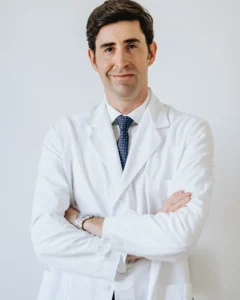
Specialist in Plastic, Aesthetic and Reconstructive Surgery (Spanish MIR training)
Medical registration no. 2828/61062 · Madrid
About Physical Activity and Breast Cancer Risk: clinical information, safety and expectations. Based on the original Spanish content.
Translation does not constitute a new medical review. This information does not replace an individual medical assessment.
View profile, training and credentialsPrepare for your MIA Femtech or Preservé consultation in Madrid: questions about suitability, implant options, risks, recovery, costs, and planning your visit.

Explore B-Lite lightweight breast implants: weight reduction, feel, benefits, limitations, extra cost, and when Dr. Aso recommends MESMO or MICROTHANE.

A guide to mommy makeover procedures after pregnancy: choosing a personalized surgical plan, understanding scars and risks, and planning recovery and costs.
Dr Jorge AsoDr. Jorge Aso is a plastic surgeon with extensive academic and clinical training. He leads Dr. Aso Clinic, with a particular focus on breast surgery alongside other aesthetic…