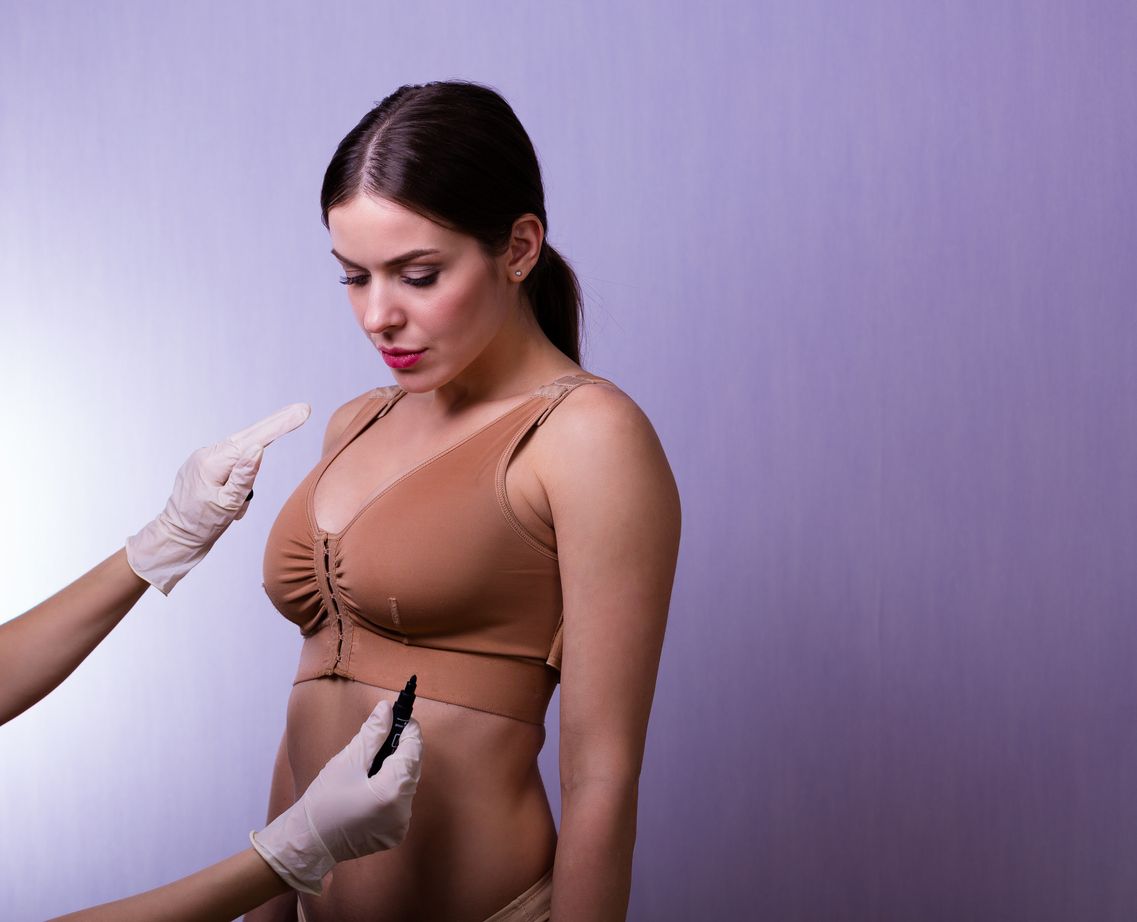
Yes: selected patients can have MIA® or Preservé™ breast augmentation without planned general anesthesia. Our usual approach combines local anesthetic infiltration with intravenous sedation. The aim is comfort and sleepiness with spontaneous breathing, without a planned breathing tube or laryngeal mask. Sedation depth, awareness and memory vary; breathing support may still be needed. Local anesthesia alone—wide awake—may also be considered if you prefer it and your case is suitable.
If general anesthesia worries you, discuss the alternatives
Some patients want breast surgery but are concerned about deep anesthesia, a breathing tube or a prolonged recovery. Tissue-preserving augmentation may allow a different anesthetic plan. A familiar comparison is sedation for a colonoscopy: medication is given through an IV while you are monitored. You may be very sleepy and remember little, but complete sleep or amnesia is not guaranteed. The procedure and anesthetic assessment are not the same as a colonoscopy.
This does not mean surgery without anesthesia or a nonsurgical breast enlargement. It means choosing a suitable operation that can be performed with local anesthesia, with or without sedation.
The August 2026 source reports this approach in approximately 99% of our tissue-preserving augmentations.
No planned endotracheal tube or laryngeal mask; support remains available if needed.
Total hospital time also includes preparation, monitoring and discharge checks.
Same-day discharge depends on your condition and the clinical criteria being met.
In this article
Without general anesthesia does not mean without anesthesia—or without surgery
Without planned general anesthesia
The plan is local anesthesia with or without sedation, rather than inducing general anesthesia. Spontaneous breathing is intended and an endotracheal tube or laryngeal mask is not planned. Sedation can affect breathing, so airway support and a change of plan must remain possible.
With local anesthesia
Local anesthetic solution is injected to numb the surgical area. Sedation helps with relaxation and sleepiness but does not replace local pain control.
It is still surgery
An incision is made, an implant pocket is created and an implant inserted. We use a hospital operating room, sterile technique, monitoring and postoperative follow-up.
This distinction matters because some searches refer to “breast enlargement without surgery.” MIA and Preservé are not external treatments or fillers: they are operations using implants. For discussion of exercises, creams, supplements and nonsurgical claims, see our guide to natural breast enlargement and methods that do not work (Spanish).
What about general anesthesia without intubation?
General anesthesia for breast augmentation commonly uses either an endotracheal tube or a laryngeal mask. A laryngeal mask does not enter the trachea, but its use does not mean that the procedure is not general anesthesia. The relevant question is the whole anesthetic plan, not simply which airway device is used. Ask whether local anesthesia with sedation, or local anesthesia alone, is appropriate for your procedure.
What is breast augmentation with local anesthesia and sedation like?
We commonly recommend this combination for suitable MIA and Preservé patients. Local anesthesia numbs the operative area and IV sedation helps you feel relaxed and sleepy. The level is adjusted to your needs; how much you perceive or remember can vary.
Sedation, as used in procedures such as colonoscopy
- Medication through an IV.
- Local anesthetic in the breast.
- Sleepiness and often limited recall.
- Spontaneous breathing is the aim.
- No planned intubation or laryngeal mask.
- An induced state of general anesthesia.
- Airway and breathing managed as required.
- An endotracheal tube or laryngeal mask may be used.
- Recovery monitored after general anesthesia.
- May be appropriate for other operations.
Oxygen levels, heart rate, blood pressure and ventilation are monitored throughout. This is a planned anesthetic in a hospital, not simply taking a sedative without supervision. Breathing support, deeper anesthesia or conversion to general anesthesia may be needed if safety requires it.
Can MIA or Preservé be performed with local anesthesia alone?
Yes, both may be performed using local anesthesia alone in suitable cases. This is often called wide awake: you remain awake, without IV sedation or general anesthesia.
This is not our routine recommendation. We mainly consider it when a patient specifically prefers it, accepts that pressure, pulling or movement may be felt, and has a suitable anatomy and surgical plan. If you experience pain, tell the team so the anesthetic can be reassessed.
It may suit you if…
- You want to avoid both general anesthesia and sedation.
- You are comfortable remaining aware.
- You want a modest increase and the operation is technically straightforward.
- Medical and anesthetic assessment supports this plan.
We may prefer sedation if…
- Hearing or feeling movement would increase your anxiety.
- You would prefer to feel sleepy during the procedure.
- The planned operation is more involved.
- The team considers sedation more appropriate for your comfort and care.
Being eligible for local anesthesia alone does not mean you have to choose it. Local anesthesia with sedation may be a suitable compromise for patients worried about general anesthesia; the exact plan is agreed after assessment.
Why can MIA and Preservé be performed without general anesthesia?
Both place the implant in front of the pectoral muscle and use controlled pocket expansion with dedicated instruments. They do not require pectoral-muscle release. This limited-dissection approach can make a local-anesthetic plan feasible in suitable patients.

A subtle increase through an armpit incision
Our practical range uses Diamond implants of 165–195 cc and an average armpit incision of about 2.3 cm. It may suit a modest change when the fold does not need repositioning and glandular correction is not required.
A broader practical volume range
Our usual practical range is approximately 200–320 cc through a short incision in the breast fold. Selected cases may allow release of a high fold, limited asymmetry correction or treatment of mild tuberous features.
You do not need to choose a brand before consultation. Examination, measurements, ultrasound and 3D simulation help assess suitability and discuss the options. Read our MIA vs. Preservé comparison.
What happens on the day of surgery?
- 01
Preparation and marking
We confirm the plan, implants and consent, mark the operative area and complete operating-room safety checks. Follow the fasting and medication instructions given by the anesthesia team.
- 02
Monitoring and sedation
An IV line is placed, monitoring begins and sedation is adjusted. If an agreed wide-awakeapproach is used, IV sedation is omitted.
- 03
Local anesthetic infiltration
Our source describes approximately 200 cc of solution containing local anesthetic—not 200 cc of pure anesthetic medication. Drug, concentration and total dose must be individualized by the treating team. The local effect also helps early comfort.
- 04
Around 20–30 minutes of surgery
The small incision is made, the pocket expanded and the implant inserted. Actual duration depends on anatomy and any additional steps.
- 05
Recovery and discharge
You are observed after surgery and assessed before walking, drinking and leaving. Discharge is often after 2–3 hours if your condition is satisfactory and all criteria are met.
These timings describe our experience, not an individual promise. Your job, response and any added procedure may change recovery. Returning to desk work does not mean you are ready for exercise or air travel.
Who may be suitable for breast augmentation without general anesthesia?
Concern about anesthesia can start the conversation, but anatomy and the required operation determine suitability. These techniques generally suit a subtle or moderate increase, with adequate tissue coverage in front of the muscle and no need for extensive correction.
It may be a reasonable option
- A preference for a modest, proportionate result.
- Adequate tissue coverage over the implant.
- A nipple at or above the breast fold.
- Limited asymmetry or selected corrections suitable for Preservé.
- A preference for limited incisions and potentially easier early recovery.
Another approach needs consideration
- A desired volume beyond the practical range.
- Significant drooping that needs a breast lift.
- Marked tuberous anatomy or complex asymmetry.
- Revision or repair requiring wider dissection.
- Insufficient coverage for an implant above the muscle.
If MIA or Preservé is unsuitable, that does not rule out surgery. It means discussing a different procedure and the anesthesia appropriate for it.
Does conventional augmentation always cut the muscle or require general anesthesia?
No. Conventional augmentation includes different techniques. Subglandular placement does not involve the pectoral muscle; submuscular and dual-plane approaches involve it to varying degrees and may release part of its attachment. It is inaccurate to say that every conventional augmentation cuts the muscle.
General anesthesia can be an appropriate and valuable option when selected and delivered by a specialist team. A longer operation, significant lift, complex revision or different surgical plane may make it preferable. Avoiding it is not more important than choosing the correct operation.
The useful question is not simply “general anesthesia: yes or no?”
Ask instead: Can the result I want be achieved with an appropriate technique that allows local anesthesia with sedation? If so, it may be a reasonable option. If your anatomy needs a different operation, do not force an unsuitable technique merely to avoid general anesthesia.
For more on implant position, read our guide to implants above or below the muscle (Spanish).
Is avoiding general anesthesia safer?
A local-anesthetic and sedation plan does not routinely schedule the same airway management as general anesthesia and may offer a different recovery experience. However, it is not risk-free or automatically safer in every respect. Overall safety depends on your health, the indication, implant, operation, hospital, team and follow-up. Sedation itself has risks and may require breathing support.
Spain’s medical devices agency, AEMPS, describes breast augmentation as surgery and notes that selected cases may use regional anesthesia and sedation. Implant-related risks still need discussion, including infection, hematoma, seroma, capsular contracture, malposition, rupture and further operations.
The published three-year prospective MIA study provides technique-specific observations, but not a head-to-head anesthetic-safety trial or proof of universal superiority. Follow-up is shorter than the decades of experience with conventional augmentation. Read our MIA and Preservé safety guide.
An authorized operating room and appropriate clinical care.
Observation during surgery and recovery.
The ability to provide breathing support or change anesthesia when needed.
Clinical reviews and ultrasound according to the individual plan.
Compare the options before deciding
Breast surgery without general anesthesia: common questions
Can breast augmentation be performed without general anesthesia?
Can I have breast surgery without intubation?
Will I be awake during surgery?
Can MIA or Preservé be performed with local anesthesia alone?
Does local anesthetic injection hurt?
Are MIA and Preservé nonsurgical breast enlargement?
How long does surgery take, and when can I leave?
Is it safer than surgery under general anesthesia?
What if the anesthetic plan needs to change during surgery?
What if I need more volume or a breast lift?
Concern about general anesthesia can be discussed
If you want a modest increase and your anatomy is suitable, MIA or Preservé may allow a short procedure with local anesthesia and sedation, intended spontaneous breathing and same-day discharge. If you also prefer to avoid sedation, we can assess a wide-awake approach.
Consultation is where we examine suitability, review comparable cases and discuss whether your desired result can be achieved without planned general anesthesia.
Initial consultations cost 100 EUR, by video or in person. Email and WhatsApp support are available in English.
If you travel to Madrid, arrange an adult escort and support after discharge as instructed. Follow the anesthesia team’s written restrictions on driving, alcohol, work and important decisions. Your return flight and postoperative stay require a separate plan; same-day discharge is not clearance to fly.
Source author and medical review
Specialist in Plastic, Aesthetic and Reconstructive Surgery through Spain’s MIR training system
Medical registration 2828/61062 · Madrid
Breast augmentation without general anesthesia: local anesthesia, IV sedation, wide-awake surgery, airway management, MIA Femtech, Preservé, suitability, recovery, risks and conventional alternatives. This English adaptation is not a new medical review.
Educational information based on clinical practice and selected institutional and scientific sources. It does not replace an individual medical and anesthetic assessment.
View profile, training and credentialsMedical sources and editorial scope Selected references for this article 5 references
References support general medical information. Suitability, alternatives and personal risks are discussed during consultation. Manufacturer material describes the product and is not independent proof of comparative safety.
- Patient information about breast implants (Spanish) Spanish Agency of Medicines and Medical Devices (AEMPS)
- 3-Year Results of a 100-Patient Prospective Study of the Safety and Effectiveness of Mia Femtech Aesthetic Surgery Journal / PubMed
- Establishment Labs Launches Preservé Establishment Labs — manufacturer information
- Sedation explainedRoyal College of Anaesthetists — levels, breathing, recall and aftercare
- IV / Monitored SedationAmerican Society of Anesthesiologists