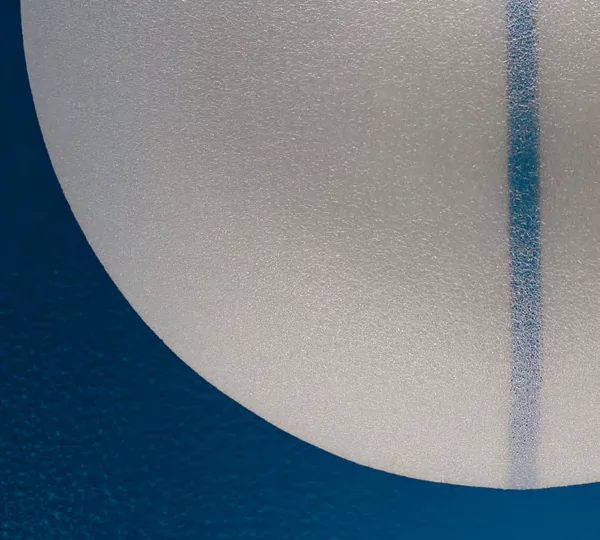
Breast stretch marks can appear during adolescence, pregnancy, rapid volume changes, and, much less often, after breast augmentation. No technique can guarantee they will not develop, but implant volume, the tension placed on the skin, and individual susceptibility help us assess the risk.
Can stretch marks develop after breast augmentation?
Yes, but this is not usual. In a published cohort of 538 breast augmentations, 7.06% of patients developed new stretch marks. Risk was higher in younger women, smokers, those with a low or normal body mass index, and when implants larger than 300 ml were used.1
That figure describes one particular series, not the exact risk for every patient. An operation using 190 cc on elastic skin does not create the same stretching as a much larger augmentation beneath thin, tight skin or skin already marked by stretch marks.
Most patients do not develop new stretch marks after augmentation.
The more expansion required, the more carefully the implant should be selected.
We recommend an early dermatology assessment to decide whether laser treatment is appropriate.
No cream, laser, or technique guarantees complete disappearance.
In this article
Why breast stretch marks develop
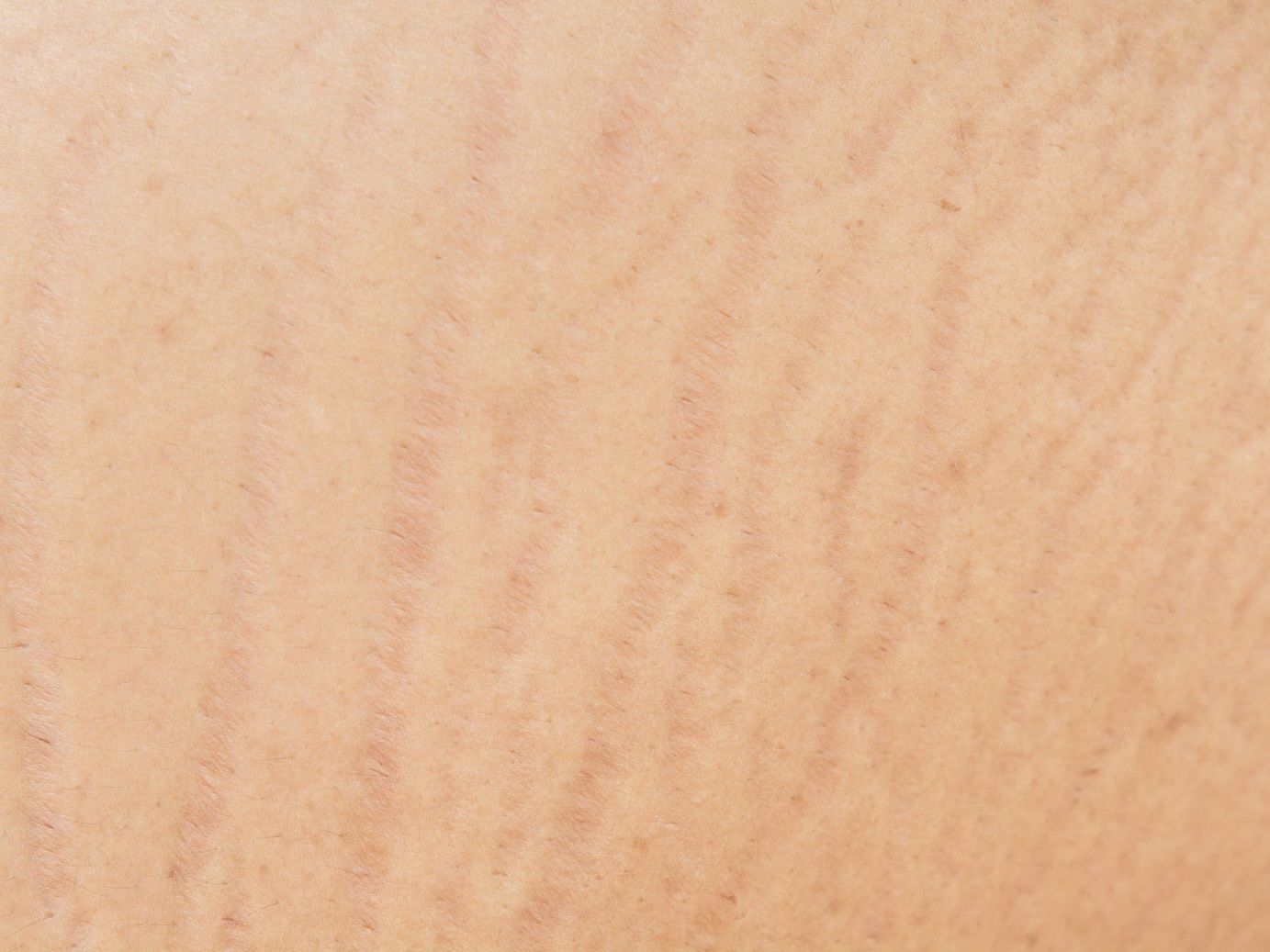
Stretch marks, or striae distensae , are linear lesions of the dermis. They are linked to a combination of mechanical tension, hormonal changes, genetic predisposition, and changes in the collagen and elastin matrix. They are not open wounds or an infection: they behave like a form of dermal scarring.2
Puberty and adolescence
Rapid breast development can stretch skin that is still very tight. Breast stretch marks are therefore common in women who have never had surgery.
Pregnancy and breastfeeding
Breast size may increase and decrease substantially. Skin elasticity and the extent of the change matter more than breastfeeding alone.
Weight, muscle development, or breast volume
Rapid weight fluctuations, substantial growth, or augmentation can place more tension on the dermis than it can tolerate.
Corticosteroids and medical causes
Prolonged corticosteroid use and some hormonal or connective-tissue disorders can also contribute. Very wide, purple stretch marks that appear without explanation warrant a medical assessment.
Color helps identify the stage
Red and white stretch marks are at different stages
Red, pink, or purple
These are more recent and retain a vascular and inflammatory component. Their color may be very noticeable at first, but this early stage usually offers more opportunities for improvement.
White or pearly
These are mature, paler, atrophic lesions. Their texture and contrast may improve, but their response is usually more limited, and complete results should not be promised.

How an implant can contribute to stretch marks
An implant increases breast volume and requires the skin to adapt. The incision, prepectoral or subpectoral placement, and commercial name of the technique do not explain stretch marks by themselves. What matters particularly is the relationship between the added volume and the skin envelope's capacity to stretch.
A large implant does not necessarily cause stretch marks, and a small one does not offer zero risk. The same number of cubic centimeters creates different tension depending on chest width, starting volume, tissue thickness, elasticity, age, and existing stretch marks.
Who has a higher risk of stretch marks after surgery?
Younger age and very tight skin
In the published cohort, risk increased between ages 22 and 28 and was higher still at 21 or younger. Younger tissues may offer more resistance to sudden expansion.
Existing stretch marks
Pronounced stretch marks during puberty, pregnancy, or weight changes suggest individual susceptibility, although they cannot reliably predict what will happen.
More volume and less coverage
Thin skin or a small breast must adapt proportionally more to the same implant. We therefore choose dimensions and volume according to anatomy, not a number alone.
Smoking
Smoking was associated with a higher incidence in the published series and also harms wound healing and general health. We recommend stopping smoking before any surgery.
Later changes
Pregnancy, a major weight change, or future hormonal changes can cause new stretch marks even if the original operation healed perfectly.
Hormonal and genetic factors
Research suggests susceptibility is not solely about stretching. The response of the dermis and the hormonal context also play a role.3
Limited-volume augmentation and tissue preservation
Do mia Femtech or Preservé prevent stretch marks?
They cannot guarantee this. “Minimally invasive” describes how we create the pocket and preserve tissue, but stretch marks form in the skin as it stretches. The practical advantage, particularly with mia, is that we use limited volumes.
mia Femtech
All implants we use are below 200 cc. With such limited expansion, we expect a very low risk of new stretch marks because less additional tension is placed on the skin; this is not a measured comparative risk estimate.
Preservé
It allows a wider range, so the theoretical risk may be somewhat higher than with mia. We still need to assess skin quality: a 225 cc Preservé procedure is not equivalent to one near the upper end of the range we use.
If both techniques could suit your anatomy, read the complete comparison of mia Femtech and Preservé.
Can stretch marks be prevented before augmentation?
No cream has been shown to prevent them reliably. In our practice, we recommend generous skin moisturization before and after surgery, once authorized by the team, to keep the skin comfortable as it adapts to mechanical stress. We always explain that this does not guarantee prevention and that preventive evidence is weak.2
Choose a proportionate volume
This is the most logical preventive decision: adapt width, projection, and volume to the breast and tissue quality.
Moisturization without promises
It may improve dryness, superficial flexibility, and comfort. It should not be marketed as proven protection against dermal damage.
Do not smoke; avoid rapid fluctuations
Stopping smoking and maintaining a stable weight benefits surgery and avoids adding further stretching and healing factors.
Recognize susceptibility
We review existing stretch marks and explain the risk. Neither good moisturization nor a particular technique can fully change the skin's genetic characteristics.
Act early without manipulating the implant
What to do if red stretch marks appear after surgery
Contact your surgical team
A red line on the skin may be a stretch mark, but it should also be distinguished from irritation, an adhesive reaction, or an inflammatory problem.
Arrange an early dermatology assessment
Once recent stretch marks are confirmed, we recommend an early dermatology review to decide whether laser treatment is indicated and which device best suits the stage and skin type.
Coordinate treatment with recovery
Treatment must respect the incision and breast healing. There is no identical timeline for everyone: the surgeon and dermatologist decide when the skin is ready.
Keep expectations realistic
Stretch marks usually fade spontaneously over time, and treatment can improve color or texture, but we cannot promise disappearance.
Current treatments to improve stretch marks
The literature includes many devices, topical products, and combinations because there is still no gold-standard treatment that works equally well for everyone. Recent reviews report variable results and few instances of complete disappearance.4
Treat color and early activity
Selected vascular or fractional lasers may reduce redness and stimulate remodeling. The choice depends on color, skin, and the postoperative stage.
Improve texture and contrast
Fractional lasers, microneedling, and fractional radiofrequency aim to stimulate collagen. The response is usually partial and may require several sessions.5
Only in selected cases
Small studies have assessed tretinoin for recent stretch marks, but it is not a harmless cosmetic cream or a treatment to use without medical advice. Its indication and contraindications must be assessed by a dermatologist.6
Personalize rather than accumulate procedures
Some combinations appear promising, but protocols and outcomes are heterogeneous. Adding more procedures does not guarantee proportionally better improvement.7
We can assess how much volume your tissues can comfortably accommodate
Existing stretch marks do not automatically rule out surgery. At your consultation, we assess skin, coverage, breast width, and the effect you want, comparing classic augmentation with mia or Preservé without forcing an indication.
Questions about breast stretch marks and implants
Why do breast stretch marks appear without surgery?
They may develop during puberty, pregnancy, rapid weight or volume changes, and because of hormonal factors and genetic susceptibility. They are common and do not, by themselves, imply disease.
Do red breast stretch marks turn white?
They usually gradually lose their red or purple color and become paler. Although they may initially look more noticeable, recent stretch marks generally offer more opportunities for improvement than mature white ones.
What implant size causes stretch marks?
There is no number separating safety from risk. One cohort found a higher incidence with implants above 300 ml, but actual tension also depends on the starting breast, width, elasticity, and tissue thickness.
Does mia Femtech guarantee no stretch marks?
No. We use implants from 165 to 195 cc in our practice and have not observed new stretch marks so far. We expect a very low risk with this limited volume, but this is not a quantified guarantee and does not mean zero risk.
Does Preservé carry a higher risk than mia?
Theoretically, somewhat, because it permits volumes from 200 to 320 cc. We have not observed this complication with Preservé so far either, but assessment becomes more individual as volume increases or the skin is tighter or more susceptible.
Does moisturizer prevent stretch marks?
We recommend generous moisturization to keep the skin comfortable as it adapts to mechanical stress, but there is no strong evidence that a cream can guarantee prevention.
Can breast stretch marks be removed completely?
No treatment guarantees removal. Red stretch marks may fade, and different techniques can improve color or texture; mature white ones are usually more resistant.
Can I have laser treatment with breast implants?
In selected cases, yes, because treatment acts on the skin. After recent surgery, it must be coordinated with the surgeon and follow a dermatology assessment, respecting the incision and tissue condition.
Medical sources
- Valente et al. Incidence and Risk Factors of Striae Distensae Following Breast Augmentation Surgery: A Cohort Study.
- Al-Himdani et al. Striae Distensae: A Comprehensive Review and Evidence-Based Evaluation of Prophylaxis and Treatment.
- Basile et al. Breast Striae After Cosmetic Augmentation.
- Zhu et al. A Systematic Review on Treatment Outcomes of Striae.
- Microneedling Therapy for Striae Distensae: Systematic Review and Meta-Analysis.
- Kang et al. Topical Tretinoin Improves Early Stretch Marks.
- Wu and Wang. Advances in the Treatment of Striae Distensae.
Proportionate augmentation better protects the quality of the result
Stretch marks after augmentation are uncommon. Explaining the possibility helps you choose volume more carefully, recognize a recent lesion, and act early if one appears, without making skin susceptibility an automatic reason to rule out surgery.
Medical transparency

Medical authorship

Jorge Aso, MD, PhD
Specialist in Plastic, Aesthetic and Reconstructive Surgery (Spanish MIR training)
Medical registration no. 2828/61062 · Madrid
Original Spanish article updated
About Breast Stretch Marks After Augmentation: Risk, Prevention, and Treatment: clinical information, safety and expectations. Based on the original Spanish content.
Translation does not constitute a new medical review. This information does not replace an individual medical assessment.
View profile, training and credentialsMedical sources and editorial standards Selected references for this article 7 references
References support the general medical information. Suitability, alternatives, and risks are discussed individually during consultation.
- Incidence and risk factors of striae distensae following breast augmentation surgery: a cohort study Plastic and Reconstructive Surgery / PubMed
- Striae distensae: a comprehensive review and evidence-based evaluation of prophylaxis and treatment British Journal of Dermatology / PubMed
- Breast striae after cosmetic augmentation Aesthetic Plastic Surgery / PubMed
- A systematic review on treatment outcomes of striae Journal of Cosmetic Dermatology / PubMed
- Microneedling therapy for striae distensae: a systematic review and meta-analysis PubMed
- Topical tretinoin improves early stretch marks Archives of Dermatology / PubMed
- Advances in the treatment of striae distensae PubMed