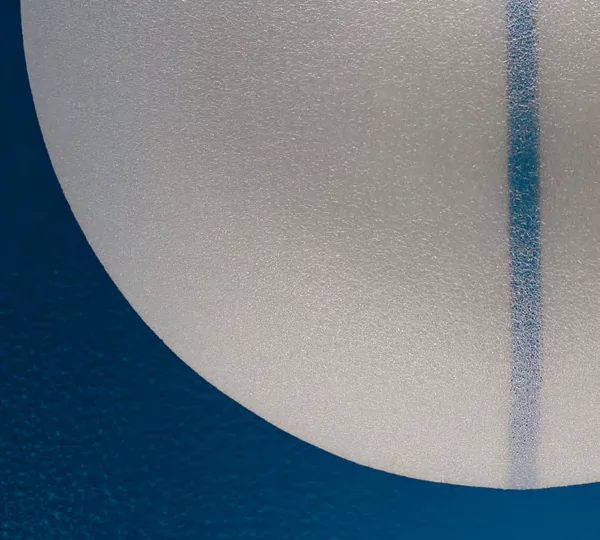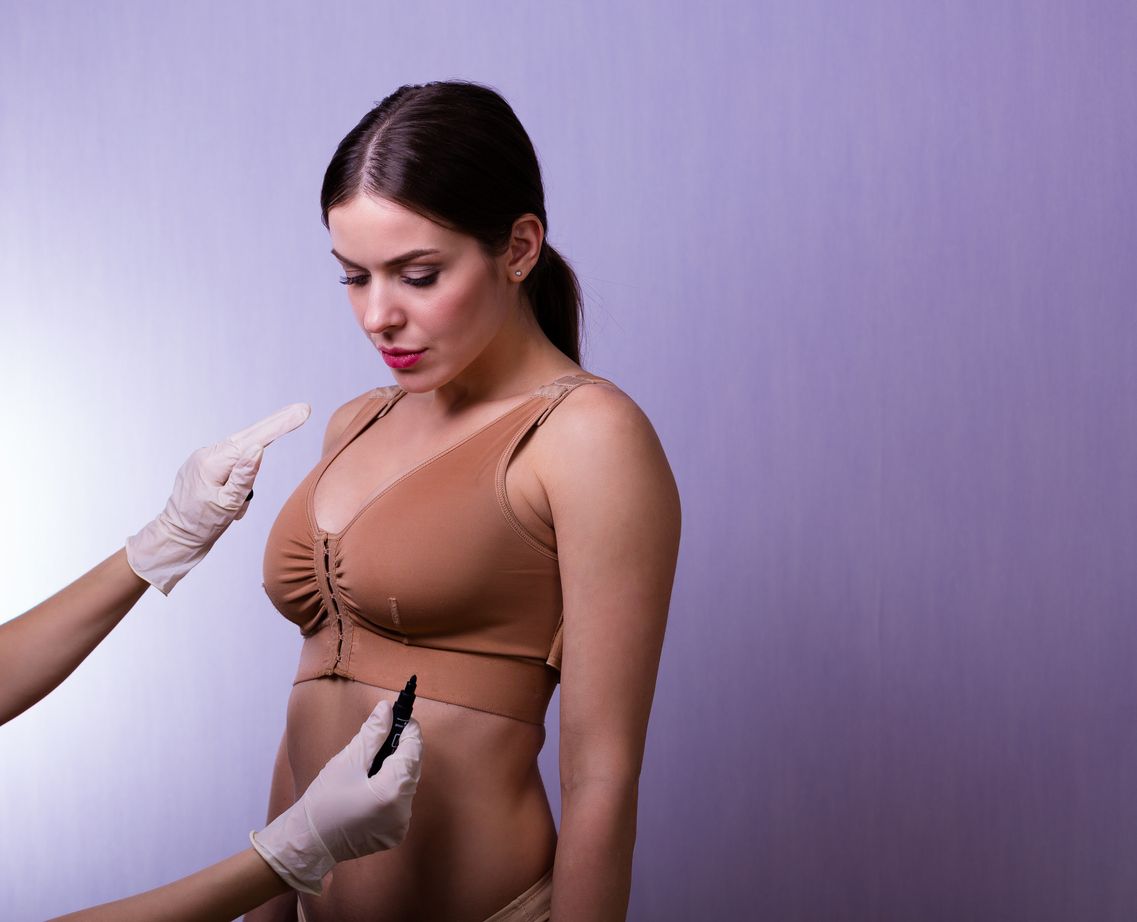
You can fly with breast implants. A normal commercial flight does not expand an implant enough to rupture it. If you have just had surgery, the timing of your flight depends on postoperative safety and staying close to your surgical team—not on the implant being at risk because of altitude.
Can breast implants burst during a flight?
No. Modern breast implants contain silicone gel or, less commonly, saline. They are not gas-filled balloons. Pressure changes in a commercial cabin can affect gas trapped in a cavity, but they do not cause dangerous expansion of the implant's filling.
An implant can rupture over its lifetime because of aging, surgical damage, persistent folds, capsular contracture, trauma, or intense physical pressure. The FDA does not list commercial air travel among the usual causes of rupture.1
Cabin pressure does not cause dangerous expansion of the implant.
We want you to stay nearby in case an early complication develops.
Wear, contracture, trauma, and surgical damage are different situations.
Pain, swelling, or a change in one breast's shape should not simply be blamed on the flight.
Article contents
The actress, the popping sound, and the implant that supposedly burst
The story goes that a famous television actress with breast implants heard a loud pop in one breast while her plane was at cruising altitude. After landing, she supposedly discovered that an implant had burst and her breast had changed shape, requiring surgery.
It is memorable because it combines three real things—altitude, pressure changes, and implants—to reach a false conclusion. There is no physical or clinical basis for expecting a normal breast implant to burst during a commercial flight.

What actually happens to pressure inside an airplane
A commercial airplane may cruise at around 30,000–40,000 feet, but its cabin is pressurized. During a normal flight, the pressure inside typically corresponds to an altitude of approximately 6,500–8,000 feet.2 That is enough to notice changes in your ears or a sealed container holding air, but it is very different from the pressure outside the airplane.
Can expand as pressure falls
Boyle's law explains changes in the volume of trapped air. The middle ear, a bag of chips, and a small air bubble respond in this way.
Its volume changes negligibly
Silicone gel and saline are practically incompressible under these conditions. They do not behave like the gas inside a balloon.
Does not build up pressure until it bursts
During an ordinary flight, the shell and filling do not undergo a change capable of multiplying the implant's volume.
A 300 cc implant does not become five times larger
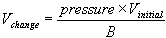
The confusion comes from applying the expansion of a gas to the entire volume of an implant. For an almost incompressible material, the relevant calculation relates the pressure change to its bulk modulus.
For an implant of around 300 cc, an illustrative estimate puts the theoretical change in volume on the order of thousandths of a cubic centimeter. The exact value depends on pressure and the material's properties, but the clinical conclusion is unchanged: the increase is negligible and nowhere near the stress needed to rupture the shell.
Are silicone and saline implants different?
Silicone implants
The gel does not expand like a gas. It is an almost incompressible filling, so pressure changes during normal commercial air travel do not produce dangerous expansion.
Saline implants
Saline does not expand significantly either. If an implant contains a small amount of residual air, that bubble can change in volume and cause a temporary sound or sensation without the implant bursting.3
Gas around—not necessarily inside—an implant has also been described after a flight or a change in altitude. A radiology study found no association with infection; it could be interpreted as a benign incidental finding when there were no other abnormalities.4 This is not a reason to ignore symptoms: a breast that changes clinically needs assessment.
What can actually cause a breast implant to rupture?
A rupture is a tear or hole in the shell, not an explosion. With cohesive silicone gel, it may be silent and remain contained within the capsule; saline implants usually show a more obvious loss of volume.
Implant aging
Risk increases over the years, although there is no single expiration date for every implant.
Damage during a procedure
An instrument, puncture, or excessive handling can damage the shell.
Contracture and persistent folds
Repeated deformation or a very firm capsule can subject the implant to genuine mechanical stress.
Trauma or intense pressure
A high-energy impact or substantial physical compression is different from ambient pressure during a flight.
For more about long-term monitoring, read our guide to breast implant lifespan, checks, and replacement.
When can you fly after breast augmentation?
This is not because airplane pressure can damage the implant. We want you to remain close to us during the days when an early complication—particularly a hematoma—may require prompt assessment and possible surgery.
Stay close to your surgical team
This is when it matters most that we can examine you and act without delay if one breast enlarges, pain increases, or a sudden change develops.
Assess recovery and the journey
If recovery is progressing normally, a flight can be considered. Flight duration, mobility, your medical history, and access to medical care still matter.
Movement and individualized prevention
Get up and walk periodically, stay hydrated, and follow your team's specific instructions. Do not start anticoagulants on your own.
Can you fly earlier after mia Femtech or Preservé?
mia Femtech and Preservé are tissue-preserving approaches that may offer a more comfortable recovery for suitable patients than conventional augmentation. However, in our practice, we still recommend staying nearby during the first week. An apparently easy recovery does not completely eliminate the possibility of an early complication.
Which signs need medical assessment?
Particularly in the first days after surgery or when a sudden asymmetry appears.
New pain that does not improve with your prescribed treatment needs assessment.
Examination and ultrasound may be needed to distinguish rupture, seroma, hematoma, or implant malposition.
These can indicate inflammation or infection and should not wait until you return from your trip.
Seek urgent medical attention. After surgery, these should not be treated as normal discomfort from flying.
Considering surgery or need your implants checked?
Breast implants, flying, and postoperative recovery
Can breast implants burst on an airplane?
Can airplane pressure rupture an implant?
How long should I wait to fly after breast augmentation?
Can I fly earlier after mia Femtech or Preservé?
Does a saline implant expand more during a flight?
What should I do if one breast changes during or after a flight?
Can I travel if I suspect an implant has ruptured?
Would a loss of cabin pressure make implants burst?
References
- FDA: risks, complications, and possible causes of breast implant rupture.
- Federal Aviation Administration: pressurization and typical cabin altitude.
- Bachman. Boyle's Law and Breast Implants.
- Periimplant Breast Gas at High Altitudes: Prevalence, Significance, and Possible Associated Factors.
- Flying Following Breast Augmentation. How Safe is it? An Evidence-Based Report of 20 Years of Experience.
- Bilateral Hematoma Following Air Travel after Breast Augmentation: A Cautionary Tale and Literature Review.
The implant is not the concern; staying close after surgery is
The actress and her supposedly bursting implant belong to an urban legend. Cabin pressure does not make flying with breast implants dangerous. After recent surgery, we wait one week so we can provide prompt care if an early complication develops.
Medical authorship Specialist in Plastic, Aesthetic and Reconstructive Surgery (Spanish MIR training) Medical registration no. 2828/61062 · Madrid About Flying with Breast Implants: Cabin Pressure and Travel after Surgery: clinical information, safety and expectations. Based on the original Spanish content. Translation does not constitute a new medical review. This information does not replace an individual medical assessment. References support the general medical information. Suitability, alternatives, and risks are discussed individually during consultation.
Medical sources and editorial standards
Selected references for this article
6 references