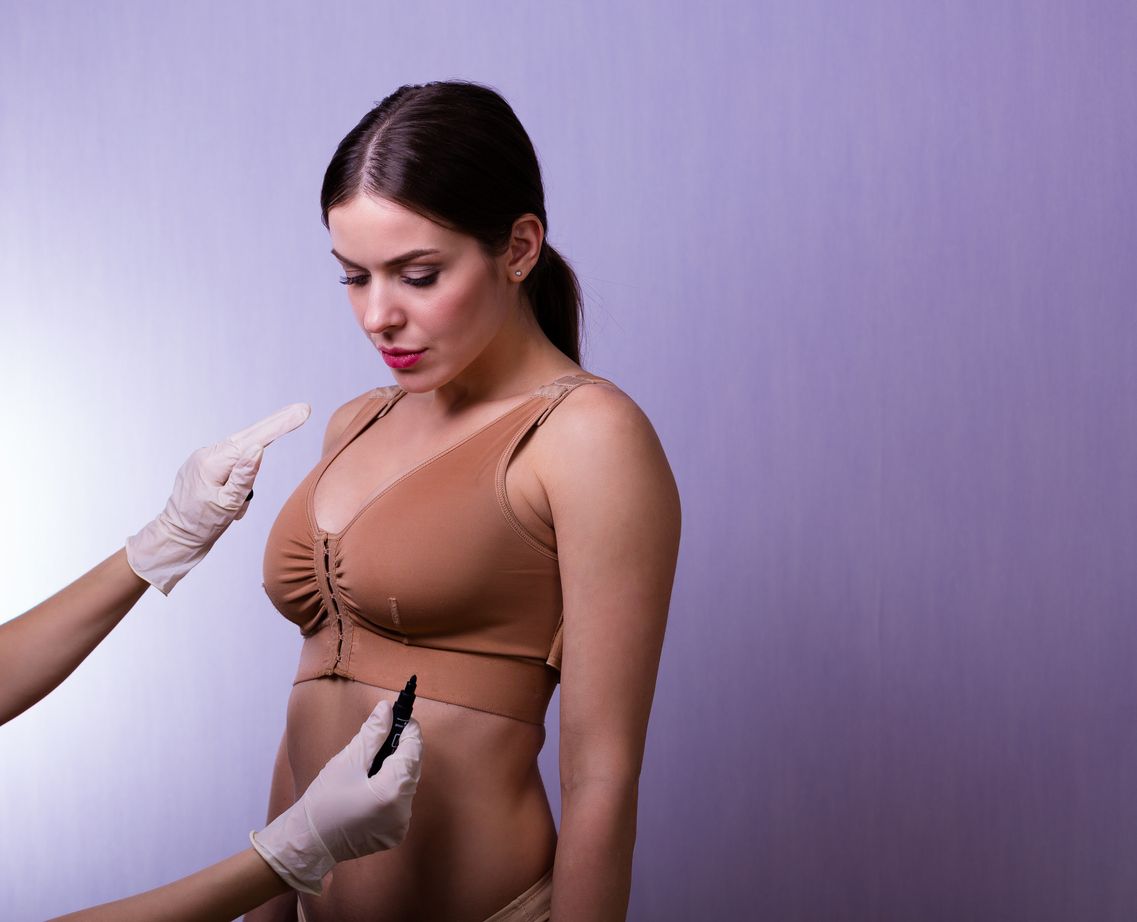
After pregnancy, there is no single body shape to regain or universal timeline. Weight, the abdominal wall, pelvic floor, skin, breasts, hips, and buttocks all change differently. The useful first step is not choosing a treatment, but understanding what has changed and whether the concern involves function, muscle, skin, or fat.
How does your body recover after childbirth?
With time, gradual activity, adequate nutrition, and assessment by a specialized physical therapist when symptoms or concerns involve the abdominal wall or pelvic floor. Exercise can improve strength, control, continence, and function, and may modestly reduce the separation between the rectus muscles. However, it does not remove excess skin or repair a hernia, and it cannot guarantee that every diastasis will close.
Once your body has stabilized, persistent localized fat, loose skin, or significant diastasis may call for different approaches: liposuction, a mini tummy tuck, lipoabdominoplasty, or preaponeurotic endoscopic repair—REPA—in selected patients. The technique is chosen after diagnosis, not from a photograph or the fashionable name of an operation.
Restore function
Breathing, walking, scar care, and rebuilding strength and control without chasing rapid results.
Specialist physical therapy
Abdominal wall, pelvic floor, pressure management, pain, continence, scars, strength, and return to sport.
At least 6 months
In our practice, we wait longer—often 12 months—if weight or tissues have not yet stabilized.
No further pregnancies planned
We do not recommend cosmetic abdominal surgery if you plan to become pregnant again.
Article contents
Recovery does not mean erasing pregnancy
Pregnancy changes blood volume, weight, posture, load distribution, the abdominal wall, and pelvic floor. The breasts enlarge and may subsequently lose volume; skin stretches; the abdomen makes room for the uterus; and pelvic mechanics adapt. Some changes reverse over weeks or months, while others may persist.
Recovery is not linear. Delivery type, a C-section, obstetric complications, sleep, breastfeeding, available support, previous activity levels, and earlier pregnancies all affect the pace. Watching symptoms, function, and progress is usually more helpful than comparing yourself with another body or a deadline.
Weight loss should be gradual
The initial priority is adequate, sustainable nutrition—not an extreme diet. If weight does not change as expected, nutrition, rest, activity, and metabolic health may need assessment.
Not every bulge is fat
Distension, poor control, diastasis, excess skin, localized fat, an adherent scar, or a hernia may be involved. Each cause needs a different approach.
Symptoms should not be dismissed
Urinary leakage, vaginal heaviness, pelvic pain, or difficulty returning to sex or exercise deserves assessment, even when these concerns are common.
Elasticity has limits
Stretch marks, excess skin, and some breast changes cannot be addressed simply by doing more abdominal exercises. First, give the tissues time to settle.
What a pelvic floor and abdominal wall physical therapist can offer
Our team works with specialist physical therapy professionals. Their role is not to give every patient the same exercise sheet, but to assess how each woman breathes, moves, and manages pressure, and adapt progression to her symptoms and goals.
Abdominal wall
Trunk control, linea alba tension, how the diastasis behaves under effort, and the ability to transfer loads.
Pelvic floor
Strength, relaxation, coordination, and symptoms such as incontinence, urgency, heaviness, pain, or sexual difficulties.
Breathing and pressure
Coordination between the diaphragm, abdomen, and pelvic floor when standing up, carrying your baby, coughing, training, or doing everyday tasks.
Scars and mobility
Healing of a C-section or tear, sensitivity, adhesions, pain, and tissue mobility once healing permits assessment and treatment.
Pelvis, back, and hips
Lumbopelvic pain, gluteal strength, hip mobility, posture, and movement strategies that overload other areas.
Return to impact
Gradual preparation for running, jumping, or returning to the gym without leakage, heaviness, pain, uncontrolled abdominal bulging, or loss of control.
What we know—and what remains uncertain
A systematic review and meta-analysis of 65 studies found that postpartum pelvic floor muscle training reduces the likelihood of urinary incontinence, while abdominal training may reduce the distance between the rectus muscles. However, certainty is limited for several outcomes, and no universal routine was identified.
The European Hernia Society considers physical therapy a reasonable option before diastasis surgery, while acknowledging insufficient evidence to recommend a specific program. We therefore assess success through function, symptoms, and confidence in movement—not just millimeters.
Is it diastasis, excess skin, fat, or a hernia?
These conditions can all produce a prominent abdomen and may coexist, but they are not the same. Clinical examination—and ultrasound when helpful—avoids attributing everything to diastasis.

- Diastasis: widening and thinning of the linea alba between the rectus muscles. The muscles are not torn apart.
- Excess skin: folds, laxity, or stretch marks that remain even after strengthening the abdomen.
- Localized fat: subcutaneous fat that can persist at a stable weight.
- Hernia: a defect in the abdominal wall through which contents protrude; it requires a different diagnosis and may change the technique.
Width is not the whole story
The European guideline uses a separation greater than 2 cm as a practical definition of diastasis, but notes that the relationship between width and symptom severity is unclear. A wider separation does not automatically mean worse function or a need for surgery. Trunk stability, bulging, pain, limitations, tissue quality, and any hernia all matter.
Postpartum exercise: progress by symptoms, not a social media deadline
Activity resumes gradually when your medical recovery allows it. An uncomplicated vaginal delivery, a C-section, and a pregnancy with complications do not necessarily follow the same timetable. The 2025 Canadian postpartum physical activity guideline recommends an individualized, symptom-guided return, considering healing, the pelvic floor, abdominal wall, pain, sleep, and breastfeeding.
Recover and move
Comfortable breathing, short walks, mobility, and basic tasks without strain. The wound, bleeding, pain, and your obstetric team's advice take priority.
Rebuild control
Individualized pelvic floor, abdominal wall, hip, and general strength work. Progression depends on assessment, not just the calendar.
Increase strength and load
More resistance, functional tasks, and preparation for impact, provided there is no heaviness, leakage, pain, or uncontrolled bulging.
Return with clear criteria
Running, jumping, and lifting require tolerance of earlier exercises and effective pressure management. A physical therapist can assess this.
Principles that are more useful than a list of good and bad abdominal exercises
Avoid unintentionally holding your breath and learn to coordinate your abdomen and pelvic floor.
An exercise may be suitable today at lower intensity but not yet with more weight, speed, or fatigue.
Leakage, heaviness, pain, or increasing bulging means the technique or exercise dose needs review.
Walking, pulling, pushing, sitting down, lifting, and strengthening the legs and glutes are all part of recovery.
A support garment may feel helpful in certain situations, but it does not strengthen the abdomen or replace rehabilitation. Use should have a clear indication and should not restrict breathing or worsen other symptoms.
Weight, breasts, hips, and buttocks: what can actually change?
Weight and localized fat
Returning to your previous weight does not guarantee the same contour. The hips, thighs, or abdomen may retain localized fat deposits. Before considering liposuction or body contouring , weight should be stable and the skin should have enough elasticity to adapt. Liposuction is not a weight-loss treatment and does not make results immune to later weight changes.
Breasts after pregnancy and breastfeeding
The breasts may have less volume, more skin, or a different position. This should not automatically be blamed on breastfeeding: pregnancy, age, elasticity, previous volume, and weight changes also matter. Once the tissues have stabilized, options may include breast augmentation, breast lift surgery with or without implants, or no surgery. Specific timelines are explained in our guide to breast surgery after childbirth and breastfeeding.
Buttocks and hip strength
Reduced activity, postural changes, pain, and general loss of strength may make the glutes look flatter or work less effectively. They are not literally asleep, and muscle memory does not produce instant recovery. Progressive strength training is usually the first approach. Once stable, a patient who wants to change volume and contour may consider fat transfer using her own fat , a surgical option requiring assessment and sufficient donor tissue.
Hips, pelvis, and outer thighs
Feeling wider may relate to weight, fat distribution, posture, muscles, or pelvic changes. Diet and exercise can change fat and strength, but cannot promise to restore an exact bone measurement. Persistent localized fat with good skin tone may be suitable for liposculpture.
Skin, stretch marks, and C-section scars
Stretch marks are dermal scars: they may fade, and some dermatologic treatments can improve their appearance, but erasing them is not a realistic promise. A C-section scar may need time, local care, or physical therapy for adhesions or discomfort. With substantial excess skin, nonsurgical treatments are not equivalent to skin removal.
When can surgery be considered after childbirth?
We do not perform cosmetic abdominal surgery during delivery or the first months of recovery. Your body, uterine volume, weight, abdominal wall, skin, and daily circumstances are still changing. Surgery at that stage adds risk and makes choosing the right technique harder.
At least six months
This is the lower threshold in our postpartum abdominal surgery protocol, always subject to recovery and individual assessment.
Often around 12 months
We wait longer if weight or tissues are still changing, or if previous pregnancies had already significantly affected the abdomen.
Stable for at least three months
Substantial later changes can affect the skin, contour, and abdominal wall result.
No further pregnancies planned
In our practice, we do not recommend this surgery if you plan another pregnancy, because results may be compromised and the abdominal wall stretched again.
Physical therapy when indicated
Particularly when functional symptoms predominate or diastasis has not yet received structured rehabilitation.
Examination of skin, fat, and the abdominal wall
If a hernia is suspected or the anatomy is unclear, ultrasound or other tests may change the plan and the team required.
When breast changes are also addressed, combining procedures is often called a mommy makeover. This does not mean every mother needs several operations or that doing everything together is preferable. Extent, operating time, and safety are assessed individually.
Two tummy tuck results we particularly like to show
These illustrate two important points after pregnancy: diastasis is not treated in isolation when excess skin and fat are also present, and the waist should be planned alongside the abdominal wall. Each card opens the complete clinical case.
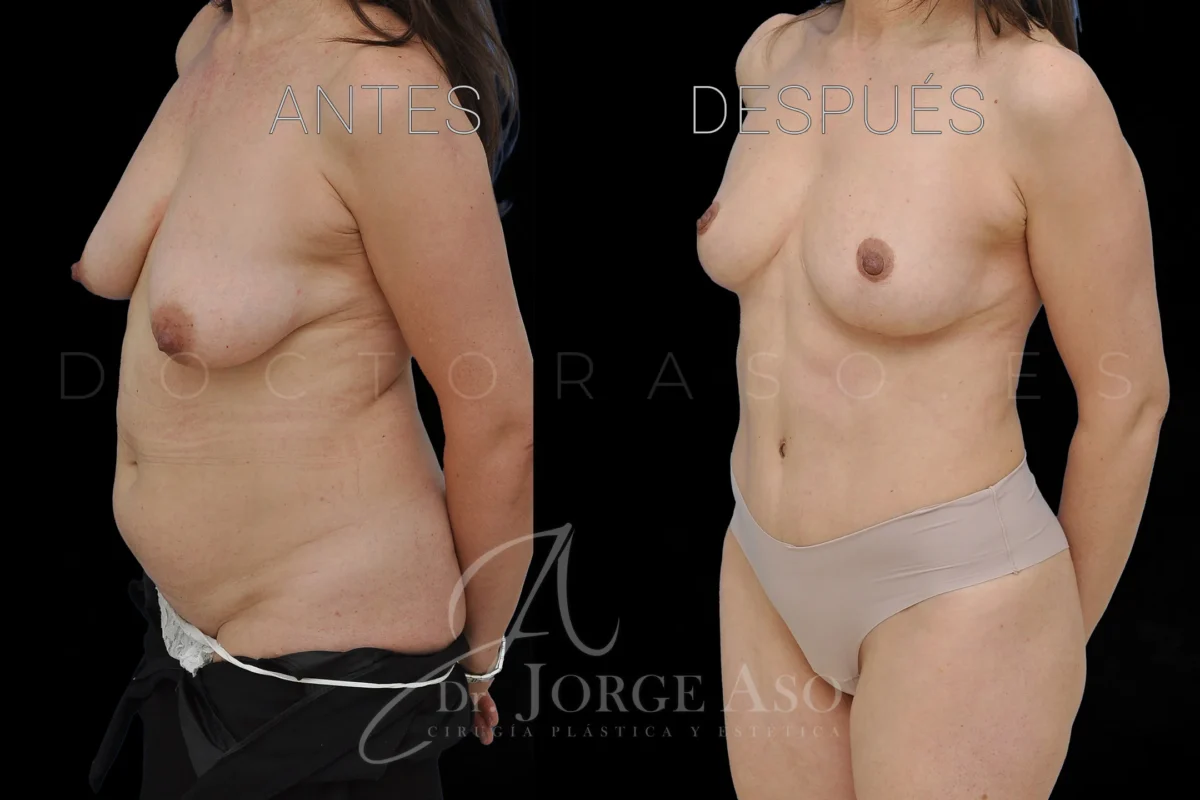
BeforeAfter
Lipoabdominoplasty with diastasis repair
An example of treating skin, fat, waist, and the abdominal wall together.
View the complete case →
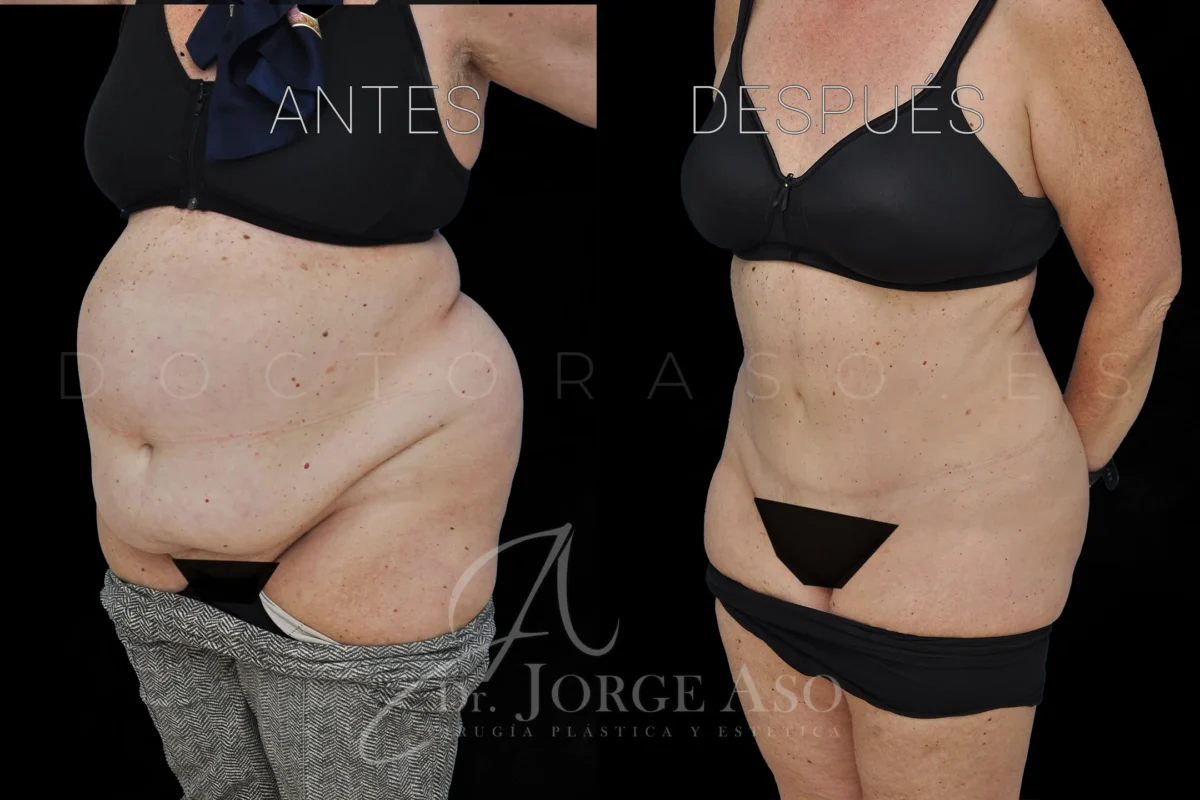
BeforeAfter
Contour, waist, and abdominal wall addressed together
The change is not simply about tightening skin: planning integrates the entire abdominal anatomy.
View the complete case →
These photographs show real clinic patients. Results vary with anatomy, the starting point, technique, and individual recovery.
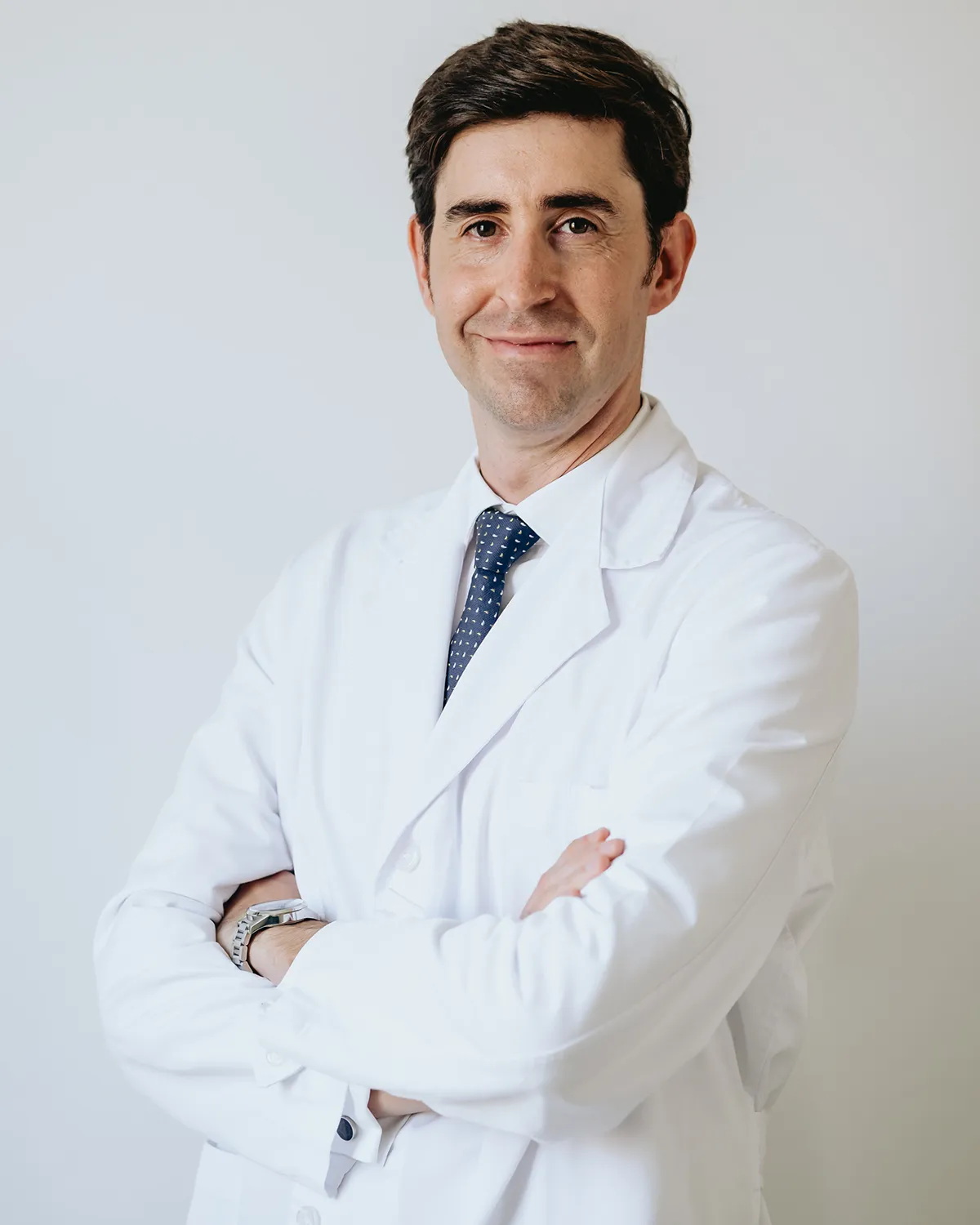
I am Dr. Jorge Aso
I am a specialist in Plastic, Aesthetic, and Reconstructive Surgery through Spain's MIR training system, and hold a PhD in Medicine cum laude. According to our internal records, I have performed more than 1,000 tummy tucks and currently perform approximately 60 to 120 abdominal contouring procedures per year.
For a patient after pregnancy, I begin by asking about her concerns—not which operation she wants. Assessment connects our physical therapy team with examination of the skin, fat, and abdominal wall. When REPA is indicated, we plan and perform it with gastrointestinal surgeons experienced in laparoscopy.
Experience figures from the clinic's internal records. Updated: August 2026.
Aesthetic treatments: realistic expectations
The earlier version of this article described mesotherapy, carboxytherapy, pressotherapy, LPG, radiofrequency, and laser as highly effective solutions. That wording does not distinguish evidence quality, indications, or the size of any benefit. A responsible medical guide starts with diagnosis:
- Lymphatic drainage or pressotherapy may temporarily change swelling or a feeling of heaviness, but do not remove fat or repair diastasis.
- Radiofrequency devices may produce modest changes in certain degrees of laxity, but are not equivalent to removing substantial excess skin.
- Dermatologic treatments may improve the color or texture of stretch marks; no laser guarantees their removal.
- Body injections and fillers require a medical indication and information about the product, limitations, and risks. They are not part of a universal postpartum protocol.
For a nonsurgical treatment, the useful question is what finding it is intended to improve and how much realistic change can be expected—not which device is fashionable.
Frequently asked questions about postpartum recovery
When can I start exercising after childbirth?
Gentle movement can begin early for many women, but progression depends on delivery type, the wound, bleeding, pain, and any complications. A C-section or complicated delivery requires a timetable adapted with your obstetric team and physical therapist.
How long does it take for my body to return to normal?
There is no single date, and you may not return to exactly your previous state. Some changes improve within weeks; strength, weight, breasts, skin, and the abdominal wall may change for many months. For surgical assessment, our minimum is six months, and we often wait around a year.
Can exercises close diastasis?
They may improve control and reduce the distance between the rectus muscles to some extent, but there is no universal routine or guarantee of complete closure. Width is not the only important outcome: function, symptoms, linea alba tension, and the ability to manage effort matter too.
Should I avoid abdominal exercises if I have diastasis?
There is no identical list of prohibited exercises for every woman. Dose, technique, and response matter. If pain, pelvic heaviness, leakage, or uncontrolled bulging develops, reduce the load and review the exercise with a physical therapist.
Does a postpartum support garment restore the abdomen?
It can provide temporary support or comfort in specific situations, but does not strengthen the wall, close diastasis on its own, or prevent excess skin. Inappropriate use may be uncomfortable or interfere with breathing and pressure management.
Why have my buttocks become flatter after pregnancy?
Reduced activity, muscle loss, weight changes, pain, or different movement strategies may contribute. Assessment and progressive strength training are the first steps; it does not mean the glutes have permanently switched off.
What is the difference between a mini tummy tuck and REPA?
A mini tummy tuck removes a limited amount of skin, usually below the belly button, and can address certain abdominal wall components. REPA focuses on endoscopic diastasis repair and does not remove substantial excess skin. Skin quality and distribution are often decisive.
Can I have surgery if I want another child?
In our practice, we do not recommend cosmetic abdominal surgery when another pregnancy is planned. Although pregnancy is possible after surgery, renewed stretching may compromise the skin, plication, and contour, making further treatment necessary.
Recover first; decide afterward
The best postpartum recovery is not the fastest or the one with the most treatments. It identifies symptoms, rebuilds function, allows the body to stabilize, and reserves surgery for concerns that time and physical therapy cannot address.
If excess skin, localized fat, diastasis, or a possible hernia persists afterward, we can assess the abdominal wall and contour separately and explain whether to continue physical therapy, consider a mini tummy tuck or lipoabdominoplasty, or explore REPA with our multidisciplinary team.
Medical sources
- Beamish NF et al. Impact of postpartum exercise on pelvic floor disorders and diastasis recti abdominis: a systematic review and meta-analysis. Br J Sports Med. 2025.
- Davenport MH et al. 2025 Canadian guideline for physical activity, sedentary behaviour and sleep throughout the first year post partum. Br J Sports Med. 2025.
- Hernández-Granados P et al. European Hernia Society guidelines on management of rectus diastasis. Br J Surg. 2021.
- Xia Y, Zhao J, Cao DS. Safety of Lipoabdominoplasty Versus Abdominoplasty: A Systematic Review and Meta-analysis. Aesthetic Plast Surg. 2019.
- Brucchi F et al. Short-term outcomes of minimally invasive endoscopic onlay repair for diastasis recti and ventral hernia repair: a systematic review and meta-analysis. Surg Endosc. 2025.
Medical authorship Specialist in Plastic, Aesthetic and Reconstructive Surgery (Spanish MIR training) Medical registration no. 2828/61062 · Madrid About Postpartum Body Recovery: Physical Therapy, Diastasis, and Surgical Options: clinical information, safety and expectations. Based on the original Spanish content. Translation does not constitute a new medical review. This information does not replace an individual medical assessment. References support the general medical information. Suitability, alternatives, and risks are discussed individually during consultation.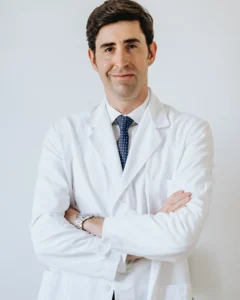
Medical sources and editorial standards
Selected references for this article
5 references