
Gradual improvement
Swelling on both sides, tightness, bruising, manageable discomfort, breasts that sit high or feel firm, and increased or reduced sensation.
After breast augmentation, swelling, tightness, an initially high implant position, and temporary changes in sensation can be normal. A one-sided, severe, progressive, or late change needs assessment, especially if there is pain, increased volume, hardening, redness, fever, or a change in shape.
Most patients recover well, and the initial discomfort is part of healing, not implant “rejection.” However, breast surgery can involve a hematoma, infection, wound-healing problems, or a seroma. Over time, an implant can also develop capsular contracture, malposition, rippling, or rupture.
The most useful way to discuss these risks is to distinguish what is expected, what should be checked, and what needs urgent assessment. Modern implants have been studied extensively, but they are not lifetime devices and require follow-up.
Swelling on both sides, tightness, bruising, manageable discomfort, breasts that sit high or feel firm, and increased or reduced sensation.
One breast gets larger, changes shape, becomes harder, hurts more than the other, or develops increasing asymmetry.
Severe pain, a sudden increase in volume, fever, increasing redness, warmth, discharge, or a decline in your general condition.
During the first few days, the breasts often feel tight, swollen, and firmer. You may have superficial bruising, pressure, discomfort when moving your arms, and a temporary difference between the two sides. Swelling does not always subside at exactly the same rate on both sides.
Early breast volume is not the final result. In young, tight tissues, an implant may remain high and relatively immobile for some time before settling and developing more natural movement.
Nerves can be temporarily stretched or irritated. Recovery is usually gradual, although any breast surgery can leave permanent changes in a minority of patients.
The degree of discomfort depends on implant placement, the technique, volume, and individual response. It should improve. Pain that gets worse, becomes clearly one-sided, or starts suddenly should be assessed.
Swelling can accentuate existing differences or temporarily make the breasts look uneven. A photograph from the first few days should not be used to judge the final result.
These problems are mainly related to the operation and wound healing. They are uncommon, but recognizing them early allows treatment sooner and helps protect both the tissues and the implant.
This can cause a relatively rapid increase in the size of one breast, tightness, pain, and increasing skin bruising. Significant hematomas may need surgical evacuation.
Increasing pain, redness, warmth, discharge, fever, or feeling generally unwell requires prompt assessment. Treatment depends on the depth of the infection, the organism involved, and whether the implant is affected.
A thin layer of fluid around an implant on a postoperative ultrasound may be entirely normal. If the collection increases, can be felt, or causes symptoms, in our practice we perform an ultrasound and drain it when indicated, sending a sample for microbiological testing.
An opening in the wound, compromised skin, or discharge should not be treated at home without medical advice. Most superficial problems can be resolved, but an exposed implant needs a different approach.
Risks are reduced through appropriate patient selection, meticulous technique, suitable materials, surgery in a hospital setting, and close follow-up. They cannot be eliminated completely, and no single measure determines the outcome.
The body normally forms a thin capsule around an implant. Capsular contracture occurs when that capsule thickens or tightens, causing firmness, a change in shape, or pain. This is different from a normal capsule and does not mean the body is “rejecting” the implant.
An implant can move downward, sideways, remain too high, or come too close to the midline. The pocket, breast fold, implant weight, and tissue quality all play a role. A small remaining asymmetry does not necessarily mean malposition.
An anatomical implant can change the breast's shape if it rotates on its axis. Round and ergonomic implants do not change silhouette with this type of rotation, although any implant can flip front to back or move out of position.
Implant folds may be felt or seen when tissue coverage is thin. The risk depends mainly on the tissues, but implant placement, volume, the capsule, and implant characteristics also matter.
Most sensory changes improve over time, but surgery can leave areas with reduced sensation or, less commonly, neuropathic pain. The incision and surgical maneuvers also affect the risk.
An implant can deteriorate over the years, and a silicone implant rupture may not cause obvious symptoms. Follow-up visits and imaging therefore remain important even when a patient feels well. There is no universal replacement date: surgery is performed when there is a clinical indication or an informed wish to make a change.
This may change the shape, firmness, or volume of the breast, but it can also be silent. Ultrasound is usually the first test, and MRI can help when uncertainty remains.
A breast that swells months or years after surgery needs assessment. Our protocol includes ultrasound, ultrasound-guided aspiration, and a full analysis of the fluid, rather than indefinite observation.
In medical terms, a silicone implant is not rejected in the way a transplanted organ can be. The body normally forms a capsule around it. When a patient describes “rejection,” she may mean several different situations: infection, capsular contracture, inflammation, a seroma, pain, wound-healing problems, or concern about recovery that is still within the normal range.
We therefore do not diagnose “rejection” from a photograph or a single word. We ask when the change began, whether it affects one side, how it is progressing, and which symptoms accompany it. We then examine the breasts and use ultrasound when it can clarify the problem.
In appropriately selected patients, mia and Preservé create a prepectoral pocket through controlled expansion, with small incisions and without cutting the pectoral muscle. In our experience, less tissue manipulation leads to a more comfortable early recovery, less swelling, and less use of pain medication than conventional submuscular augmentation.
This does not mean that the procedures are risk-free. They still use implants, require the same long-term follow-up, and can involve contracture, rupture, rippling, or malposition. The technique reduces certain aspects of surgical trauma; it does not make an implant a permanent device or eliminate the risks of having one.
In the currently audited mia and Preservé series, we have not diagnosed an infection, a postoperative hematoma requiring treatment, or a seroma requiring aspiration or surgery. These are among the acute complications patients worry about most before surgery, and so far we have not observed them in this series.
The series does include four small superficial wound openings reinforced with one to three stitches in the office, and one early implant rupture detected by ultrasound, treated with replacement and a good recovery. Separating these events avoids an inaccurate claim of “0% complications.” Follow-up is still short and uneven, and this is not a comparative trial.
Some patients report fatigue, joint pain, difficulty concentrating, or other general symptoms under the term breast implant illness or BII. There is no specific diagnostic test, and a causal relationship with implants remains uncertain.23
In our experience, it is very uncommon for a systemic illness to be attributed to an implant with reasonable certainty after assessment. This does not mean ignoring symptoms. They should be heard, investigated, and assessed together, considering medical, hormonal, nutritional, autoimmune, and other possible causes before a surgical decision is made.
No protocol can promise zero risk. Our goal is to reduce avoidable factors, recognize problems early, and choose each technique according to the patient's actual anatomy.
We assess health, medical history, tissues, coverage, asymmetry, size, and expectations before choosing implant placement, the incision, and the implant.
We perform surgery in an accredited hospital setting, with an anesthesiologist and protocols in place to recognize and treat complications.
Implant positioning, control of the breast fold, and insertion with a sleeve or injector reduce direct handling and help protect the tissues.
The surface, shape, dimensions, gel, and weight are selected according to tissue coverage and the behavior we want. No implant is the best choice for everyone.
We provide postoperative checks, recommend an annual ultrasound and an MRI at ten years. In our revision-surgery consultations, Dr. Aso personally performs a dynamic ultrasound.
We do not recommend directly massaging the implant. For sudden one-sided pain or increasing asymmetry, we usually perform an ultrasound unless the situation requires immediate treatment.
The Spanish medicines and medical devices agency, AEMPS, recommends that patients understand the risks, keep their implant identification records, attend regular follow-up visits, and seek advice for pain, swelling, redness, warmth, discharge, loss of volume, changes in shape, or asymmetry.1
This information can help you decide when to seek advice, but it does not replace an examination. If you are concerned about your recovery, contact the team that knows your surgery.
We compare conventional augmentation, mia Femtech, and Preservé according to your tissues, desired volume, and recovery.
Explore breast augmentation in Madrid →
We assess the breast, capsule, pocket, and implant through examination and an ultrasound during the consultation.
Request an assessment →
Side effects exist, but their frequency, severity, and timing differ. An honest explanation should help you recognize a warning sign while also preventing normal swelling from being mistaken for a serious problem.
Medical authorship
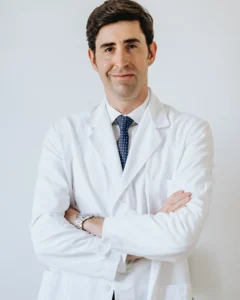
Specialist in Plastic, Aesthetic and Reconstructive Surgery (Spanish MIR training)
Medical registration no. 2828/61062 · Madrid
About Breast Implant Side Effects: Normal Recovery, Complications, and Warning Signs: clinical information, safety and expectations. Based on the original Spanish content.
Translation does not constitute a new medical review. This information does not replace an individual medical assessment.
View profile, training and credentialsReferences support the general medical information. Suitability, alternatives, and risks are discussed individually during consultation.
Dr Jorge AsoDr. Jorge Aso is a plastic surgeon with extensive academic and clinical training. He leads Dr. Aso Clinic, with a particular focus on breast surgery alongside other aesthetic…
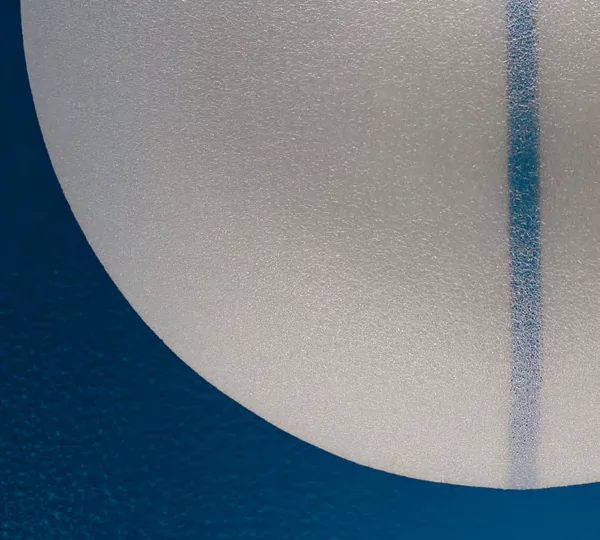
Explore B-Lite lightweight breast implants: weight reduction, feel, benefits, limitations, extra cost, and when Dr. Aso recommends MESMO or MICROTHANE.

Dr Jorge AsoDr. Jorge Aso is a plastic surgeon with extensive academic and clinical training. He leads Dr. Aso Clinic, with a particular focus on breast surgery alongside other aesthetic…
Dr Jorge AsoDr. Jorge Aso is a plastic surgeon with extensive academic and clinical training. He leads Dr. Aso Clinic, with a particular focus on breast surgery alongside other aesthetic…