The essentials
Short answer
After a breast reduction you spend one night at Hospital Universitario HLA Moncloa and go home with no drains or bandages, wearing a post-operative bra. Most patients return to work that involves no physical effort 3 to 7 days later. The bra is worn day and night for the first month, and exercise is resumed gradually from 4–6 weeks. In most cases the result is final at 3–4 months, and the scar keeps improving for 12–18 months.

- 1 nightin hospital, no drains or bandages
- 3–7 daysto return to work with no physical effort
- 1 monthin the bra, day and night
- 4–6 weeksto ease back into sport
Timings
Recovery at a glance
- Length of surgery
- 2–3.5 hours, under general anaesthesia
- Hospital
- One overnight stay; discharge the next day
- Drains and bandages
- Not routinely
- Work with no physical effort
- 3–7 days
- Work involving lifting or effort with the arms
- Longer, as agreed at your check-up
- Driving
- 7–12 days depending on progress: around day 7 with an automatic, a little later with a manual
- Bra
- One month, day and night
- Sport
- Gradually from 4–6 weeks
- Sleeping
- On your back for the first month; on your side after that; on your front from 6 months
- Showering
- In parts from day one, keeping the breasts dry; a full shower after the one-week dressing
- Check-ups
- At least at one week, two weeks, one month, 3 months and one year
These timings are a guide for an uncomplicated recovery. The advice you receive at your check-up comes first.
Step by step
Breast reduction recovery, day by day
- Day 0
The day of surgery
The operation is done under general anaesthesia and takes 2 to 3.5 hours, depending on how much tissue has to be removed and reshaped. You leave the operating theatre wearing the post-operative bra, with no drains or bandages, and spend the night at Hospital HLA Moncloa, where we monitor your progress and keep pain under control.
- Take only the prescribed pain relief.
- Get up with help and walk short distances from the first day.
- Drink water and eat light meals as you feel able.
- Days 1–7
Days 1–7
Tightness, pressure and swelling are normal; the more noticeable discomfort usually lasts 4–5 days. Many patients feel from the start that their back and shoulders are relieved. Paracetamol and metamizole are usually enough; if not, we add an anti-inflammatory.
You can shower in parts from the first day, keeping the breasts dry. Keep the dressings clean and dry and do not change them unless we tell you to. Sleep on your back. Walk several times a day, but do not carry weight or repeatedly lift your arms above shoulder height. If your work involves no physical effort, you can go back after 3 to 7 days.
- Week 1
First week: the dressing
At one week we see you at the clinic for the first dressing; from then on you can take a full shower. Driving is resumed between days 7 and 12, depending on progress: around day 7 with an automatic car, a little later with a manual. Always provided you can react without pain and are not taking sedating medication.
If you are travelling from another city or country, you can fly home after this dressing, with help for your luggage.

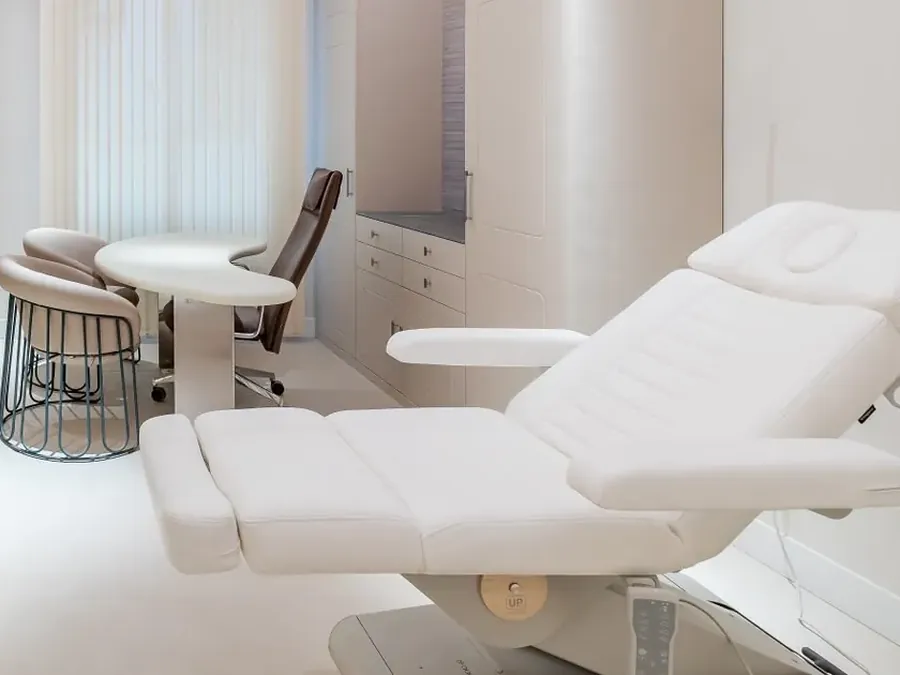
The first dressing, at our clinic on Jorge Juan 69 - Weeks 2–4
Weeks 2–4
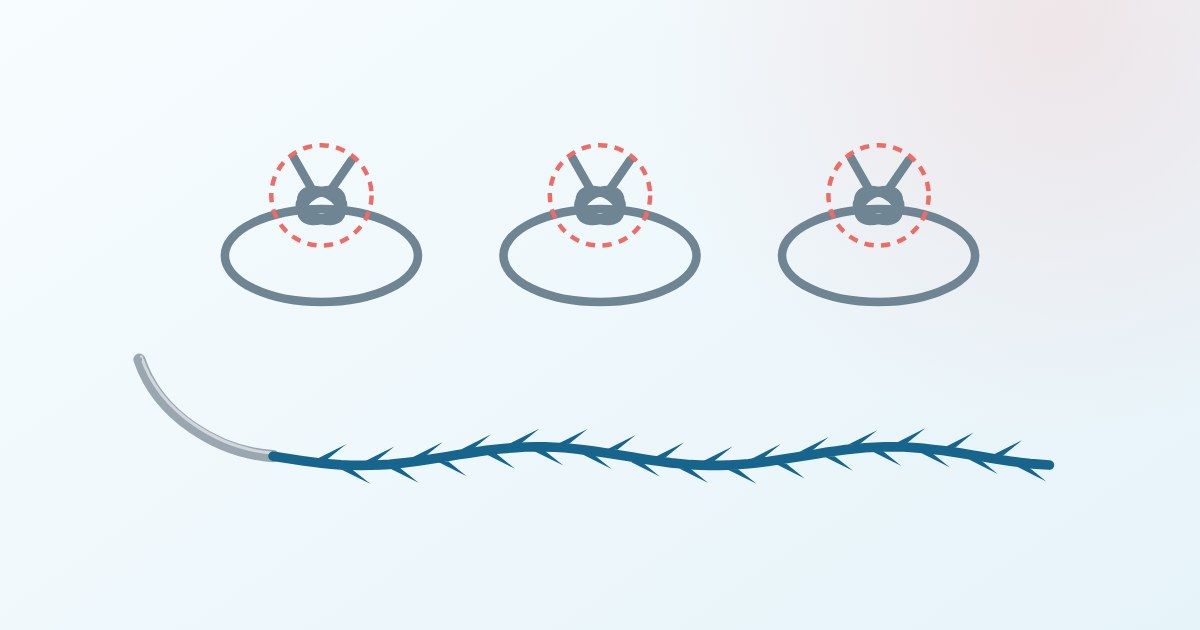
At the two-week check-up we remove the start and end of each suture: there is no row of stitches to take out, because we close the skin with barbed sutures, with no knots on the surface (why stitches surface and how we prevent it). From two weeks you can carefully resume sexual relations, without pressure or weight on the breasts. From the third week, silicone sheets go on the scar.
The two-week check-up - Months 1–3
Months 1 to 3
At one month you stop wearing the post-operative bra and switch to one with good support, and you can start sleeping on your side. On your front, from 6 months. Swimming in the sea or a pool is usually possible from one month, once we confirm it at your check-up. Exercise is resumed gradually from 4–6 weeks, with a well-fitting sports bra. Work that involves lifting or effort with the arms is resumed when we say so at your check-up.
The clinic treatment room - 3–4 months
At 3–4 months
In most cases the result is final at 3–4 months: the swelling has gone down and the breasts have settled into their shape. We review it with you at the 3-month and one-year check-ups.
- 12–18 months
Up to 12–18 months
The scar changes more slowly than the shape: in the first months it is pink and slightly thicker, and it gradually fades and flattens over 12–18 months.
Scar
The scar: care and how it evolves
A breast reduction leaves a scar around the areola, a vertical one down to the fold and another in the fold under the breast (an inverted T). On the breast reduction page we explain when each pattern is used. This is the care we follow:
- Laser in the operating theatre
- We apply a non-ablative laser while closing the wound, as part of the surgery itself. As a rule, no further sessions are needed. It is optional and costs €900.
- Silicone from the third week
- Silicone sheets on the healed scar.
- Sun protection for at least a year
- No direct sun while the wound is still open. After that, SPF 50+ or keep it covered for at least 12 months and until the scar has turned pale.
- No smoking
- Smoking impairs healing: you need to stop for the time we advise before and after the operation.
Is it normal for the scar to open slightly?
Yes, a small opening of the wound (dehiscence) is not unusual, especially where the lines of the T meet, which is the area under most tension and the slowest to close. In our series it happened to 11 in every 100 patients, almost always in the second or third week. It usually heals with dressings and, at most, needs a little extra suturing at the clinic. If you notice the wound opening, oozing or turning red, let us know and do not treat it yourself.
Our data
Is breast reduction safe? Our data
We reviewed, one by one, the records of 118 breast reductions without implants performed at the clinic between 2023 and early 2026, with the same technique and the same protocol. Of those 118 patients, 117 did not need to return to theatre. The complications that did occur were almost always minor and were resolved at the clinic.
- Wound openings, resolved at the clinic
- Infections, treated with oral antibiotics
- One revision in theatre, for a haematoma within 24 hours
These are all the complications we found, including minor ones:
Small wound opening in the first 30 days
Dressings at the clinic; in three cases, also a few reinforcing stitches at the clinic
Infection treated with antibiotics, including suspected cases
Oral antibiotics; in one case, also cleaning out an abscess around a stitch
Haematoma
One drained under local anaesthesia; the other revised in theatre within 24 hours
Major complication: return to theatre under general anaesthesia
The haematoma revised in theatre
Each patient is counted once per row, and the same patient can appear in more than one. Wound openings are counted in the first 30 days; infections and haematomas throughout follow-up. The openings appeared mainly in the second and third weeks, when the suture ends are trimmed.
Breast reductions that also include an implant are a different operation, with more complications, and we will analyse them separately. Most of the series predates closure with barbed sutures, which we now use routinely; we will measure those cases too.
When to call us
Warning signs: when to contact the clinic
Get in touch without waiting for your next check-up if you notice any of these signs. If you are short of breath, have chest pain or feel much worse, go to A&E.
- One breast getting bigger quickly
- Pain that suddenly increases or is not relieved by your medication
- Bleeding
- High or persistent fever, especially if you feel generally unwell
- Spreading redness, warmth or discharge from the wound
- A marked change in the colour of the areola, for example if it darkens
- Pain and swelling in one leg
In the long term
After a breast reduction: sensation, breastfeeding, pregnancy and weight
- Sensation
- Reduced sensation is common, mainly in the lower part of the breast and sometimes in the nipple. In many cases it returns over the months, although some patients notice a permanent decrease.
- Breastfeeding
- Removing glandular tissue and moving the remaining tissue can cut milk ducts, so the chance of breastfeeding normally is usually not high. If you want to breastfeed in the future, tell us at the consultation.
- Pregnancy
- You can become pregnant after a breast reduction. We recommend waiting at least 6 months after the operation. Pregnancy and breastfeeding can change the size and shape of the breasts again.
- Weight
- The tissue removed does not grow back. The remaining tissue can get larger or smaller with changes in weight and hormones, but less than before, because there is less tissue. This is why it is best to have surgery at a stable weight.
How we work
Our protocol at the Dr. Aso Clinic
- One overnight stay at Hospital Universitario HLA Moncloa.
- No routine drains or bandages. Only if a complication requires it, which is very rare.
- Bra for one month, day and night; then one with good support.
- Protected sleep: one month on your back; on your front from 6 months.
- Check-ups: at least at one week, two weeks, one month, 3 months and one year.
- No massage on the breast. We do recommend lymphatic drainage on the sides, armpits, arms or abdomen.
- Scar care from the operating theatre: barbed sutures, laser during closure and silicone from the third week.


Dressings and check-ups take place at our clinic on Jorge Juan 69, Madrid. See the clinic
Is breast reduction painful?
There is discomfort, mainly in the first few days: tightness, pressure and swelling. It is well controlled with the prescribed pain relief, and after the first week most patients need nothing more than paracetamol and metamizole. Many also feel relief from the weight on their back and shoulders from the start.
Frequently asked questions
How much rest do I need after a breast reduction?
Bed rest is not needed: walk from the first day. Most patients return to work with no physical effort 3 to 7 days later. For 4–6 weeks, avoid carrying weight, intense exercise and effort with the arms.
How long do I need to wear the post-operative bra?
One month, day and night. After that, a bra with good support, and a well-fitting sports bra when you return to exercise.
When can I drive after a breast reduction?
Between days 7 and 12, depending on progress: around day 7 with an automatic car, a little later with a manual. Always provided you can react without pain and are not taking sedating medication.
When can I exercise?
Walking, from the first day. Exercise is resumed gradually from 4–6 weeks, with a sports bra, and high-impact exercise or weights when we say so at your check-up.
When can I sleep on my side or on my front?
On your side, at one month. For the first month, on your back, and on your front from 6 months.
When will I see the final result?
In most cases, at 3–4 months. The scar keeps improving for 12–18 months.
Can the breasts grow back after a reduction?
Yes, but only to a limited extent. The remaining tissue can get larger or smaller, mainly with changes in weight and hormones, but because there is less tissue than before, these changes are smaller: the less tissue left, the less it varies. At a stable weight, it is practically impossible for the breasts to grow back.
Can I get pregnant after a breast reduction?
Yes. We recommend waiting at least 6 months after the operation. Pregnancy and breastfeeding can change the size and shape of the breasts again, and the chance of breastfeeding normally is usually not high after a reduction.
What complications can a breast reduction have?
In our series of 118 breast reductions without implants, 117 patients did not need to return to theatre; one (0.8%) did, for a haematoma within the first 24 hours. The most common complication was a small opening of the wound (11%), which was resolved at the clinic. 5.1% needed oral antibiotics for an infection or suspected infection, and 1.7% had a haematoma.