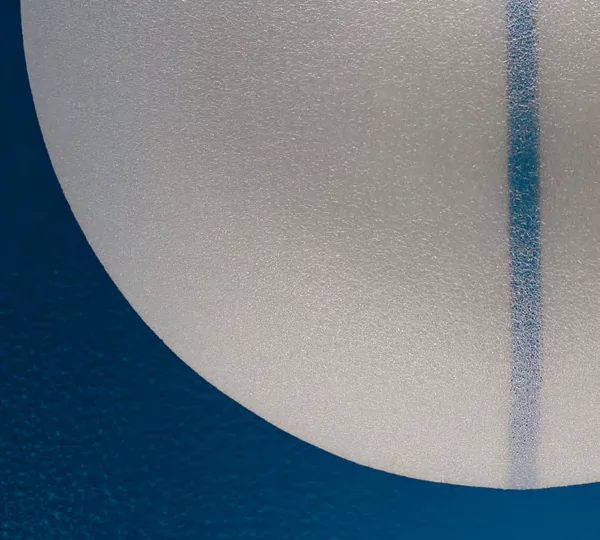
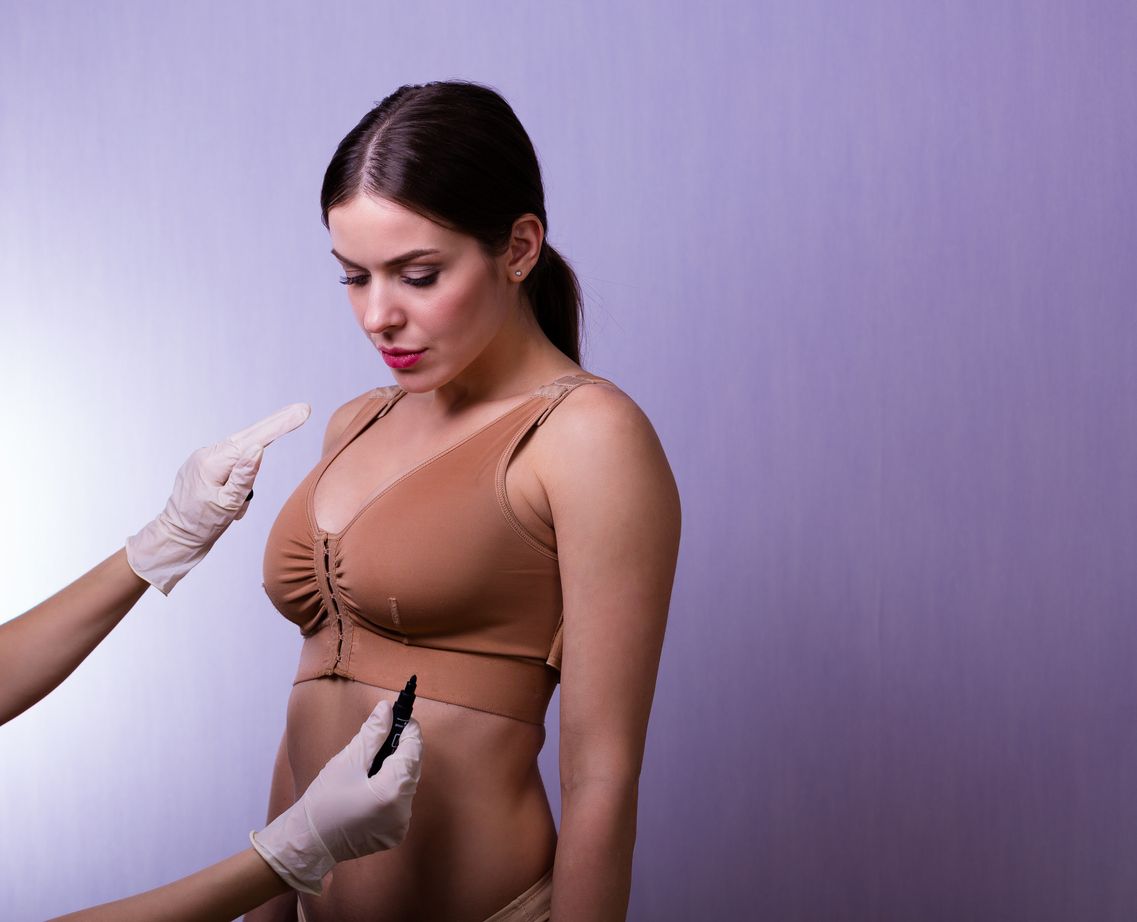
Ergonomix2 is a geometrically round implant whose gel redistributes with posture: spreading out more when you lie down and creating greater lower-pole fullness when you stand up. In our experience, it feels very soft and offers particularly appealing natural movement, but it is not the “perfect implant” for every patient.
Anatomy, tissue coverage and quality, desired volume, and surgical technique remain more important than the implant's name. As of August 10, 2026, our clinical series includes 206 patients with Ergonomix2. This article combines what we have learned from that experience with published evidence, keeping first-generation Ergonomix data, Ergonomix2 data, and manufacturer information clearly separate.
What are ergonomic implants, and are they better?
They are round silicone gel implants designed to subtly change their volume distribution with posture. When you stand, the gel settles lower, creating a somewhat more teardrop-like silhouette; when you lie down, it spreads out. This dynamic response can produce breasts that move and feel less rigid than with other implants.
They are not better in absolute terms. In our practice, they work particularly well when we want moderate sizes, natural movement, and tissue capable of covering a soft implant. We still use conventional round implants more often for patients seeking upper-pole fullness, and prefer a more stable option for many breast lifts involving lax tissue.
Article contents
How ergonomic implants look standing and lying down
“Ergonomic” does not describe a fixed anatomical shape. Ergonomix2 retains a round shell, but contains ProgressiveGel Ultima, a very soft, deformable gel. Gravity changes its distribution inside the shell, subtly changing the implant's profile.
Greater lower-pole fullness
The gel settles lower, partly approaching the profile of an anatomical implant. It does not become an anatomical implant or reproduce its exact shape.
Volume redistributes
The implant spreads out and loses some of its teardrop shape, much as a natural breast changes with position.
A less static breast
Its softness allows movement that many patients perceive as more natural when walking, turning, or changing position.
“A breast is not a photograph: it should look, move, and feel natural in real life.”
Dr. Jorge Aso
For years, breast surgery was assessed mainly through static before-and-after photographs. Today, we place more emphasis on the dynamic breast: how the implant moves, how it changes when you lie down, how it feels, and whether contraction or movement reveals distortions that a still photograph cannot show.
Motiva Ergonomix and Ergonomix2 are different generations
Published studies and many websites use “Ergonomix” as though it were a single product. This can lead to first-generation results being attributed to Ergonomix2. Both share the dynamic concept, ProgressiveGel Ultima, and the SmoothSilk/SilkSurface shell, but their data should not be used interchangeably without explanation.
Motiva Ergonomix
- This generation has been studied in several series with longer follow-up.
- It was also used in the comparative study with MESMO examining downward displacement.
- Dr. Aso began using it before the COVID-19 pandemic.
Motiva Ergonomix2
- Since 2021, it has been the only Motiva ergonomic version we use.
- In our assessment, it is slightly fuller and produces fewer, more natural-looking ripples.
- Direct clinical evidence is favorable, but remains shorter-term and more limited.
In bench tests, the manufacturer describes Ergonomix2 as 45% softer, 23% more adaptable, and capable of 32% greater elongation than Ergonomix. These are the manufacturer's mechanical measurements, not percentages of clinical improvement or a guarantee that a patient's result will be “45% more natural.”
Real benefits of Ergonomix2
The benefits do not come from a single property. The result combines the gel, shell, volume selection, a well-fitted pocket, and adequate coverage. For a suitable candidate, these are the aspects we value most.
An especially soft feel
This is the difference patients most readily notice when comparing implants during a consultation. In our experience, it feels more like natural breast tissue than many conventional implants.
Natural movement
The breast does not retain a rigid silhouette in every position. This matters in everyday life, even when a frontal photograph barely shows it.
Axial rotation without anatomical distortion
Because the geometry is round, rotation around its axis does not change the direction of the volume as it would with an anatomical implant.
Slightly smaller incisions
Its compressibility allows insertion through an incision averaging approximately 5 mm less than an equivalent conventional round implant in our practice.
Less rippling than expected
Despite its softness, we observe gentle, fewer ripples than with certain conventional smooth implants. This does not mean the risk is zero.
Integration with Preservé
In our practice, Preservé uses Ergonomix2 exclusively, combining its compressibility with a tissue-preserving approach to access and dissection.

Who we recommend Ergonomix2 for
Ergonomix2 accounts for a growing share of our augmentations, but is not yet our most-used implant. Conventional round implants in moderate sizes still predominate, particularly when a patient wants clear upper-pole fullness. Ergonomic implants become more relevant when we prioritize feel, movement, and a gentle transition.
Good coverage and natural movement
- A pinch test around or above 2 cm for prepectoral placement.
- A preference for moderate volume and a very soft feel.
- A priority for breasts that change with posture.
- A suitable candidate for Preservé.
- A preference for avoiding distortion from anatomical implant rotation.
Borderline coverage or less supportive tissue
- A 1.5 cm pinch test is not an absolute contraindication, but we explain the risk.
- If the patient plans to lose weight, future loss of coverage changes the decision.
- Large implants increase weight and the possibility of downward malposition.
- For many breast lifts, we prefer a surface with slightly more friction.
Placement also changes the result. Read more about how we choose implants above or below the muscle. No single threshold replaces a full examination.
Ergonomix2 profiles: Mini, Demi, Full, and Corsé
Profile is not selected by preference alone. Existing breast projection combines with the implant's projection; it is not an exact mathematical sum, but helps explain why the same profile can look different in two patients.
Minimal enhancement
For subtle enhancement and “mia-like” results. Many candidates ultimately prefer mia for its specific benefits.
Subtle natural appearance
Widely used for natural-looking augmentation and some breast lifts. Moderate projection often looks less artificial.
More projection with a natural appearance
Common in younger patients with underdeveloped breasts, little existing projection, and a desire for a clearly visible change.
A highly projected result
The least-used profile in our practice. It may suit a patient deliberately seeking fuller breasts, particularly in implant revision surgery.
For the full explanation, see our guide to breast implant profiles and projection.
Risks and limitations of Ergonomix2 implants
An ergonomic implant is still a breast implant. It shares general risks such as infection, hematoma, seroma, capsular contracture, rupture, changes in sensation, asymmetry, and future revision surgery. Its softness and low-friction surface offer benefits but also influence certain mechanical problems.
Palpability and rippling
Coverage is the main factor. The ripples we observe are usually gentle and fewer than expected, but may become visible in very thin patients or after weight loss.
Displacement and bottoming out
An implant can move downward, sideways, or remain too high without having “rotated.” Weight, tissue quality, the pocket, and fold control are crucial.
Front-to-back flipping
Axial rotation of a round implant does not distort the breast, but any cohesive implant can flip front to back. This differs from anatomical implant rotation.
Breast lift and sideways displacement
Many breast lifts involve tissues that have already stretched. Ergonomix2 is our second choice because MESMO or another microtextured implant offers somewhat more stability.
Capsular contracture
The surface does not eliminate contracture. Our clinical snapshot includes two stable Baker II contractures that are not visible and are well tolerated.
Specific evidence is still early
Five-year studies of the Motiva family do not establish five-year outcomes for Ergonomix2. The direct E2 cohort is smaller and earlier.
How we reduce downward malposition
Downward malposition does not depend on the surface alone. Implant weight, tissue quality, lower-pole length, and pocket construction all matter. Moderate volumes—a common indication for Ergonomix2—weigh less and help reduce the mechanical load.
Careful preservation
We perform upward oblique dissection that respects the fold. We do not routinely fix it simply because we use Ergonomix2, except with large implants or other risk factors.
Routine suture reinforcement
If the new design requires lowering the fold, we systematically reinforce it with specific sutures. We consider this critical to reducing subsequent downward movement.
Montemurro compared 185 patients with MESMO and 144 with first-generation Motiva Ergonomix, with a median follow-up of eight months. He found 15 cases of bottoming out with Ergonomix and none with MESMO. This is a useful signal about pocket construction and low friction, but should not be presented as an established E2 rate.
Our experience with 206 Ergonomix2 patients
As of August 10, 2026, our clinical series includes 206 patients with Ergonomix2 implants. This is an internal record of clinical activity, not a prospective cohort or a published comparative study. Follow-up is not uniform, and each result must be interpreted using the available denominator and follow-up duration.
The small displacements recalled are generally downward or sideways when lying down, do not cause a significant problem, and the patients do not wish to correct them. They do not represent flipping or revision surgery. We expect new events as the series and follow-up grow; we therefore never present these findings as “zero risk.”
Our review of clinical activity identified one unilateral infection after implant replacement. It was treated with explantation, one month of antibiotics, and subsequent reimplantation after a favorable recovery. This was a postoperative infection in secondary surgery, not rotation, flipping, or an Ergonomix2-specific mechanical failure.

A recommendation based on experience, not just the implant's name
Dr. Jorge Aso completed specialist MIR residency training in Plastic, Aesthetic, and Reconstructive Surgery at Hospital Universitario 12 de Octubre in Madrid and holds a doctorate in Medicine, cum laude , from Universidad Complutense de Madrid. His surgical practice is particularly focused on aesthetic breast surgery.
He currently performs more than 500 aesthetic breast operations a year and has performed more than 4,000 breast augmentations, according to the clinic's internal records. He teaches and speaks internationally on breast surgery and trains other surgeons in minimally invasive techniques such as mia and Preservé.
+500/yearaesthetic breast operations
+15 yearsof breast surgery experience
* Surgical volume figures come from the clinic's internal records, updated in June 2026.
Ergonomix2 and Preservé: why they go together
Preservé always uses Ergonomix2
Its compressibility allows insertion through small access incisions, and its dynamic behavior supports the aim of a natural-looking result with limited tissue dissection.
- Typical Preservé incision
- 2.3–2.5 cm
- MinimalScar with E2
- 2.5–3.0 cm
- Typical discharge
- 2–3 hours
These lengths are approximate ranges from our practice; they vary with implant size, anatomy, access, and elasticity. We use a special Motiva sleeve, Keller Funnel, or an equivalent injector for every implant type, reducing direct handling and supporting a no-touch technique.
mia does not use Ergonomix2. It uses a specific biconvex Diamond implant. If you are comparing procedures, see the differences between mia Femtech and Preservé.
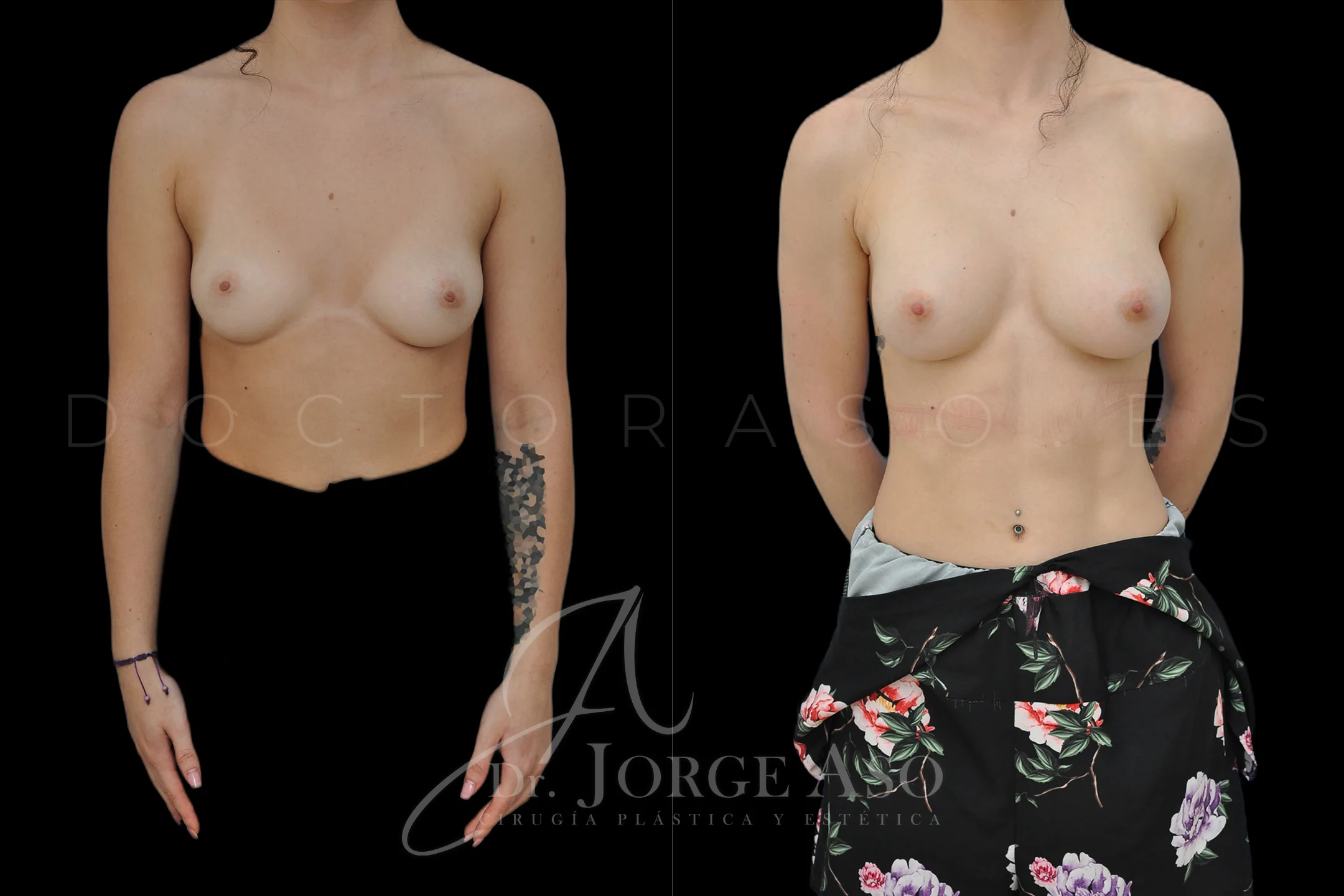
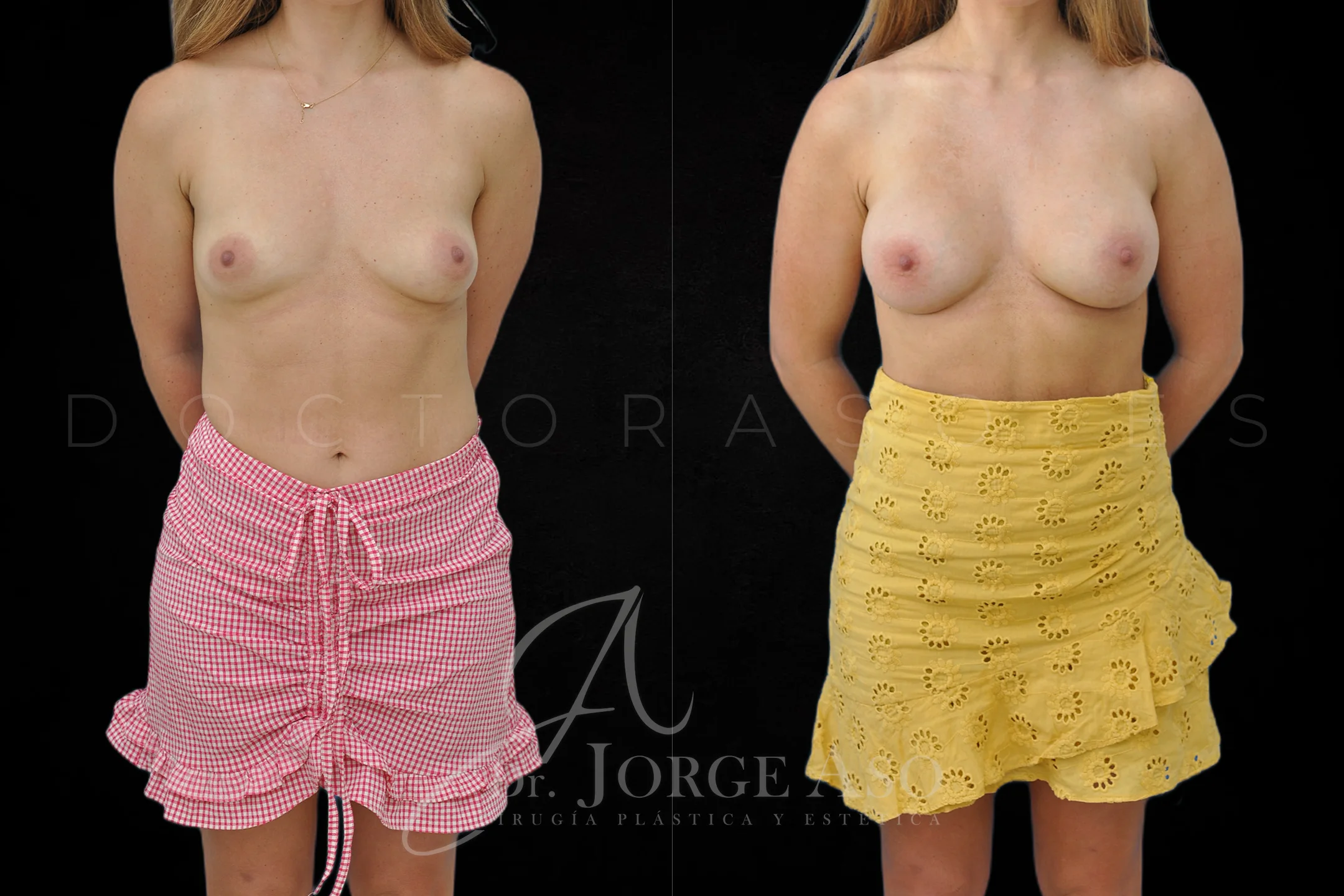
Results with Ergonomix2 implants
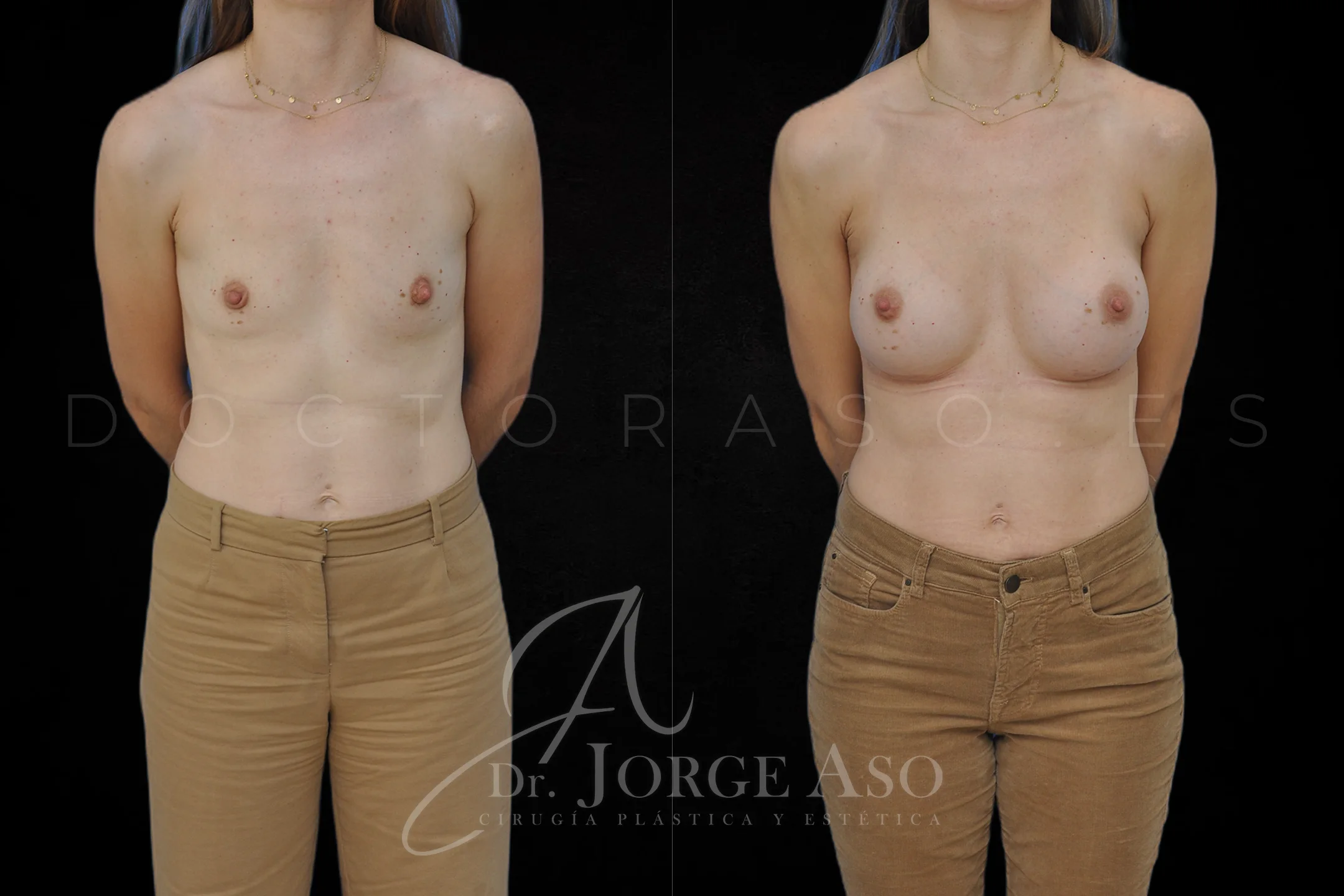
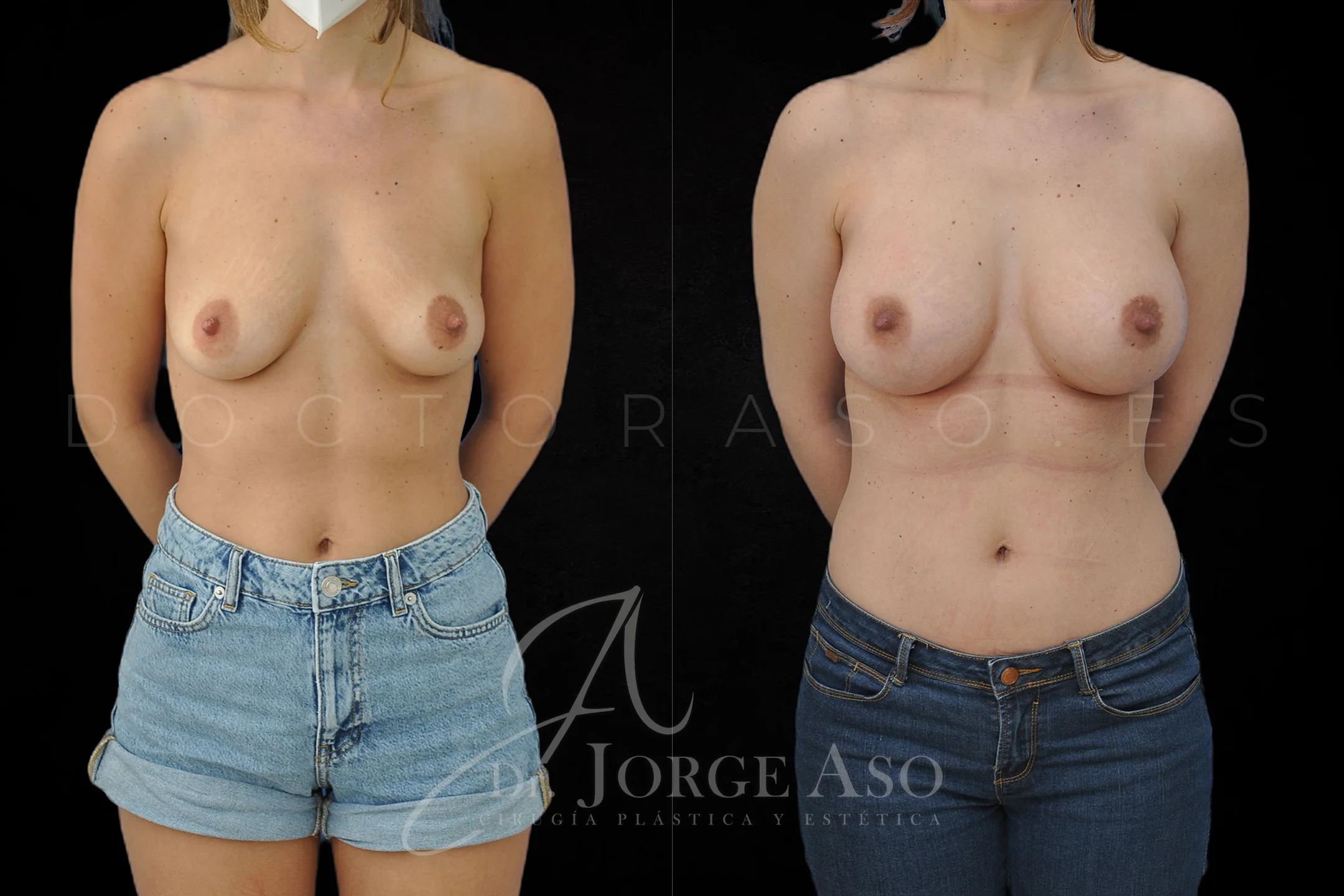
These cases illustrate how volume and profile differ across anatomies. They do not guarantee the same result and should not be compared without considering height, weight, the original breast, placement, and technique.
Round, anatomical, or ergonomic implants
This comparison is a guide. No category alone produces a natural or artificial result; anatomy, volume, projection, placement, and technique all affect the outcome.
Greater upper-pole fullness
Still our most frequent choice in moderate sizes, particularly when a patient wants upper-pole fullness.
Axial rotation does not change the shape.
The most natural shape in a still photograph
In Dr. Aso's opinion, anatomical MESMO remains the closest to a natural static breast in many patients.
The risk of visible rotation must be accepted.
An intermediate look with natural movement
Combines round geometry with adaptable gel, a very soft feel, and a silhouette that changes with posture.
Axial rotation does not distort the breast, but malposition or flipping can occur.
For a fuller discussion of this choice, see our complete comparison of round, anatomical, and ergonomic implants.
What studies show and what we still do not know
The evidence becomes confusing when Ergonomix2, first-generation Ergonomix, and all SmoothSilk implants are grouped together. These evidence layers should be read separately.
31 Ergonomix2 versus 51 Ergonomix
Szychta's prospective study reported greater softness and adaptability using elastography, as well as favorable early results for feel, contour, and movement.
A small sample and insufficient follow-up to establish lasting clinical superiority.
144 Ergonomix versus 185 MESMO
Montemurro found more downward displacement and revision surgery with Ergonomix. This was a retrospective, single-surgeon study with short follow-up.
Do not treat its 15 bottoming-out cases as an Ergonomix2 rate.
Five-year clinical data
The pivotal study includes Motiva SmoothSilk Round and Round Ergonomix, not Ergonomix2. It reported an 8.8% all-cause reoperation rate in primary augmentation.
94% were placed in a dual plane; findings should not be applied uncritically to prepectoral patients.
Mechanical tests and technical documentation
Motiva provides useful information on ProgressiveGel Ultima, SmoothSilk, SuperSilicones, TrueMonobloc+, and BluSeal+, along with softness and elongation tests.
Bench data explain the design but do not replace independent clinical outcomes.
We prefer to describe it as a smooth, controlled surface according to technical documentation, rather than using “nanotextured” as a universal regulatory category. We also avoid “rejection”: capsular responses and complications should be named specifically.
What Ergonomix2 costs and what JOY.(dot) includes
In our practice, a pair of Ergonomix2 implants costs approximately €1,000–€1,200 more than equivalent conventional round implants. This relates to the product and associated package; choosing this implant does not increase the clinic's margin.
JOY.(dot)
The current supply we receive in Spain includes Ergonomix2, a single-use retractor with integrated lighting, a special insertion sleeve, and a specific bra, together with extended coverage.
- Extended warranty: Motiva publishes a five-year term for JOY.(dot), subject to its conditions.
- Rupture: product coverage throughout the device's lifetime under the official terms.
- Baker III–IV contracture: product replacement for ten years, subject to requirements.
- Woman’s Choice: a separate program that may contribute up to USD 1,500 toward eligible complete and permanent explantation during the first two years.
Woman’s Choice requires registration within the first 90 days and has conditions and exclusions; it is not an automatic payment promise or a “total guarantee.” To compare complete quotes, see our guide to mia and Preservé costs.
Follow-up for a patient with Ergonomix2
We apply our general follow-up protocol for patients with implants: clinical reviews, annual ultrasound and an MRI at ten years. During the first year, we perform ultrasound during indicated clinic reviews, then recommend continuing annually.
Reviews and ultrasound in the clinic
We assess position, fluid collections, the capsule, and tissue recovery according to the individual case.
Annual ultrasound
Helps monitor the implant even when the patient has no symptoms.
MRI
Part of our own protocol if an earlier scan has not been indicated.
A sudden increase in breast size, severe pain, progressive swelling, redness, or fever requires assessment before the scheduled review. For more on longevity, rupture, and warranties, see our guide to how long breast implants last and when to replace them.
Questions about Motiva Ergonomix2
What are ergonomic implants?
They are geometrically round breast implants whose deformable gel redistributes with posture. They develop greater lower-pole fullness when standing and spread out when lying down, producing more dynamic behavior.
Is Ergonomix2 round or anatomical?
It is round around its axis. Its gel can create a partly teardrop-like silhouette when standing, but it is not a fixed-shape anatomical implant.
What is the difference between Ergonomix and Ergonomix2?
Ergonomix2 is the evolution we have used since 2021. In our assessment, it is slightly fuller and creates fewer, more natural-looking ripples. Its construction has changed, but direct E2 evidence is shorter-term than for the first generation.
How do ergonomic implants look standing and lying down?
When standing, the gel settles lower and concentrates somewhat more volume in the lower pole. When lying down, it redistributes and the implant spreads out. The final change depends on the patient's coverage and tissues.
Can Ergonomix2 implants rotate?
They can rotate around their axis, but their round geometry means this sideways rotation does not alter the silhouette as with an anatomical implant. This does not remove the possibility of displacement or flipping.
Can they flip?
Yes. Flipping means turning front to back and can affect cohesive round or ergonomic implants. We have detected no cases in our preliminary snapshot of 109 Preservé patients, but mean follow-up is around eight months and this does not imply zero risk.
Do they cause more rippling because they are so soft?
That is not what we observe. Rippling is not absent, but the ripples are usually gentle and fewer than with some conventional smooth implants. Coverage remains the main factor, and weight loss can make them more visible.
Can I have Ergonomix2 with limited tissue coverage?
With a 2 cm pinch test, we generally use it confidently in a prepectoral position. With 1.5 cm, we discuss it with the patient and do not consider it an absolute contraindication. We are more cautious if she plans to lose weight.
Is it the first choice for a breast lift?
Usually not. Breast lift tissues are more lax, and we often prefer MESMO or another microtextured implant with slightly more friction. Ergonomix2 remains a valid alternative in selected cases.
Is Ergonomix2 always used in Preservé?
Yes. In our practice, Preservé uses Ergonomix2 exclusively. The implant's compressibility is part of the system that allows a small incision and tissue-preserving dissection.
Does mia Femtech use Ergonomix2?
No. mia uses a specific Diamond implant with biconvex geometry. Although both techniques aim for natural results and fast recovery, they do not use the same device.
Which Ergonomix2 profile looks most natural?
There is no universal profile. Demi provides moderate projection; Full can still look natural in a patient with very little breast tissue initially; Mini aims for minimal changes, and Corsé for a much more projected effect.
How much do Ergonomix2 implants cost?
In our practice, a pair costs approximately €1,000–€1,200 more than equivalent conventional round implants. This is an additional product and package cost, not an increase in the clinic's margin.
What monitoring does a patient with Motiva implants need?
We apply our general protocol of annual ultrasound and MRI at ten years, together with any earlier investigation indicated by symptoms or clinical changes.
What do JOY.(dot) and Woman’s Choice cover?
JOY.(dot) includes extended coverage, and Motiva publishes conditional rupture and contracture programs. Woman’s Choice is separate and may contribute up to USD 1,500 toward eligible complete and permanent explantation during the first two years, subject to registration and exclusions.
Ergonomix2 is an excellent tool, not an automatic answer
Its feel, compressibility, and response to gravity can produce very appealing results when a patient seeks natural movement. Its round geometry avoids distortion from axial rotation of an anatomical implant, but does not eliminate rippling, malposition, flipping, or the other risks of an implant.
The best decision is not to choose the implant with the most technology, but the one offering a reasonable balance of shape, feel, stability, coverage, and personal preferences. We combine examination, 3D simulation, and an honest explanation of the alternatives.
Sources and further reading
- Motiva: official description of Ergonomix2 and ProgressiveGel Ultima.
- Szychta: early prospective study of Ergonomix2 versus Ergonomix.
- Montemurro: comparison of MESMO with first-generation Ergonomix.
- FDA: Summary of Safety and Effectiveness for Motiva SmoothSilk Round and Round Ergonomix.
- Glicksman et al.: five-year clinical data for Motiva SmoothSilk.
- TGA: registration of Motiva Ergonomix2 SmoothSilk.
- Motiva: JOY.(dot), MinimalScar, and associated coverage.
- Motiva: product warranty terms.
- Motiva: Woman’s Choice terms.
- Motiva: tissue-preservation instruments for Spain.
- FDA: general risks and complications of breast implants.
Medical authorship Specialist in Plastic, Aesthetic and Reconstructive Surgery (Spanish MIR training) Medical registration no. 2828/61062 · Madrid About Motiva Ergonomix2 Breast Implants: Benefits and Risks: clinical information, safety and expectations. Based on the original Spanish content. Translation does not constitute a new medical review. This information does not replace an individual medical assessment. References support the general medical information. Suitability, alternatives, and risks are discussed individually during consultation.
Medical sources and editorial standards
Selected references for this article
11 references