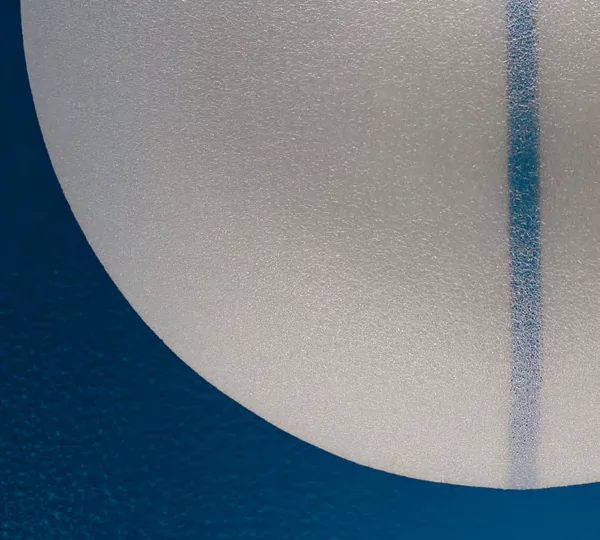
The brand matters, but it does not determine the outcome on its own. Surface, gel, shape, dimensions, and clinical indication should be considered together and tailored to each patient's tissues and goals.
Which breast implant brand is best?
There is no single best brand for every patient. In our current practice, the options we use most often are Motiva SmoothSilk and POLYTECH MESMO, because they offer different, complementary clinical characteristics. Mentor remains a quality brand that we use less frequently when its dimensions or features are a better fit.
We do not choose an implant based on popularity or a commercial warranty. The decision depends on anatomy, tissue coverage, the need for stability, the type of procedure, and the result the patient hopes to achieve.
A very smooth surface and a natural-feeling gel. It is becoming increasingly prominent in our practice because of the capsule characteristics we observe and the low rate of capsular contracture we have seen.
A low-roughness microtexture that retains moderate friction. It can be particularly useful when we need greater stability, as in certain breast lifts.
An established manufacturer offering different levels of gel cohesivity and a range of dimensions. We use it in selected cases when it provides a specific combination we need.
In this guide
What matters more than the brand name
Two implants from the same manufacturer can behave very differently. We therefore compare more than logos: we assess the specific product, its surface, gel, dimensions, the available clinical experience and, above all, whether it suits the patient's anatomy and lifestyle.
Friction and capsule response
Surface roughness affects how an implant interacts with tissues, its mobility, and certain risks. A very smooth surface, a fine microtexture, an aggressive macrotexture, and polyurethane should not be treated as equivalent.
Cohesivity, feel, and movement
A more cohesive gel holds its shape better; a more dynamic one may feel and move differently. The amount of breast tissue covering the implant affects how noticeable that difference is and how much stability we need.
Width, height, and projection
Volume in cubic centimeters does not tell the whole story. The same volume looks very different depending on base width, projection, height, and gel distribution. An implant must respect the actual limits of the chest and soft tissues.
Stability versus mobility
Our priorities are not identical in a first augmentation, a breast lift, a tuberous breast correction, or an implant revision. Shape, surface, and pocket must address the problem we are trying to solve.
Track record and independent follow-up
We review the model's accumulated experience, studies with adequate follow-up, post-market surveillance, and who funded each publication. A sponsored study can be useful, but should not be interpreted in the same way as an independent comparison.
Tissues, lifestyle, and expectations
Physical activity, preferences about movement or cleavage, skin quality, implant weight, and whether a breast lift is needed all inform the choice. There is no ideal implant independently of the patient.
How we assess a manufacturer's reliability
In addition to the specific product's regulatory marking, we look at traceability, manufacturing consistency, the breadth of the range, availability of useful dimensions, medium- and long-term complication data, and the manufacturer's ability to monitor and communicate safety issues. Models from the same well-known brand may perform very differently.
The key point
A good implant used for the wrong indication can produce a poorer result than another implant selected and placed appropriately. Surgical technique, planning, and follow-up matter at least as much as the brand.
Smooth, nanotextured, microtextured, and macrotextured surfaces
Marketing terms can be confusing. We focus on actual surface roughness, how it interacts with the capsule, and the clinical behavior of each model—not just the label in a catalog.
Smooth and very-low-roughness surfaces
These allow more movement within the pocket and usually form thin capsules. Motiva calls its surface SmoothSilk; it is often described as nano- or nanotextured, although the current ISO classification places it among smooth surfaces. Lower friction makes precise pocket creation essential.
Microtextured surfaces
These aim to retain some friction while being much less rough than historical macrotextures. MESMO is the option in this group that we use most often when we want a little more stability, for example in certain breast lifts.
Macrotextured surfaces
They provided greater adherence, but certain aggressively macrotextured models have been associated with late seroma, double capsules, and BIA-ALCL. In our practice, we have also observed substantially more capsular contracture than with lower-roughness surfaces, so they are no longer part of our routine choices.
What our published series found
In our comparison of 621 patients, POLYtxt implants had significantly more overall complications and repeat operations than MESMO. The most striking difference was late seroma: 6.4% with POLYtxt versus 0% with MESMO. This finding, together with our experience of more contracture with aggressive macrotextures, explains why we stopped using them routinely. You can read the Marcelli and Aso study on PubMed.
“Textured” does not describe a single surface
Problems associated with an aggressive macrotexture cannot automatically be attributed to MESMO, a very smooth surface, or polyurethane. Each category should be evaluated separately, with its own benefits and potential complications.
For a closer look at these differences, read our guide to smooth, nanotextured, microtextured, and polyurethane-coated implants, which explains why “textured” does not describe a single pattern of behavior.
How manufacturing affects implant quality
Two implants can look alike yet differ in shell construction, gel, sealing, batch testing, and traceability. Safety depends on more than shape or the name on the package.
Elastomer, layers, and barrier
The shell is usually made from multiple layers of silicone elastomer. Its thickness, uniformity, mechanical strength, and barrier layer help contain the gel and limit its diffusion. Not all shells are built in exactly the same way.
Sealing and posterior patch
After the implant is filled, the manufacturing opening must be closed. The junction between the shell and posterior patch requires precise sealing and rigorous checks because it is part of the device's overall integrity.
Purity and cohesivity
Medical-grade silicone gel may come from shared specialist suppliers, but each manufacturer selects different formulations and levels of cohesivity. The combination of gel, shell, and design determines feel and shape stability.
Production and batch testing
Many stages combine automated processes with individual handling and checks. We look at fatigue, elongation, integrity, sterilization, and consistency testing, as well as post-market surveillance.
The lesson of the PIP case
The PIP implant case showed that a regulatory mark or outward appearance cannot replace the actual quality of materials, manufacturing controls, and health surveillance. Traceability and European requirements were strengthened after the crisis. Spain's AEMPS provides information and protocols relating to PIP.
For patients, the practical advice is simple: know your implant's exact manufacturer and model, keep your implant card, and attend follow-up appointments. CE marking applies to specific products; it does not make every model from a brand automatically equivalent.
The brands we use most often at Dr. Aso Clinic
Our preferences have changed with experience, advances in materials, and clinical and ultrasound follow-up of our patients. There is no permanent ranking: we evaluate each model, not a brand in the abstract.
Motiva SmoothSilk
Increasingly common in our practiceMotiva SmoothSilk implants are becoming increasingly prominent in our practice. We value the thin capsules we usually observe, their very natural feel, and the low rate of capsular contracture we have seen during follow-up.
The SmoothSilk surface is also used in the Motiva implants we select for our tissue-preserving techniques: mia® uses its specific Diamond implant, while Preservé™ uses Ergonomix2. They belong to the same technological family but involve different procedures, implants, and indications.
Regulatory update (August 2026): on September 26, 2024, the U.S. FDA approved Motiva SmoothSilk Round and SmoothSilk Round Ergonomix for primary augmentation and revision augmentation in women aged 22 or older (PMA P230005). This is a U.S. approval for those specific models; it does not make one brand universally superior or replace European regulation or individual assessment.
The range includes conventional round models and Ergonomix, whose gel behaves more dynamically. The very-low-roughness surface allows movement but does not anchor the implant to tissue. This makes it important to respect breast dimensions and create a very precise pocket to reduce displacement and flipping.
POLYTECH MESMO
Moderate frictionWe consider MESMO a good option between very-low-roughness surfaces and more aggressive textures. It retains a limited degree of friction and may be particularly useful when stability matters, as in some breast lifts or when tissues are prone to stretching.
That does not eliminate malposition or rotation. We have seen both with MESMO too, which is why we perform routine imaging follow-up and do not present any surface as infallible. The choice depends on how we weigh friction against mobility for each patient.
Research from our group
Dr. Aso coauthored a study of POLYtxt versus MESMO and late seroma. Its findings support our decision to stop routinely using aggressive macrotextures and favor much lower-roughness surfaces. We also consider a published comparison of MESMO and Motiva Ergonomix regarding displacement, although it is an external series with limited follow-up.
B-Lite
Lightweight implantB-Lite is a POLYTECH line whose gel contains biocompatible microspheres to reduce weight without reducing volume. According to the manufacturer, it can be up to 30% lighter than a conventional implant of the same volume.
Lower weight may be worth considering for larger volumes, physically active patients, tissues prone to stretching, or situations where we want to limit the sustained load on a breast lift. This does not mean every athlete needs a lightweight implant or that weight alone determines whether a breast sags: skin quality, volume, and technique also matter.
Polyurethane-coated implants
Specific indicationsPolyurethane should not be lumped together with conventional macrotextures. Its foam coating promotes strong adherence and has its own capsule behavior. It can be useful in selected cases of recurrent contracture, a high risk of rotation or malposition, and certain breast lifts.
It is not our routine choice for every augmentation. Its fixation, the possible difficulty of revision surgery, and each model's particular features require experience and a very specific indication. POLYTECH and Silimed offer implants in this category.
Mentor
Selected useMentor is a long-established manufacturer with extensive clinical experience and a range of gel cohesivities, profiles, and dimensions. Its catalog can address specific anatomical combinations, and it remains a quality brand.
We use it less frequently because, in our current practice, it does not usually offer a decisive advantage over MESMO or Motiva. Even so, it may be the right option when a particular width, projection, or level of cohesivity better suits the patient.
Silimed
Broad rangeSilimed is an established manufacturer with a range that includes smooth, microtextured, and polyurethane-coated implants, as well as anatomical, round, and conical profiles. It is particularly well known for its experience with polyurethane.
We do not choose it for the brand name alone, but when a particular model and surface offer a useful solution for the anatomy or problem we are treating. As with any manufacturer, the exact product, its current regulatory status, and its clinical evidence should be reviewed.
Eurosilicone, Sebbin, Nagor, and other brands
Potential alternatives depending on the modelThese manufacturers offer products with different shapes, gels, and surfaces. They may be valid alternatives when their ranges meet a particular need, but we do not favor them solely because they are priced differently or commercially popular.
Some Allergan/Natrelle models were widely used, but its Biocell macrotextured implants were withdrawn from the market. That history shows why we must discuss the exact model and surface: the risks of one historical product cannot automatically be attributed to every implant made by a company.
Clinical comparison at a glance
This table summarizes how we currently use the most common options. It is not an automatic prescription.
| Option | Surface | What we value most | Main caution | Typical use |
|---|---|---|---|---|
| Motiva SmoothSilk | Very low roughness | Thin capsule, natural feel and movement | Precise pocket control | Primary augmentations and tissue-preserving techniques in selected cases |
| POLYTECH MESMO | Low-roughness microtexture | Some additional friction and stability | Rotation or malposition remains possible | Breast lifts and cases requiring additional stability |
| Mentor | Depends on the model | Range of products and accumulated experience | Does not always offer a specific advantage | Selected cases based on dimensions or gel cohesivity |
Shape and gel can matter as much as the brand
Shape determines where volume is distributed; gel affects feel, movement, and stability. Neither choice can be separated from the patient's starting anatomy.
Round implants
These distribute volume more centrally and may provide more upper-pole fullness and pronounced cleavage. They are a good option for many patients, particularly when the upper breast lacks volume or the lower poles are long. If the nipple sits low, adding too much fullness above it may make it appear to point even farther downward. In those cases, an anatomical implant with a dual-plane approach may be preferable, or the nipple may need to be lifted before a round implant is used.
Anatomical implants
These place more volume in the lower pole and, in the great majority of cases, allow a more natural result. They are particularly helpful when tissue coverage is limited, when we need to guide breast shape, or when we want to control the relationship between the upper and lower poles. Orientation matters: if they rotate, they can visibly distort the breast.
Ergonomix
These have a round base but a dynamic gel that changes its distribution with body position. We therefore consider them a clinical middle ground between conventional round and anatomical implants. They cannot rotate in a way that causes the characteristic distortion of an anatomical implant, because their base is round and there is no vertical orientation to maintain.
Rotation is not the same as flipping
An anatomical implant can turn around its axis and change breast shape. A round or Ergonomix implant can rotate without that axial movement causing the same type of distortion. However, any implant can flip from front to back. This is much less common but can happen, especially if the pocket is too large or the tissues provide little support.
Types of filling and gel cohesivity
Cohesive gel
This is the most common option in our setting. Some gels are firmer and hold their shape, while others are softer or more dynamic. Greater cohesivity does not automatically mean a more natural result: it must be balanced against shape, tissue thickness, and the degree of control needed.
Saline filling
These implants have a silicone shell filled with saline. They are used much less often in Spain because they tend to feel and behave less naturally, although a loss of volume is easy to recognize if they deflate. They remain a real category available in some markets.
B-Lite gel
This combines cohesive silicone gel with microspheres to reduce weight without reducing volume. It may make sense when the mechanical load on tissues is a particular concern.
Feel in the hand is not everything
An implant that feels softer outside the body will not necessarily produce a more natural-feeling breast. Tissue coverage, pocket, width, and interaction with the capsule all affect the result after implantation.
What makes a result look natural
Natural-looking results depend on implant width and height matching the breast, volume staying within what the tissues can support, gel distribution, and a technique that positions the implant correctly. A subglandular, subfascial, dual-plane, or submuscular pocket is chosen individually: no placement is always safer or aesthetically better.
It also matters what “natural” means to each patient. Some want an almost imperceptible transition at the upper breast; others prefer slightly more cleavage that still looks subtle under clothing. Current preferences tend toward somewhat smaller volumes and results that look natural both in photographs and in motion. This helps explain interest in tissue-preserving techniques such as mia and Preservé, but does not replace individual assessment.
To explore this decision further, see our guides to round, anatomical, and ergonomic implants and how we choose implant size.
How we select an implant at our clinic
We make the decision step by step, using measurements, simulation, comparable cases, and the patient's active participation.
We discuss a natural look, cleavage, movement, clothing, personal preferences, and examples the patient likes or dislikes.
Breast base, tissue coverage, elasticity, asymmetries, folds, nipple position, and what the tissues can realistically accommodate.
Width, height, projection, gel distribution, and volume must work together.
Sports, physical work, impact, the desired degree of movement, and load on the tissues may influence weight and surface selection.
Pocket type, breast lift, skin quality, and displacement risk determine how much friction we need.
We do not choose a brand alone: we review the model, surface, gel, dimensions, traceability, and available evidence.
We use examples from patients with similar height, weight, anatomy, and implant volume to avoid unrealistic comparisons.
We record the implant details and perform routine clinical and ultrasound checkups for all our surgical patients.
Compare results in patients like you
Our interactive breast augmentation gallery lets you filter cases by volume, height, weight, implant shape, and technique. This is far more useful than judging one isolated photograph or choosing a brand based on advertising.
Explore the interactive galleryWhy breast implant prices differ
Two implants of a similar size can have different costs. Price reflects more than the amount of silicone and, by itself, does not prove that one option is better.
Research and development
A specialized gel, proprietary surface, lightweight implant, or range with many combinations requires development, testing, and technical documentation.
Manufacturing and testing
Production location, shell construction, batch checks, sterilization, and traceability all affect cost.
Range and distribution
Offering many widths, heights, projections, shapes, and gel cohesivities allows a more tailored choice, but also increases inventory and logistics costs.
Actual clinical value
A more expensive implant is not automatically safer or more appropriate. We pay for a special feature only when it offers a reasonable advantage for that patient.
Price-to-quality ratio is not the only factor
Established brands offer differently priced, appropriately regulated products. We do not automatically choose the cheapest or the most expensive implant: we choose the one that best addresses anatomy, stability, and the desired result. A quote should explain transparently what the operation and follow-up include.
Safety, warranties, and follow-up
Regulatory clearance applies to specific products, but it does not make an implant perfect or guarantee the same result for every patient. Commercial warranties usually cover defined situations under particular conditions; they are not a medical guarantee against rupture, contracture, or further surgery.
No implant lasts forever
Breast implants do not have the same expiration date for everyone, but they may eventually need replacement. We do not recommend surgery solely because ten years have passed if everything is normal. We do recommend follow-up and action if symptoms, imaging findings, or clinical changes arise.
Our follow-up approach
We perform routine follow-up ultrasound for all patients we operate on. This lets us check implant integrity, the capsule, any fluid, and position even when there are no symptoms. The schedule is adapted to each patient's progress and findings.
You can also read our guides to capsular contracture, seroma around an implant, and how long breast implants last.
Frequently asked questions
Is Motiva better than POLYTECH?
Not universally. We highly value the feel and capsule response of Motiva SmoothSilk. MESMO provides a little more friction and can be useful when stability is the priority. Anatomy and the procedure determine which is the better fit.
Can a smooth implant move out of position more easily?
Lower friction can allow more movement, but position also depends on the pocket, tissues, implant dimensions, and surgical technique. Careful planning is essential, and no implant type completely eliminates malposition.
Can anatomical implants rotate?
Yes. Pocket stability and follow-up therefore matter. Reported rates vary with surface, technique, and how rotation is measured: a rotation seen on imaging may not be obvious clinically.
Can the Qid chip tell whether an implant has ruptured?
No. The radiofrequency identifier gives access to implant traceability details such as the model, batch, or serial number. It does not assess implant integrity; we use a clinical examination and imaging for that.
Which brand has the lowest capsular contracture rate?
There is no single figure that applies to every patient and technique. We have observed very favorable results with very-low-roughness surfaces in our practice, but the pocket, surgery, bacterial contamination, bleeding, anatomy, and follow-up also affect risk.